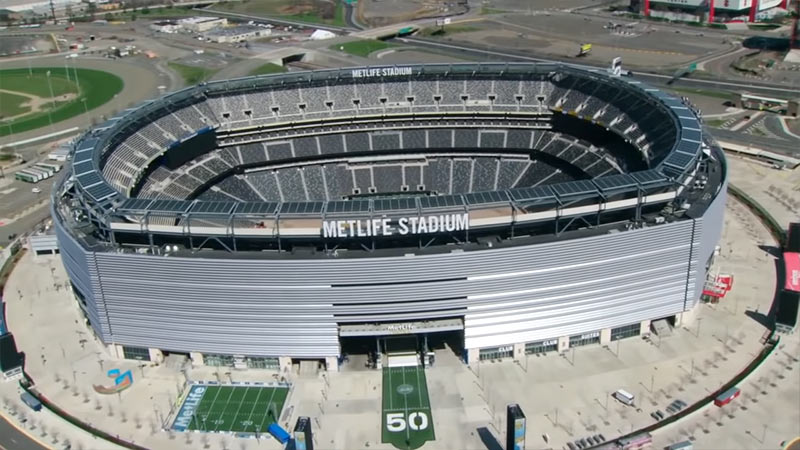
The architectural layout of a professional stadium is rarely a product of aesthetic preference or accidental urban alignment.
Instead, it is a masterclass in functional engineering, where every angle is calculated to optimize performance, safety, and commercial viability.
One of the most enduring standards in sports design is the North-South orientation of the playing surface.
While casual observers might assume the layout is determined by the shape of the city block or the direction of the wind, the reality is dictated by the immutable laws of physics and the celestial movement of the sun.
For decades, the North-South alignment has served as the “Golden Rule” for outdoor sports facilities.
This choice is a functional requirement that affects the safety of the players, the comfort of the spectators, and the multi-billion-dollar industry of global sports broadcasting.
The Physics of the Golden Rule: Solar Management
The fundamental reason football fields are oriented North-South is to manage solar glare. To understand this, one must look toward the sky. Because the Earth rotates, the sun travels an arc from East to West.
In the context of a sports stadium, this movement creates a shifting landscape of light and shadow that can be either a minor nuisance or a significant competitive disadvantage.
By aligning the long axis of the field—the distance between the end zones—in a North-South direction, architects ensure that the sun’s path remains perpendicular to the primary action of the game.
Most critical football plays occur along the length of the field, with players moving toward one end zone or the other. During late-afternoon or early-evening games—which often coincide with the most dramatic moments of a match—the sun is low on the horizon.
If a field were oriented East-West, one team would be forced to look directly into the setting sun when driving toward the western end zone. This would create an immediate and unfair hazard.
The North-South orientation ensures that the low afternoon sun shines across the sidelines rather than straight into the end zones, preventing players from being blinded during high-stakes plays.
Protecting the Players’ Vision: A Performance Necessity
In professional sports, where the margin between victory and defeat is measured in millimeters, environmental factors take on immense importance. The “sun avoidance” strategy is a cornerstone of player performance and safety.
The Quarterback’s Perspective
The quarterback is the most visual position on the field. To execute a successful play, they must process a massive amount of visual data in seconds: the movement of the pass rush, the positioning of the linebackers, and the precise timing of their receivers’ routes.
If that quarterback is blinded by a direct beam of late-afternoon light while looking downfield, their ability to perform is compromised.
Receivers and Defenders
Tracking a football as it arcs through the air requires clear, unobstructed vision. When a ball passes through the direct line of the sun, it can “disappear” in the glare, making it nearly impossible for a player to adjust their speed or positioning.
This is particularly dangerous for defenders and receivers tracking deep passes. A momentary lapse in vision caused by solar glare can lead to missed catches, interceptions, or dangerous collisions.
By maintaining a North-South axis, stadium designers keep the sun on the periphery, allowing athletes to track the ball with confidence.
The Spectator Experience: Comfort and Visibility
The logic of stadium orientation extends beyond the white lines of the field and into the seating bowl. A stadium is a venue for thousands of spectators, and the quality of their experience is directly linked to the orientation of the field.
In a traditional stadium layout, the “home” side of the field is often situated on the western side, facing East. This is a strategic choice for fan comfort. During late-afternoon games, the sun is positioned behind these spectators rather than in their eyes.
This provides the home crowd—often the highest-paying and most loyal segment of the fan base—with a clear view of the game while the visiting side (facing West) may have to contend with more direct light.
Furthermore, the heat of the sun is a factor. In warmer climates, being seated with the sun at your back can significantly improve thermal comfort. By aligning the field North-South, architects can better manage the experience for the majority of the crowd, ensuring they remain engaged with the action on the field rather than distracted by physical discomfort.
Commercial Reality: Broadcast Consistency and Media Quality
While player safety and fan comfort are paramount, the financial engine of professional football is driven by television. Modern sports broadcasting is a high-definition production that requires precise lighting conditions to maintain visual quality for millions of viewers.
For television cameras, extreme lighting contrast is a significant technical hurdle. If a field is oriented in a way that creates deep shadows on one half and brilliant sunlight on the other, the camera’s sensors struggle to balance the exposure.
This can result in “washouts,” where the brightly lit areas of the field appear as a featureless white blur, or harsh shadows that obscure the players and the ball.
A North-South field orientation assists media crews in maintaining even lighting conditions. Because the sun moves across the width of the field, the shadows cast by the stadium’s rim and seating decks are more uniform across the playing surface.
This allows broadcast engineers to maintain consistent exposure levels, ensuring that the viewing experience for the audience at home is clear and professionally presented regardless of where the ball is on the field.
The Modern Exception: Architecture and Urban Constraints
Despite the clear advantages of the North-South rule, the landscape of stadium design is shifting.
In the contemporary world, we are seeing more exceptions to this rule than ever before. This is largely due to urban density, structural innovation, and the evolution of stadium technology.
1. Urban Real Estate Constraints
In many major metropolitan areas, the luxury of choosing a perfect North-South axis is often unavailable. Stadiums are frequently built within existing urban grids where the layout of streets, railways, and neighboring buildings dictates the footprint of the structure.
When a team decides to build a new arena in a downtown core, they are often forced to work with the land available, even if it means a diagonal or East-West orientation.
2. The Impact of Massive Stadium Structures
As stadiums have grown in size, the physical structure itself has become a tool for light management. Modern professional stadiums often feature towering decks and massive roof overhangs.
These structures are so tall that they effectively create a self-contained environment, blocking out the low-angle sun that would otherwise cause glare.
In these high-tech venues, the physical building acts as a massive sunshade, making the compass orientation of the grass or turf less critical than it was for a simple, open-air high school field.
3. The Rise of the Domed Stadium
The most definitive departure from the North-South rule occurs in domed or enclosed stadiums. In these environments, the position of the sun is irrelevant to the game’s internal mechanics.
These venues use artificial lighting systems to provide a perfectly uniform playing environment regardless of the time of day or the season.
This allows architects to orient the field based on other priorities, such as optimal entrance and exit flow for fans or better integration with local public transit hubs.
Conclusion: A Tradition Built on Utility
The North-South orientation of the football field is a testament to the enduring influence of the natural world on human design.
What began as an absolute functional necessity for outdoor high school and college fields—where early evening schedules and limited budgets made sun glare a deal-breaking issue—has evolved into a respected tradition in stadium architecture.
While modern technology has provided ways to mitigate the risks of solar interference, the North-South axis remains the baseline for excellence.
It represents a commitment to the fundamental principles of the sport: fairness for the athletes, comfort for the spectators, and visual clarity for the world.
As we look toward the future of sports design, the North-South alignment will likely remain the standard—a silent, invisible hand guiding the layout of the world’s most iconic cathedrals of sport.