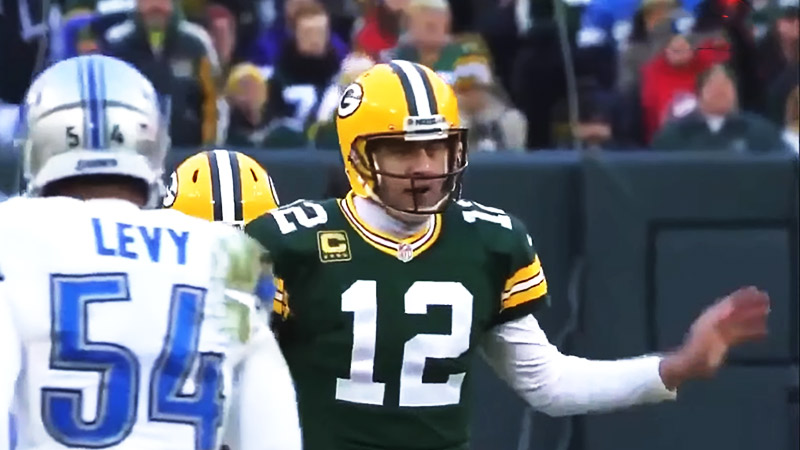
In the high-stakes environment of professional football, where milliseconds determine the boundary between a championship and a loss, the most potent weapon often isn’t a physical attribute—it is the voice of the quarterback.
When a signal-caller stands behind the center and barks out phrases like “Green 18” or “Blue 80,” the uninitiated viewer might hear mere tradition or noise. However, to the twenty-two athletes on the field, these vocalizations represent a complex, real-time data stream.
The quarterback cadence is a sophisticated system of rhythmic communication designed to establish timing, facilitate instant tactical adjustments, and deploy psychological deception against a defensive unit.
Understanding the mechanics of “Green 18” requires looking past the words and into the operational framework of an elite offensive unit.
I. The Foundation of Offensive Synchronicity
At its most fundamental level, the quarterback’s cadence serves as the heartbeat of the offensive unit. Football is a game of explosive movements that must occur in perfect unison, and the cadence is the conductor’s baton that ensures every player begins their task at the same moment.
The Power of Synchronized Focus
A primary objective of any cadence is to provide the offensive linemen and receivers with a shared tempo.
In a stadium filled with eighty thousand screaming fans, the quarterback’s voice acts as a focal point, cutting through the auditory clutter to create a “synchronized focus”.
This shared rhythm ensures that the entire unit knows exactly when to react, allowing the offensive line to fire off the ball as one cohesive wall of force.
Without this vocalized tempo, the risk of false starts or sluggish transitions increases exponentially, handing the advantage to the defense.
Mastering Snap Control
Beyond simply starting the play, the cadence is the primary tool for snap control. By varying the count and the rhythm of the delivery, the quarterback dictates the precise moment the ball is snapped.
This variability is essential to prevent defensive players from “jumping” the snap—a tactic where a defender times the offensive rhythm perfectly to penetrate the backfield the moment the ball moves.
A disciplined cadence forces the defense to react to the physical movement of the ball rather than anticipating the sound, effectively neutralizing their explosive advantage.
II. The Chess Match: Tactical Meanings and Real-Time Adjustments
If timing is the heartbeat of the cadence, then communication is its brain. The phrases shouted at the line of scrimmage are rarely random; they are a live interface for the quarterback to manage the complexities of the modern game.
Deciphering Live vs. Dummy Calls
One of the most critical components of the pre-snap process is the distinction between “live” and “dummy” calls. Not every word uttered by a quarterback like Aaron Rodgers or Tom Brady carries a directive.
To protect their strategies, offenses incorporate meaningless filler words—dummy calls—specifically designed to confuse the opponents.
While the defense is frantically trying to decode whether “Green 18” means a run to the left or a deep pass, that phrase may actually be a dummy call intended to mask the true signal buried later in the sequence.
Conversely, a “live” call might signal a fundamental change of protection at the line of scrimmage, alerting the offensive line to a shifting blitz or a disguised coverage.
This layer of deception forces the defense to process an immense amount of information in a matter of seconds, often leading to hesitation.
The Role of the Audible
The cadence is also the vehicle for the “audible,” one of the most exciting maneuvers in football. As the quarterback approaches the line, they are constantly scanning the defensive alignment.
If they recognize a defensive formation that counters the original play call, they use the cadence to alert their teammates to switch to a different play entirely. This real-time pivot allows the offense to maintain a tactical advantage regardless of how the defense disguises its intentions.
III. The Psychology of the Hard Count
While much of the cadence is internal communication, it is also a psychological weapon used against the defense. The “hard count” is perhaps the most famous application of this.
By emphasizing certain syllables or using an aggressive, sudden tone, a quarterback can trick a defensive lineman into thinking the snap is imminent.
If a defender flinches or crosses the line of scrimmage prematurely, they are penalized. This “free play” or yardage gain is the direct result of the quarterback’s vocal mastery.
It creates a state of perpetual anxiety for the defense, forcing them to remain static and disciplined when their every instinct is telling them to attack.
Why “Green 18”? Anatomy of a Phrase
While many teams use their own proprietary codes, “Green 18” has become iconic in the lexicon of the sport. The structure usually follows a simple logic:
- The Color (Green): This often designates the “color” of the play or the specific grouping of players. In many systems, it can also act as an indicator of whether the following numbers are “live” or “dummy.”
- The Number (18): This often refers to a specific play number in the playbook or a direction for the offensive line’s blocking scheme.
- The Rhythm: The cadence is usually delivered in a repetitive “Color-Number, Color-Number” format to establish the rhythmic baseline before the final snap signal.
By using a consistent phrase like “Green 18,” the quarterback builds a familiar environment for his teammates while providing enough room for variation to keep the defense guessing.
The Evolution of the Voice as a Tactical Tool
As defensive schemes become more complex, the role of the quarterback’s cadence continues to evolve. We are seeing a move toward more “sugar huddles” and no-huddle offenses, where the cadence becomes the primary method of play-calling for the entire game.
This requires quarterbacks to be more than just athletes; they must be expert communicators and masters of linguistic deception.
The next time you hear a quarterback bark “Green 18” under the stadium lights, remember that you aren’t just hearing a signal to start a play.
You are witnessing a high-speed data transmission, a psychological gambit, and a masterclass in organizational synchronization.
The voice is the engine, the words are the code, and the result is the most intricate game of chess ever played at 100 miles per hour.