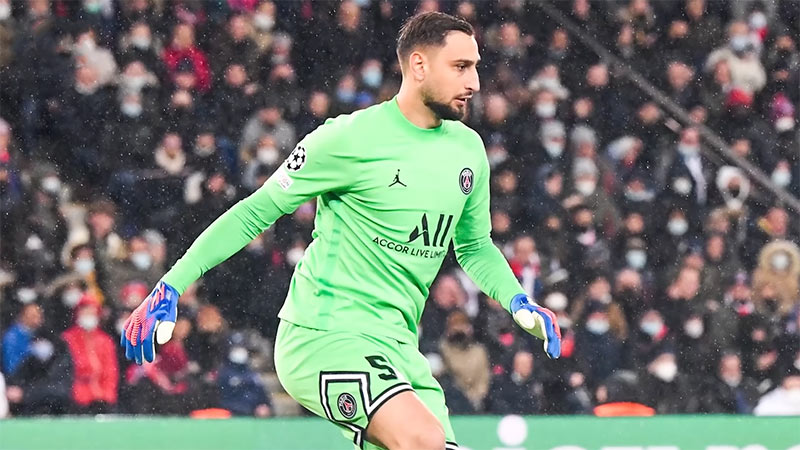
The history of Italian football is inextricably linked with the prestige of its goalkeepers. For decades, the “Azzurri” goal was guarded by titans of the game—men whose careers were defined by longevity, tactical discipline, and a slow, methodical rise through the ranks of the national youth system. However, the emergence of Gianluigi Donnarumma fundamentally disrupted this traditional trajectory.
By bypassing established developmental timelines, Donnarumma did more than just fill a vacancy; he rewrote the record books of one of the world’s most successful footballing nations.
To understand the magnitude of his achievements, one must examine the specific milestones he reached during a pivotal six-month window in 2016. These records are not merely trivia; they represent a seismic shift in how elite talent is identified and integrated at the highest level of international competition.
The Initial Breakthrough: Reimagining the U21 Timeline
In the structured world of European football, the Under-21 (U21) level serves as the final proving ground. It is the stage where “prospects” become “professionals.”
For most Italian goalkeepers, reaching this level before the age of 20 is considered an exceptional feat. Donnarumma, however, reached it while most of his peers were still focused on youth-level academy tournaments.
In March 2016, Donnarumma established a new benchmark for Italian youth development. He broke the record as the youngest Italian player to ever feature for the U21 national team. At the time of this debut, he was just 17 years and 28 days old.
This milestone was particularly significant because of the position he plays. While outfield players might occasionally rely on raw speed or physical energy to compensate for a lack of experience, goalkeeping is a discipline rooted in psychological stability, positional awareness, and communication—traits that typically take years to cultivate.
By stepping into the U21 goal at 17, Donnarumma signaled to the world that his maturity was far beyond his chronological age.
A Historic Senior Debut: The Youngest Guardian
While the U21 record was an impressive indicator of potential, his transition to the senior squad moved with unprecedented velocity.
Typically, a player might spend several seasons proving their consistency at the U21 level before receiving a senior call-up. For Donnarumma, that interval was compressed into a mere half-year.
Only six months after his record-setting U21 appearance, he was summoned to the senior Italian national team. During this window, he achieved a feat that many experts believed would remain untouched for generations.
Donnarumma became the youngest goalkeeper ever to appear for the Italian senior team. He made his debut at the age of 17 years and 189 days.
This record is profound when placed in the context of Italian footballing history. Italy has produced some of the greatest goalkeeping legends in the history of the sport, including Dino Zoff and Gianluigi Buffon.
For a teenager to shatter the age records of such icons suggests a level of natural ability that transcends standard scouting reports. It moved him from the category of “promising talent” into the realm of a generational “prodigy.”
The Psychological and Technical Demands of Early Greatness
The records Donnarumma broke are a testament to more than just physical talent. To perform at 17 years old in front of a demanding national audience requires a specific psychological makeup.
The Italian “Azzurri” jersey carries immense weight; the expectations of the fans and the media are relentless.
Technically, Donnarumma’s rise was supported by his immense physical presence and refined shot-stopping abilities, which allowed him to compete against seasoned professional strikers while still a minor.
His ability to command a penalty area populated by veteran defenders—many of whom were nearly twice his age—demonstrated a level of authority that is rarely seen in teenage athletes.
The compression of his developmental stages—from U21 record-breaker to senior record-breaker in just 180 days—highlights a unique convergence of opportunity and readiness. He was not merely a beneficiary of a changing of the guard; he was the catalyst for it.
Expert Insight: Why These Records Matter Globally
From a strategic perspective, Donnarumma’s early records changed the market valuation and scouting philosophy for goalkeepers worldwide.
For years, the consensus was that goalkeepers peak in their late 20s or early 30s. Donnarumma proved that with the right physical tools and mental fortitude, a teenager could provide world-class stability.
His records also served as a morale booster for Italian football during a period of transition. Seeing a 17-year-old take the field for the four-time World Cup winners provided a sense of continuity and hope for the future.
He became the bridge between the legendary era of his predecessors and the modern, high-intensity requirements of today’s game.
Frequently Asked Questions
How old was Gianluigi Donnarumma when he made his Italian U21 debut?
Donnarumma was 17 years and 28 days old when he set the record for the youngest Italian player to ever appear at the U21 level in March 2016.
What is the specific record Donnarumma holds for the senior Italian team?
He holds the record for the youngest goalkeeper ever to appear for the senior Italian national team, making his debut at 17 years and 189 days old.
How long did it take Donnarumma to move from the U21s to the senior squad?
The transition was remarkably fast, taking only six months from his U21 debut in March 2016 to his senior debut later that year.
Conclusion: A Legacy Built on Precocity
Gianluigi Donnarumma’s entry into international football was nothing short of a statistical anomaly. By setting records at both the U21 and senior levels before his 18th birthday, he established a standard of precocity that defines his career to this day.
These milestones—17 years and 28 days for the U21s and 17 years and 189 days for the senior squad—are etched into the annals of Italian sports history.
As he continues to evolve on the world stage, these early records remain the foundation of his identity: the young prodigy who didn’t just wait for his time but claimed it with historic authority.