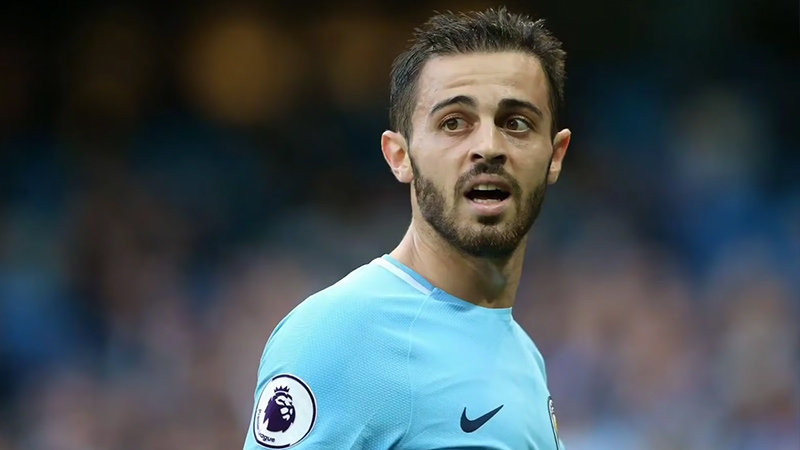
In the fast-paced world of Premier League football, where transfer fees often skyrocket into the hundreds of millions, finding “value for money” is a rare art form.
However, if you ask any Manchester City supporter about the summer of 2017, one name stands out as the ultimate bargain: Bernardo Silva.
The question of “How much did Man City buy Silva for?” is one that frequently surfaces during transfer windows as a benchmark for successful recruitment.
Below, we dive deep into the financial details, the strategic timing of the deal, and the monumental impact this Portuguese playmaker has had on the blue side of Manchester.
The Final Figure: Breaking Down the Transfer Fee
When Manchester City secured the services of Bernardo Silva from AS Monaco, the football world was just beginning to see the massive inflation of player valuations. Despite this, City managed to act with clinical efficiency.
Manchester City signed Bernardo Silva for an initial fee of £43 million (which was approximately €50 million or $48 million at the time).
While many high-profile signings are often accompanied by months of speculation and “transfer sagas,” City’s pursuit of Silva was remarkably swift.
The deal was officially signed on May 26, 2017, although he did not officially join the squad until July 1, 2017.
The Role of Performance Add-ons
While the widely reported figure was £43 million, it is common practice in modern football for contracts to include performance-related incentives.
There were potential add-ons included in the agreement that could have increased the total valuation of the deal over time.
Given that Silva went on to become a cornerstone of a team that won nearly every trophy available, many of these performance benchmarks were likely met.
Strategic Timing: The May 2017 Masterstroke
One of the most impressive aspects of the Bernardo Silva transfer was the timing. By finalizing the deal in May, City’s hierarchy and Pep Guardiola ensured they beat the post-season rush.
By securing Silva’s signature before the summer window even fully opened, City avoided potential bidding wars with other European giants who were also monitoring Monaco’s “golden generation.”
This proactive approach allowed the player to prepare for a five-year contract and integrate into the Guardiola system from the very start of the 2017 pre-season.
Why Was Silva Worth the Investment?
To understand why £43 million is now seen as a “steal,” one must look at the context of the club he was leaving.
Bernardo Silva was a vital component of the AS Monaco side that stunned the world by winning Ligue 1 and reaching the UEFA Champions League semi-finals in 2017.
City had seen Silva’s quality first-hand during their Champions League clashes with Monaco. His ability to maintain possession under pressure, his tireless work rate, and his tactical flexibility made him the “dream player” for a manager like Pep Guardiola.
The Return on Investment: Trophies and Legacy
The financial cost of a player is ultimately judged by what they deliver on the pitch. In the case of Bernardo Silva, his tenure at Manchester City has been nothing short of legendary. He evolved into one of Guardiola’s most trusted and key players.
Since he arrived in 2017, Silva has been an integral part of a squad that dominated English football. His trophy cabinet includes:
- Multiple Premier League titles.
- The prestigious UEFA Champions League.
- Numerous domestic cups (League Cup and FA Cup).
His longevity is also a testament to the value of the deal. While many players move on after three or four seasons, Silva’s initial five-year commitment laid the foundation for a long-term stay that has seen him become a fan favorite and a tactical “engine” for the team.
Comparing the Fee to the Modern Market
In today’s market, where mid-level midfielders often command fees upwards of £60 million to £80 million, the £43 million spent on Silva appears increasingly shrewd.
When you compare Silva’s fee to subsequent transfers in the Premier League, his “price-per-trophy” ratio is arguably one of the best in the history of the competition.
He didn’t just fill a gap in the squad; he redefined the role of a modern, versatile midfielder who can play as a winger, a “number 10,” or even a deep-lying playmaker.
Conclusion: A Transfer That Defined an Era
The story of Bernardo Silva’s move to Manchester City is a perfect example of how scouting, timing, and financial decisiveness can come together to create a legacy.
For an initial fee of £43 million, Manchester City didn’t just buy a player; they bought a decade of excellence.
As City continues to compete at the highest level of world football, the acquisition of the Portuguese maestro from Monaco remains the gold standard for how the club conducts its business.