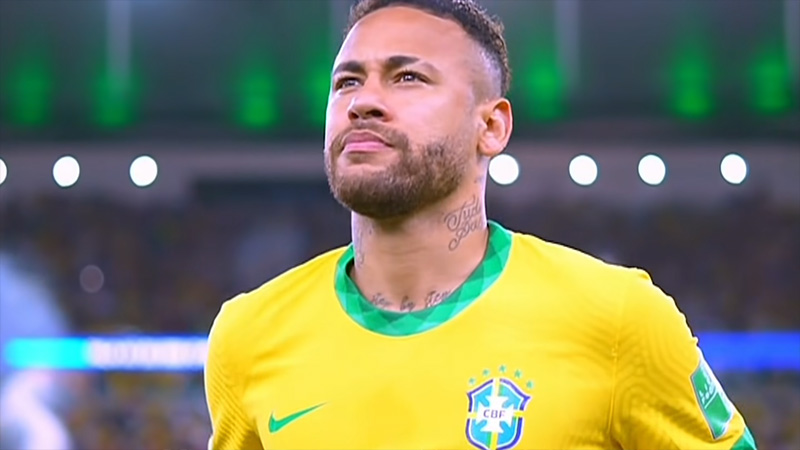
In the landscape of modern sports, few figures command as much attention, both as an athlete and a global brand, as Neymar da Silva Santos Júnior.
Known globally as Neymar Jr., he represents more than just a footballer; he is the personification of “Ginga”—the traditional Brazilian spirit of movement, flair, and rhythm—brought into the digital age.
From his early days as a teenage sensation in Santos to his record-breaking transfers in Europe, Neymar has navigated the complexities of elite sports with a unique blend of technical virtuosity and market-defining influence.
This analysis explores the multifaceted career of Neymar Jr., examining his tactical evolution, his historical dominance within the Brazilian National Team, and the economic ripples caused by his unprecedented transfer valuations.
By synthesizing his career milestones, we can understand how he became the architect of a new era in footballing glory.
I. The Genesis of a Phenomenon: The Santos FC Wonderkid
The journey of Neymar Jr. began with an explosive start at Santos FC, a club historically synonymous with Pelé. Neymar’s debut at the age of 17 marked the beginning of a transformation for the Brazilian club.
His presence on the pitch was immediately recognizable due to his electrifying and skillful style of play, known as “Ginga”. This style was not merely for show; it was a highly effective tool that led Santos to significant domestic and continental success.
During his tenure at Santos, Neymar scored an astonishing 136 goals. His ability to decide matches at a young age led the club to multiple major titles, most notably the Copa Libertadores in 2011.
His individual brilliance during this period was recognized twice with the South American Footballer of the Year award, cementing his status as the premier talent in South America before he even moved to Europe.
The defining moment of his early career—and perhaps the catalyst for his global fame—was his performance against Flamengo in 2011. At just 19 years old, Neymar scored an incredible solo goal that bypassed multiple defenders with a combination of speed and intricate ball control.
This feat earned him the 2011 FIFA Puskás Award for the best goal of the year, signaling to the international community that a new global superstar had arrived.
II. Tactical Synergy and the Barcelona Treble
Neymar’s transition to European football in 2013, when he joined FC Barcelona, represented a strategic evolution in his career. While his time at Santos was characterized by individual brilliance, his era at Barcelona was defined by collaborative dominance.
He became a core component of the “MSN” trio, alongside Lionel Messi and Luis Suárez, which is widely considered one of the most iconic attacking lineups in football history.
The 2014-2015 season serves as the pinnacle of this partnership. Under the tactical guidance of the coaching staff, Neymar and his teammates achieved the elusive “Treble,” winning La Liga, the Copa del Rey, and the UEFA Champions League in a single campaign.
Neymar’s role was critical; he provided the explosive width and finishing ability that complemented Messi’s playmaking and Suárez’s clinical positioning.
This period solidified his reputation not just as a skillful dribbler, but as a winner at the highest possible level of club competition.
III. The Poster Boy of the Seleção: Surpassing Legends
While club success brought him trophies, Neymar’s performance for the Brazilian National Team (the Seleção) brought him a different kind of immortality. Since his youth, Neymar has been the “poster boy” for Brazilian football, carrying the weight of a nation’s expectations.
One of his most significant international achievements came in 2013, when he led Brazil to victory in the FIFA Confederations Cup. However, his legacy with the national team reached a new height in 2016.
Captaining the side during the Rio Olympics, Neymar led Brazil to their first-ever Olympic gold medal in football. This victory was a defining moment, as it fulfilled a long-standing void in Brazil’s trophy cabinet and did so on home soil under immense pressure.
Historically, Neymar’s most impressive feat is his goal-scoring record. In 2023, he officially surpassed Pelé to become Brazil’s all-time top goalscorer.
To exceed the record of a figure as legendary as Pelé is a testament to Neymar’s consistency and longevity at the international level, firmly establishing him as the heartbeat of modern Brazilian football.
IV. The €222 Million Shift: Redefining Football Economics
Neymar’s career is not only defined by goals and trophies but also by his impact on the business of sports. In 2017, he made a move that fundamentally altered the global transfer market.
His transfer from Barcelona to Paris Saint-Germain (PSG) for a fee of €222 million remains the most expensive football transfer in history.
This move was more than a change of clubs; it was a statement of financial and strategic intent by PSG and a reflection of Neymar’s immense market value.
The sheer scale of the fee disrupted the economic equilibrium of European football, leading to a new era of hyper-inflation in player valuations.
For Neymar, the move to Paris was an opportunity to lead a project as the primary protagonist, further enhancing his brand as a global icon whose influence transcends the pitch.
V. The Legacy of Ginga: Technical and Cultural Influence
To understand Neymar’s legacy, one must look beyond the statistics and examine the “how” of his play. His adherence to “Ginga” has made him a torchbearer for a style of football that emphasizes joy and creativity.
In an era increasingly dominated by rigid tactical systems and physical data, Neymar remains a player who relies on intuition and flair.
This style has made him a polarizing figure, yet it has undeniably influenced a generation of younger players who seek to emulate his ball mastery and confidence.
His ability to maintain this style while performing under the scrutiny of the world’s largest stages—from the Maracanã to the Camp Nou—demonstrates a psychological resilience that is often overlooked.
Strategic FAQ: Understanding the Neymar Era
1. Why is Neymar’s 2011 Puskás Award considered a turning point in his career?
The Puskás Award was the moment Neymar transitioned from a “regional prospect” to a “global superstar.” Winning the award for best goal of the year at age 19 proved that his technical skills were elite even when compared to the best players in Europe.
2. How did the “MSN” trio change the way football is played?
The “MSN” trio (Messi, Suárez, Neymar) demonstrated that three high-volume attackers could coexist and thrive through unselfish play and tactical chemistry. Their 2015 Treble success is the gold standard for attacking partnerships in the modern era.
3. What does surpassing Pelé’s scoring record mean for Neymar’s legacy?
Surpassing Pelé makes Neymar the statistically greatest goalscorer in the history of the world’s most successful national team. It cements his status as a historical equal to the legends of the game, regardless of World Cup outcomes.
4. Why was the €222 million PSG transfer so controversial?
The fee was so significantly higher than any previous record that it forced a re-evaluation of how players are valued. It highlighted the growing financial gap between state-backed clubs and traditional powers, sparking ongoing debates about Financial Fair Play.
Conclusion: The Blueprint for Modern Greatness
Neymar Jr. has spent over a decade at the intersection of sport, culture, and commerce. By combining the traditional Brazilian “Ginga” with the demands of modern European football, he has built a career that is as aesthetically pleasing as it is statistically dominant.
Whether leading Santos to continental glory, winning a treble with Barcelona, or becoming Brazil’s greatest ever scorer, Neymar has consistently met the highest standards of the sport.
As the architect of his own global glory, his legacy is secured not just in the trophies he has won, but in the way he has redefined what it means to be a global superstar in the 21st century.