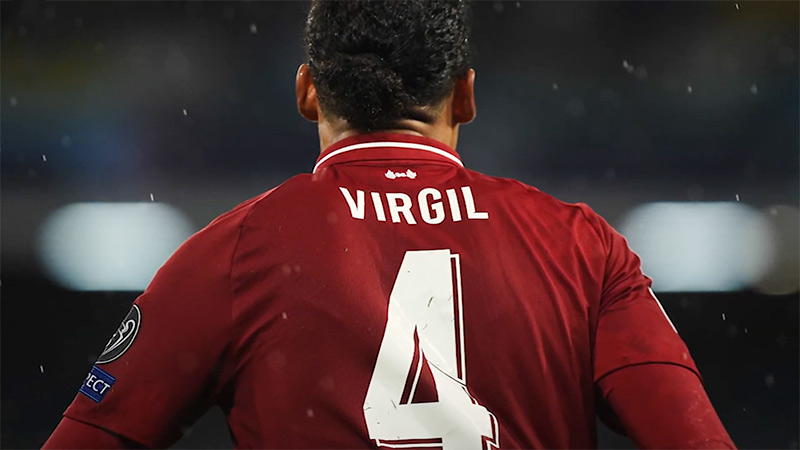
In the modern era of global football, few figures command as much respect and authority as Virgil van Dijk.
As a cornerstone of Liverpool’s success under Jurgen Klopp and a captain for the Netherlands, he is widely regarded as one of the greatest centre-backs to ever grace the Premier League.
His physical presence is imperious, his reading of the game is peerless, and his passing range is elite.
Yet, for all his fame, there is a striking visual discrepancy that millions of fans notice every matchday: the name on the back of his shirt does not match the name most commonly used by commentators and journalists.
While the world knows him as “Van Dijk,” the fabric of his jersey simply reads “Virgil.” This choice is far from a mere branding exercise or a stylistic whim.
It is a profound statement of personal identity, a tribute to a “heroic” mother, and the result of a deeply fractured family history that dates back to his childhood.
The Psychology of the Kit Name: More Than Just Fabric
For most professional athletes, the surname on their jersey is a badge of heritage—a way to carry their family legacy into the annals of sporting history.
However, for a growing number of elite players, the jersey has become a canvas for personal truth. Virgil’s decision to drop “Van Dijk” is a primary example of how personal trauma and professional identity intersect on the world stage.
To understand why a world-class athlete would choose to distance himself from his legal surname, we must look beyond the bright lights of Anfield and the silverware of the Champions League.
We must look at a twelve-year-old boy in the Netherlands facing a life-altering domestic shift.
A Fractured Foundation: The Rift with His Father
The core reason Virgil sports his first name on his kit for both club and country is rooted in a lengthy feud with his father, Ron.
According to insights provided by Virgil’s maternal uncle, Steven Fo Sieeuw, the future star’s father left the family while Virgil was still a child. This abandonment occurred during critical formative years, creating a rift that has never truly healed.
The Turning Point
The fallout began in earnest when Virgil was roughly 12 years old. While he initially spent a brief period living with his father, he ultimately made the choice to return to his mother.
It was at this juncture that he began to distance himself from the man who had left them.
By 2011, a young Virgil was already clear about his stance. In an interview with Dutch journalist Jan Mennega, he stated bluntly: “I broke all contact with my dad. At the beginning it wasn’t nice but I don’t need him any more”.
While Virgil has expressed a theoretical openness to speaking with his father later in life, he maintained at the time that he had “no feeling for him”.
This emotional detachment is a powerful driver behind his refusal to represent the “Van Dijk” name on the pitch. To Virgil, that name belongs to a man who was not there when it mattered most.
The “Real Hero”: A Mother’s Sacrifice
If the absence of his father defined what Virgil didn’t want to represent, the presence of his mother, Hellen, defined what he did. Steven Fo Sieeuw is emphatic that Virgil’s mother is the “real hero” of the story.
In the wake of her husband’s departure, Hellen was left to raise three children alone while maintaining a full-time job.
Her daily routine was one of relentless sacrifice: working all day, coming home to cook, and dedicating every spare second to her children’s well-being.
A Family United in Change
This sentiment isn’t unique to Virgil. His siblings, brother Jordan and sister Jennifer, have taken similar steps to distance themselves from their father’s legacy.
Both have opted to drop the “Van Dijk” surname in favor of their mother’s maiden name, Fo Sieeuw.
While Virgil continues to use Van Dijk professionally for registration purposes, his choice of “Virgil” on his kit serves as a public acknowledgment that his success was built on his mother’s strength, not his father’s name.
A Growing Professional Precedent: Identity over Heritage
Virgil is not an isolated case in the world of elite football. His choice reflects a broader trend where players utilize their kit names to reclaim their narratives or celebrate their own independent journeys.
Dele Alli: A Lack of Connection
In 2016, former Tottenham and current Everton midfielder Dele Alli made a similar move, transitioning to “Dele” on his jersey. His reasoning echoed Virgil’s: a lack of connection to the Alli surname.
Dele noted that the decision was made after significant “thought and discussion” with his inner circle, seeking a name that truly represented who he was.
Memphis Depay: The Father Who Left
Virgil’s international teammate, Memphis Depay, also famously uses only his first name. Memphis has been vocal about his father leaving the family when he was just four years old, stating that he does not wish to carry a name associated with someone who abandoned him.
Jobe Bellingham: Carving a New Legacy
The trend also extends to players seeking to avoid being defined by famous relatives. Jobe Bellingham, brother of Real Madrid superstar Jude Bellingham, chose to wear “Jobe” on his shirt at Sunderland.
According to his manager at the time, Tony Mowbray, this was a conscious effort to carve out his own legacy rather than living in the shadow of his brother’s immense fame.
The Case of Andros Townsend
Conversely, kit names can be used to strengthen family bonds. Luton Town’s Andros Townsend added “Sr.” to his jersey because his son shares his name.
This forward-looking gesture was designed to create a distinction should his son eventually pursue his own career in the sport.
Strategic Insight: The “Virgil” Brand and Search Intent
“Virgil” has become an iconic singular entity. Much like “Pele” or “Ronaldinho,” the use of a single name simplifies the brand, making it more memorable and distinct.
For fans and marketers, Virgil’s decision has inadvertently created a powerful, unique identifier that stands out in a sea of traditional surnames.
Why This Topic Dominates Search Intent:
- High Curiosity: Fans noticing the “Virgil” kit often search for the “why” behind the departure from tradition.
- Emotional Connection: The narrative of the underdog, the single mother, and the self-made man resonates deeply with global audiences.
- Humanizing the Athlete: It shifts the focus from Virgil as a “defensive machine” to Virgil as a son and a brother, increasing user engagement and brand loyalty.
Frequently Asked Questions (FAQ)
Q: Does Virgil use his surname for the Netherlands national team?
A: No. Virgil maintains the same naming convention for both club (Liverpool) and country (Netherlands), sporting “Virgil” on the back of his international kit.
Q: Has his father ever commented on the situation?
A: His uncle notes that Ron Van Dijk is a “nice guy” but failed to be the father the children needed, especially after remarrying.
Q: Is “Van Dijk” still his legal name?
A: Yes. Despite the kit name, he is registered as Virgil van Dijk for all official competition rosters and legal documentation.
Conclusion: A Legacy Built on Character
Ultimately, the name on the back of the shirt is a symbol. For Virgil, “Van Dijk” represented a past he chose to leave behind—a reminder of an absent father and a fractured home.
By choosing “Virgil,” he honors the man he has become through his own hard work and his mother’s unwavering support.
As he continues to lead Liverpool and the Oranje, his legacy will not be defined by a surname, but by the imperious performances and the quiet strength of a man who knew exactly who he wanted to be.
Whether he is lifting a Premier League trophy or commanding a backline in the World Cup, the name “Virgil” will be remembered as a hallmark of defensive excellence for generations to come.