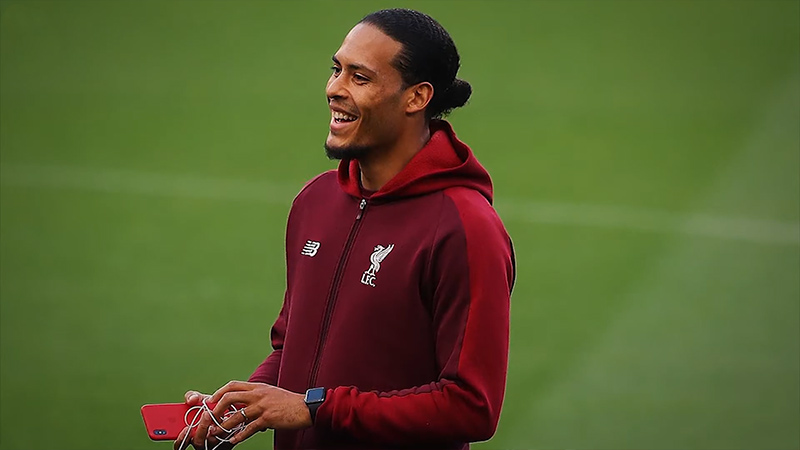
In the pantheon of modern footballing legends, few names command as much immediate respect as Virgil van Dijk.
The Liverpool powerhouse and captain of the Netherlands national team is often described as the “complete defender”—a player who combines physical dominance with an almost supernatural reading of the game.
However, beyond the accolades and the statistics, there is a recurring question that has fascinated fans across the globe, from the streets of Liverpool to the hubs of Southeast Asia: Is Virgil van Dijk half Chinese?
The answer is a fascinating study of global history, migration, and the cultural melting pot that defines the modern era. While many fans assume he might be “half-Chinese,” the reality of his lineage is more complex and deeply rooted in a history that spans continents.
Setting the Record Straight: Is He Half Chinese?
To address the primary search intent directly: Virgil van Dijk is not half-Chinese.
While his features and his mother’s surname often lead to this assumption, his heritage is more accurately described as a mixed racial background encompassing Afro-Surinamese, Chinese, and Dutch roots.
In genealogical terms, Virgil is frequently identified as being part-Chinese rather than half-Chinese. This distinction is important because it honors the specific branches of his family tree that contributed to his identity.
His Chinese roots do not come directly from one of his parents being a Chinese national, but rather through a rich maternal lineage that traces back several generations to the Guangdong province of China.
The Paternal Foundation: Ron van Dijk
Virgil was born in Breda, Netherlands. His father, Ron van Dijk, is Dutch. This is where the world-renowned defender gets his legal surname.
However, as many astute observers have noticed, Virgil famously chooses to wear his first name, “Virgil,” on the back of his club and international jerseys.
This choice is often discussed in the media as a personal decision reflecting his family history and his relationship with his paternal side.
The Maternal Line: Hellen Chin Fo Sieeuw
Virgil’s Chinese ancestry is his mother, Hellen Chin Fo Sieeuw. Hellen herself is of mixed Chinese-Surinamese heritage. It is through her that Virgil inherits the cultural and genetic markers that have sparked so much interest among Asian football fans.
The presence of the name “Chin Fo Sieeuw” is the most visible indicator of this heritage. In many Surinamese-Chinese families, the original Chinese name of the patriarch was adopted as a permanent family surname following migration.
This specific nomenclature serves as a bridge to a past that began thousands of miles away from the Dutch football pitches where Virgil first made his mark.
The Guangdong Connection: Who was Chin Fo Sieeuw?
The most pivotal figure in understanding Virgil van Dijk’s Chinese roots is his maternal great-grandfather, Chin Fo Sieeuw. His life story represents a classic tale of the 20th-century diaspora.
Around 1920, Chin Fo Sieeuw emigrated from Guangdong, China, to Suriname. At the time, Guangdong was the Chinese diaspora seeking new opportunities in the Americas and the Caribbean.
By settling in Suriname—a former Dutch colony—Chin Fo Sieeuw became part of a growing community of Chinese immigrants who integrated into the local Surinamese culture, often marrying into the local population.
This migration is the reason Virgil is described as having Afro-Surinamese and Chinese roots. The blending of these cultures in Suriname created a unique ethnic identity that Hellen Fo Sieeuw, and subsequently Virgil, carries forward.
Understanding the “Part-Chinese” Identity
In the world of professional sports, players are often symbols of their nation. However, Virgil van Dijk represents something more: a multi-ethnic icon.
Because his Chinese heritage comes via his maternal great-grandfather, he is technically about one-eighth to one-quarter Chinese, depending on the full composition of his mother’s heritage (who is described as mixed Chinese-Surinamese).
This is why the term “part-Chinese” is favored over “half-Chinese”. It accurately reflects that his Asian roots are one significant piece of a larger cultural mosaic that includes his Dutch nationality and his Afro-Surinamese descent.
A Breakdown of Virgil van Dijk’s Heritage
| Relative | Heritage | Origin |
|---|---|---|
| Father (Ron) | Dutch | Netherlands |
| Mother (Hellen) | Mixed Chinese-Surinamese | Suriname |
| Great-Grandfather (Chin) | Chinese | Guangdong, China |
| Virgil van Dijk | Dutch, Afro-Surinamese, and Chinese | Breda, Netherlands, |
Why This Matters to Global Fans
The interest in Virgil’s background is not merely about trivia; it is about representation. For the millions of football fans in China and the broader Asian diaspora, seeing a player of Van Dijk’s caliber acknowledge his roots is a point of immense pride.
The story of a man from Guangdong traveling to South America in 1920, only for his great-grandson to become the captain of the Netherlands and a legend at Anfield, is a testament to the unpredictable and beautiful nature of human history.
Conclusion: A Global Legacy
Virgil van Dijk’s story is a reminder that identity is rarely a simple, single-lane road. He is a Dutch citizen by birth, a Surinamese by cultural heritage, and a descendant of the Guangdong province by blood,.
While he may not be “half-Chinese” in the way some headlines suggest, the Chinese ancestry flowing through his maternal line is a documented and essential part of his family history.
As he continues to dominate the pitch, he does so as a modern representative of a globalized world—a player whose roots connect China, Suriname, and the Netherlands in a single, remarkable story of excellence.