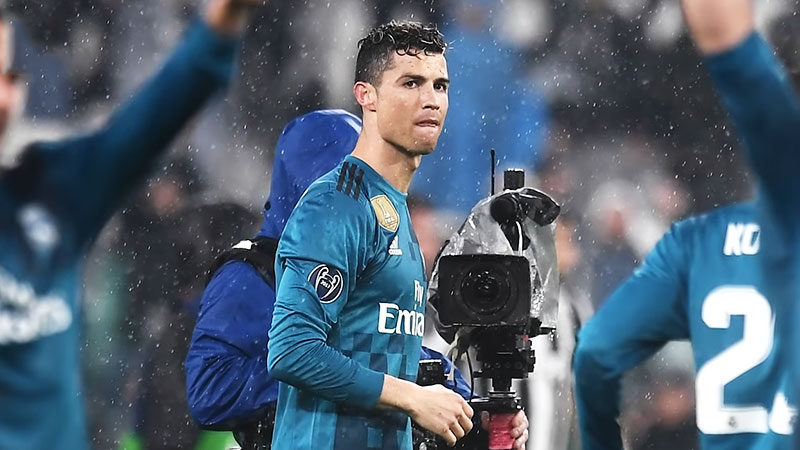
The official departure of Cristiano Ronaldo from Real Madrid on July 10, 2018, signaled the conclusion of perhaps the most dominant individual era in the history of modern football.
For nine years, the Portuguese forward served as the primary catalyst for the club’s global resurgence, transforming the Santiago Bernabéu into a theatre of record-breaking achievements.
His move to Juventus was not merely a tactical change but a structural shift that forced the sporting world to re-evaluate the longevity of elite athletes and the evolving business models of major European institutions during a period of intense competition.
The Precise Timing of the Departure
The formal announcement that Cristiano Ronaldo would be leaving Spain arrived on July 10, 2018.
This date is etched into the history of the sport as it confirmed the exit of a player who had spent nearly a decade redefining the scoring standards of the Spanish top flight.
The transition from Real Madrid to the Italian giants, Juventus, was the culmination of months of internal deliberation and a growing sense that a chapter was naturally closing.
The Immediate Aftermath of Kiev
While the official move occurred in July, the foundations were laid much earlier in the year. Following the 2018 Champions League victory, speculation regarding his future reached a fever pitch.
The timing was calculated, occurring during the peak of his professional value after securing a third consecutive European trophy.
This strategic exit allowed the player to leave while the club was at its zenith, ensuring his legacy was tied to triumph rather than decline.
The Logistics of the Transition
The process of moving a global icon involves complex legal and commercial negotiations that extend beyond the simple signing of a contract.
Between the final whistle in Kiev in May and the official statement in July, representatives from both clubs and the player’s management worked to finalize terms that respected his nine-year tenure.
By the time the world received the news on July 10, the infrastructure for his new life in Turin was already being established, marking a seamless transition between two of the world’s most prestigious sporting organizations.
The Quantitative Magnitude of the Madrid Era
To understand the weight of the question “When did Ronaldo leave Real Madrid?” one must first quantify what exactly the club was losing. Over 438 matches, Ronaldo maintained a scoring rate that defied historical trends, totaling 451 goals.
This production level established him as the all-time leading goalscorer for the club, a record that remains a formidable challenge for any future signing to approach.
His impact is best summarized by the following collection of major achievements during his tenure from 2009 to 2018:
- Total Goals: 451 in 438 official appearances.
- Champions League Titles: 4 trophies, including three consecutively between 2016 and 2018.
- Domestic Success: 2 La Liga titles and 2 Copa del Rey trophies.
- Major Trophy Total: 15 distinct honors earned over nine years.
Beyond these milestones, his scoring efficiency of 1.03 goals per match represents a level of productivity that distinguishes him from even the most storied legends in the club’s history, such as Raúl and Alfredo Di Stéfano.
This statistical dominance provided Real Madrid with a consistent competitive advantage that allowed them to dominate the European stage for nearly a decade.
Investigating the Relationship with Florentino Pérez
The departure was not motivated by a lack of success on the pitch but rather by a shift in the internal hierarchy of the club. Ronaldo later indicated that his relationship with Real Madrid President Florentino Pérez had changed fundamentally.
In a professional environment where personal validation and executive support are paramount, the feeling of being undervalued can serve as a powerful catalyst for change, even in the presence of historic team success.
The Shift in Sentiment
Ronaldo noted that the way he was perceived by the club’s leadership, specifically Pérez, began to evolve. In the early years of his tenure, the synergy between the player’s ambition and the president’s vision was the bedrock of the club’s strategy.
However, as the seasons progressed, the warmth and sense of being a priority began to dissipate, leading to a professional rift that ultimately became irreparable.
The Definition of Indispensability
A crucial turning point was Ronaldo’s realization that he was no longer considered “indispensable” by the president. In the context of Fortune 500-level talent management, an elite performer’s motivation is often tied to their status within the organization.
When the leadership signals that a player is no longer the central pillar of the future project, the player often seeks an environment where their contribution is viewed as essential.
For Ronaldo, this meant looking toward Italy for a new challenge where his presence would be the cornerstone of a new era.
Financial Metrics of the €100 Million Transfer
From a business perspective, the transfer was a landmark transaction. Juventus agreed to pay an initial fee of €100 million, which was approximately £88 million, to secure the services of the 33-year-old forward.
This figure represented a significant statement of intent from the Italian club and a calculated financial exit for Real Madrid, who were able to recoup their initial investment on a player who had already delivered his peak performance years.
Valuation of Aging Assets
The €100 million fee was particularly noteworthy given Ronaldo’s age at the time of the transfer. Most professional football clubs are hesitant to invest such substantial sums in players over the age of 30 due to the high risk of physical decline.
However, Ronaldo’s exceptional conditioning and consistent output made him a unique asset that transcended traditional valuation models.
For Real Madrid, selling a player for such a high amount after nine years of service was a masterpiece of asset management.
The Business Case for Juventus
Beyond the goals, the acquisition of Ronaldo was a move to enhance the Juventus brand on a global scale.
The transfer functioned as a major catalyst for commercial growth, precipitating a massive surge in social media engagement and substantially increasing the sponsorship valuations for the Turin-based organization.
The €100 million was not just a payment for a striker; it was an investment in a global media entity that brought unprecedented attention to the Italian league.
The Historical Context of the Kiev Final
The final official match for Ronaldo in the white shirt took place on May 26, 2018, in Kiev.
This match, the UEFA Champions League Final against Liverpool, served as the functional end of his playing time for the club, even though the transfer was not finalized until July.
The victory cemented his legacy as a winner, ensuring that his last act for the club was hoisting the most prestigious trophy in club football.
One Last Triumph
The 3–1 victory over Liverpool was a testament to the collective strength of the Real Madrid squad that Ronaldo had helped build.
While he did not score in the final, his presence was a constant tactical concern for the opposition, creating the space for teammates to capitalize on defensive errors.
Winning a fourth Champions League title with Madrid in his final match provided a perfect narrative conclusion to his nine-year story in the Spanish capital.
The Post-Match Revelation
Almost immediately after the trophy ceremony in Kiev, hints began to emerge that the era was ending. Ronaldo’s comments following the match suggested a level of uncertainty about his future that had not been present in previous seasons.
This period between the May final and the July announcement was filled with intense speculation, but the outcome was a direct result of the tensions that had been simmering throughout the 2017-2018 campaign.
Long-Term Strategic Impact on World Football
The departure of a player of Ronaldo’s caliber creates a vacuum that is difficult to fill. Real Madrid had to pivot their entire sporting strategy to account for the loss of 50 goals per season.
This forced a transition toward a more collective offensive approach and eventually led to the recruitment of new talent to lead the next generation.
The “Sunset” of the Ronaldo era was not just the end of a player’s tenure; it was the start of a multi-year restructuring process for the world’s most successful club.
The Vacuum in Madrid
Following his 2018 departure, the organization entered a transitional phase, adapting its tactical approach and leadership structure to fill the void left by its greatest goalscorer.
This period required a shift away from a system centered on a single prolific output, leading to a mix of results as the team worked to sustain its competitive standing both domestically and in European competition.
Brand Expansion in Italy
For Juventus and the Italian Serie A, the arrival of Ronaldo brought a level of international scrutiny and prestige that had been missing for some time.
The move re-centered the football world’s attention on Italy, proving that the league could still attract the world’s most elite talent.
This shift in power dynamics illustrated the fluid nature of the modern transfer market, where even the most established legends are subject to the changing tides of professional relationships and financial opportunity.
Frequently Asked Questions
What was the exact date Ronaldo left Real Madrid?
Cristiano Ronaldo officially left the club on July 10, 2018.
How much did Juventus pay for the transfer?
The initial transfer fee was €100 million, which converted to approximately £88 million at the time of the deal.
What was the main reason cited for his departure?
Ronaldo felt that his relationship with President Florentino Pérez had changed and that he was no longer viewed as “indispensable” to the club.
What was Ronaldo’s final goal tally for Real Madrid?
He finished his tenure as the club’s all-time leading scorer with 451 goals in 438 matches.
Which match was his last for the club?
His final official appearance was the 2018 UEFA Champions League Final on May 26, 2018, resulting in a 3–1 win over Liverpool.
The Eternal Legacy of the Number 7
When analyzing when Ronaldo left Real Madrid, it is clear that the date July 10, 2018, marks more than a transaction; it marks the end of a golden age.
His nine years in Madrid were characterized by a level of excellence that transformed the club’s modern identity.
By the time he moved to Juventus, he had already secured his place as perhaps the greatest player to ever wear the white shirt, leaving behind a collection of 15 major trophies and a scoring record that defines the era.
As the club continues to evolve, the standards set during the Ronaldo years remain the benchmark for success at the Santiago Bernabéu.
For more insights into football history and legendary transfers, stay tuned to our upcoming deep dives into the strategic evolution of the world’s leading clubs.