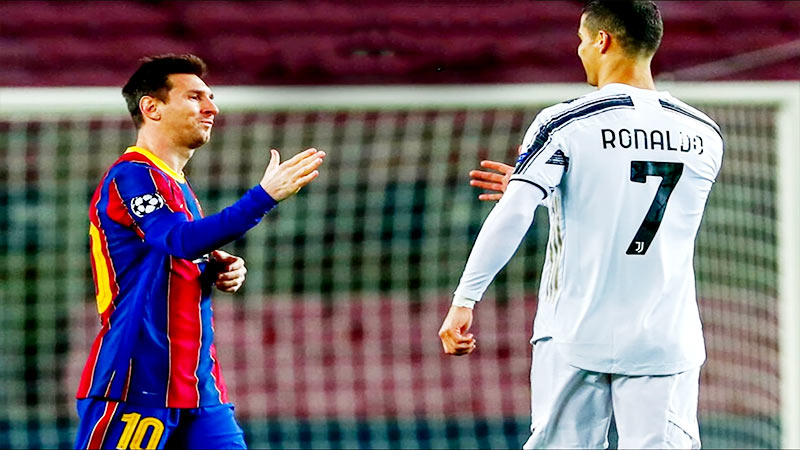
Type “who is better than Messi” into any search bar and you will find two camps shouting past each other.
One side says nobody, end of discussion. The other side points to Cristiano Ronaldo’s goal tally, Pelé’s three World Cups or the raw genius of Diego Maradona.
Both camps are partly right, and that is exactly why the debate refuses to die.
This guide takes a different approach. Instead of picking a side and defending it at all costs, we define what “better” actually means, put every serious challenger through the same tests, and show you where each one genuinely outperforms Lionel Messi and where he falls short.
By the end, you will have a clear, defensible answer you can bring to your next argument with friends.
The timing matters too. Messi turned 39 in June 2026, reached the World Cup final again in July, and is on the shortlist for tonight’s Ballon d’Or ceremony in London. His story is still being written, which makes this the perfect moment to take stock.
How Do You Measure “Better”? Six Fair Tests
Most arguments go wrong because people use different yardsticks. A fair comparison needs consistent criteria. Here are the six we use throughout this article:
- Peak level: How good was the player at his absolute best, over two or three seasons?
- Longevity: How long did he stay at or near the top?
- Trophies: Team honours for club and country.
- Individual recognition: Ballon d’Ors, Golden Balls, and similar awards.
- Big-game impact: Did he decide finals and knockout matches?
- Era and context: How hard was it to dominate in his time, and how much did he change the sport?
No player wins all six. The question is who wins the most, and by how much.
The Benchmark: Messi’s Case in 2026
Before asking who is better, we need to be clear about what “better” has to beat.
Individual Awards
Messi has won the Ballon d’Or eight times, a record no one else comes close to. He also won the World Cup Golden Ball in both 2014 and 2022.
Trophies
He has been part of 47 trophy-winning teams for club and country, including the 2022 World Cup and Inter Miami’s 2025 MLS Cup, making him the most decorated player in the history of the men’s game.
Goals
In March 2026, he scored his 900th career goal in a CONCACAF Champions Cup match against Nashville, reaching the milestone roughly 100 games faster than Cristiano Ronaldo did.
International Record
After years of near misses, he won the 2021 Copa América, the 2022 World Cup and the 2024 Copa América back to back to back.
The 2026 World Cup
At 39, he scored eight goals and added several assists as Argentina reached the final, finishing second only to Kylian Mbappé in the scoring charts.
Argentina lost 1-0 to Spain after extra time at MetLife Stadium on July 19, with Ferran Torres scoring in the 106th minute after Argentina had been reduced to ten men. Messi’s tearful reaction was one of the defining images of the tournament.
What makes Messi unusual is not any one of these numbers. It is that he is elite at everything at once: scoring, creating, dribbling, and controlling tempo. Most greats are specialists. Messi is the rare all-rounder at the very top of every category.
The Serious Contenders
1. Cristiano Ronaldo: The Strongest Statistical Challenger
If anyone can claim to be better than Messi on paper, it is Ronaldo.
Where Ronaldo beats Messi:
- Total goals. Ronaldo passed 900 official goals in September 2024 and has kept scoring, holding the record for the most goals in official men’s football.
- Champions League. Five titles (2008, 2014, 2016, 2017, 2018) to Messi’s four, plus the all-time Champions League scoring record.
- Proven in multiple leagues. He won league titles in England, Spain and Italy, answering any question about adaptability.
- Physical completeness. Ronaldo is the superior header of the ball and was the more explosive athlete at his peak.
- International trophies. Euro 2016 and two Nations League titles (2019 and 2025) with Portugal.
Where Messi still leads: Ballon d’Ors (eight to five), the World Cup, assists, chance creation and dribbling. Ronaldo was a phenomenal finisher; Messi was a finisher and the team’s chief creator at the same time.
Verdict: Ronaldo is better than Messi as a pure goalscorer over a career. Messi is the more complete footballer.
2. Pelé: The Three-Time World Champion
Pelé won the World Cup in 1958, 1962 and 1970, a feat no other player has matched. He burst onto the global stage at 17 and was the face of the sport for two decades.
The case for Pelé: Three World Cups, staggering scoring numbers (his official total is around 800, though some counts including friendlies exceed 1,000) and a cultural impact that made football a truly global game.
The counterpoint: Pelé spent his club prime in Brazil rather than against the strongest European competition, and he was injured early in the 1962 tournament. Comparing across that many decades of change in tactics, fitness and scouting is genuinely difficult.
Verdict: Pelé beats Messi on World Cup success. Whether that outweighs Messi’s longer run against tougher week-to-week opposition is the heart of the debate.
3. Diego Maradona: The Greatest Single Tournament Ever
Maradona’s 1986 World Cup in Mexico, where he scored five goals, created five more and almost single-handedly carried Argentina to the title, is still the benchmark for individual dominance. He then led unfancied Napoli to Serie A titles in 1987 and 1990.
The case for Maradona: He lifted ordinary teams to extraordinary heights in an era when defenders could kick creative players with little protection from referees.
The counterpoint: His elite peak was shorter, and off-field issues cut his career short of its potential.
Verdict: For one tournament or one season, Maradona may have reached a height no one has topped. Over a career, Messi’s consistency wins.
4. Johan Cruyff: The Player Who Changed the Game
Cruyff won three Ballon d’Ors (1971, 1973, 1974) and three straight European Cups with Ajax. More importantly, his ideas about space, movement and possession shaped Barcelona’s philosophy, the very system that later helped produce Messi.
Verdict: Cruyff is arguably more influential than Messi. Influence and greatness are related, but they are not the same thing.
5. Honourable Mentions: Zidane and Ronaldo Nazário
Zinedine Zidane delivered in the biggest moments: two goals in the 1998 World Cup final, a stunning volley in the 2002 Champions League final. Ronaldo Nazário may have been the most frightening striker ever at his peak, with two Ballon d’Ors and eight goals at the 2002 World Cup. Both had brilliant peaks but fewer years at that level than Messi.
The Next Generation: Could Anyone Surpass Messi?
The more forward-looking version of this question is: who will be better than Messi?
Kylian Mbappé is the most obvious candidate. He won the World Cup at 19 in 2018, scored a hat-trick in the 2022 final and finished as the top scorer at the 2026 World Cup. If he keeps this pace into his mid-30s, his scoring numbers could challenge anyone’s.
Lamine Yamal has a long runway after winning Euro 2024 as a teenager with Spain. The talent is obvious; the challenge is sustaining it for 15 or more years.
Rodri had a remarkable summer, helping Spain complete a European Championship and World Cup double and collecting the tournament’s Golden Ball. He shows that midfield control can win the biggest prizes.
Erling Haaland and Harry Kane are elite goalscorers, though neither has yet won a major international tournament.
The honest answer: today’s stars may match Messi’s peak, but matching his longevity and trophy count at the same time is a far steeper climb.
Category by Category: Who Beats Messi Where?
- Most career goals: Cristiano Ronaldo
- Most World Cup titles: Pelé (three)
- Greatest single World Cup: Diego Maradona (1986)
- Most Champions League titles among the pair: Cristiano Ronaldo (five)
- Biggest influence on football tactics: Johan Cruyff
- Best header and athlete at peak: Cristiano Ronaldo
- Most Ballon d’Ors: Lionel Messi (eight)
- Most total trophies: Lionel Messi (47)
- Best combination of scoring and creating: Lionel Messi
- Best dribbler of the modern era: Lionel Messi
Notice the pattern. Others win individual categories. Messi wins the broadest spread.
Why This Debate Never Ends
Four forces keep the argument alive:
- Era bias. Older fans saw Pelé and Maradona in their prime; younger fans grew up on Messi and Ronaldo highlights.
- Different definitions. Some value peak brilliance, others value totals, others value World Cups above all.
- National loyalty. Brazilians, Argentines and Portuguese fans understandably favour their own heroes.
- Incomplete data. Detailed statistics such as assists and chance creation barely existed before the 1990s, which makes older players harder to measure fairly.
Understanding these forces does not settle the question, but it helps you have a far better conversation about it.
The Verdict: Is Anyone Better Than Messi?
Using our six tests, the fairest answer is this:
No player is clearly better than Messi overall, but several are better in specific ways. Ronaldo is the greater goalscorer over a career. Pelé has the stronger World Cup record. Maradona produced the greatest single tournament. Cruyff had the greater influence on the sport’s ideas.
What no one else combines is Messi’s mix of peak level, longevity, individual honours, team trophies and all-round skill. That is why many players, coaches and analysts rank him first, while respected voices still make strong cases for Pelé, Maradona or Ronaldo.
In the end, “better” depends on what you value most. If you value goals above all, choose Ronaldo. If you value World Cups, choose Pelé. If you value completeness, the evidence points strongly to Messi.