In professional football, physical measurements are not merely roster listings; they represent the structural boundaries of what is athletically possible on the field.
At the absolute pinnacle of this physical spectrum stands Trent Williams, the offensive tackle for the San Francisco 49ers. Born on July 19, 1988, Williams has spent years refining a physical frame that defies conventional athletic limitations.
This analysis deconstructs the precise dimensions of his physical profile—focusing on his height of 6 feet 5 inches (1.96 meters) and his weight of 320 pounds (145 kilograms)—to explore how these physical traits function within the demanding environment of professional line play.
By examining the biomechanical and tactical implications of these metrics, we can understand why his physical composition represents the ideal blueprint for protecting the edge of an offensive line.
Profile and Core Metrics
To understand the athlete, we must first establish the baseline metrics provided by official team records. Below is a detailed breakdown of his primary physical and professional identifiers:
| Physical Metric / Professional Identifier | Official Measurement / Record Details |
|---|---|
| Full Name | Trent Williams |
| Height | 6 feet 5 inches (1.96 meters) |
| Weight | 320 pounds (145 kilograms) |
| Primary Position | Offensive Tackle |
| Current Professional Franchise | San Francisco 49ers |
| Collegiate Program | University of Oklahoma |
| Date of Birth | July 19, 1988 |
The Biomechanics of Height: Leverage, Reach, and Perimeter Control
Height in the offensive tackle position is a double-edged sword. At 6 feet 5 inches (1.96 m), Williams possesses a significant spatial advantage on the perimeter. However, managing this height requires exceptional physical mastery.
1. Lateral Range and Pass Set Width
A taller frame naturally translates to a wider wingspan. In pass protection, an offensive tackle must protect the “edge”—the outermost path to the quarterback.
With a height of 6’5″, the absolute reach of his arms allows him to initiate contact with defensive ends earlier in their rush path.
This early engagement disrupts the defender’s momentum and forces them to take wider, less efficient angles toward the pocket.
2. The Leverage Challenge
In blocking, the lower player almost always wins. A taller lineman has a naturally higher center of mass.
This means a 6’5″ athlete must consistently bend at the knees and hips, rather than the waist, to maintain a low pad level. If a tackle bends at the waist, they become top-heavy and susceptible to push-pull moves or bull rushes.
Williams’ ability to sink his hips and maintain a low base despite his 1.96 m height is what separates elite movement patterns from average ones.
3. Torque and Kinetic Chains
Power in football is generated from the ground up. A longer frame means longer anatomical levers (thighs, shins, torso). While longer levers can generate massive torque when properly aligned, they also require extraordinary core strength to keep stable.
Any weakness in the torso or core causes the transfer of force from the ground to the defender to break down.
Force Absorption and Inertial Anchoring
Mass is the ultimate equalizer in the trenches. Weighing in at 320 pounds (145 kg), Williams carries a massive amount of inertia.
- Inertia of Rest: Newton’s first law states that an object at rest stays at rest unless acted upon by an external force. For a pass-rusher trying to move a 320-pound obstacle, the force required to generate displacement is immense. When Williams plants his feet and establishes his anchor, his 145 kg mass provides a natural resistance to the bull rush.
- Inertia of Motion: In run blocking, that same mass is put into forward motion. When a 320-pound lineman moves forward in a zone scheme, the kinetic energy transferred to a defender upon contact is devastating. Even at moderate speeds, the momentum generated by 145 kg of body mass can easily displace defensive linemen and linebackers who typically weigh significantly less.
- Functional Weight Distribution: Crucially, this weight is not passive mass. In an elite professional athlete, the 320 pounds consists of highly developed skeletal muscle, particularly in the posterior chain (glutes, hamstrings, and lower back) and the shoulder girdle. This ensures that the weight acts as an active force generator rather than dead weight that slows down lateral movement.
Tactical Implications in the San Francisco Scheme
The offensive system implemented in San Francisco demands unique athletic capabilities from its linemen. Let’s explore how a player of Williams’ size operates within these tactical frameworks:
- Zone Blocking Agility: Modern outside-zone schemes require tackles to run laterally, reach-block defenders who are lined up outside of them, and climb to the second level to block linebackers. For a 320-pound tackle, this requires an elite level of cardiorespiratory fitness and muscular endurance.
- Pass Protection Depth: In pass-blocking sets, a tackle must drop backward at an angle to cut off the path of speed rushers. The ability to move 320 pounds backwards smoothly while maintaining the balance needed to react to inside counter-moves is a rare athletic trait.
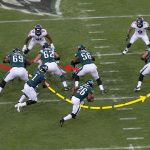
- Pulling and Space Blocking: Occasionally, tackles are asked to pull or lead-block in space. Navigating in open space at 6’5″ and 320 pounds requires exceptional spatial awareness and body control, ensuring that contact is made cleanly without committing penalties.
The Path from Collegiate Foundations to Professional Longevity
The physical profile we observe today in San Francisco was built upon the rigorous training systems of the University of Oklahoma. Collegiate athletic programs serve as the developmental laboratories for elite professional talent.
Technical Foundations
At Oklahoma, linemen are taught the fundamental footwork and hand placement strategies that allow them to maximize their natural physical gifts.
Learning how to transition from a collegiate stance to a professional blocking scheme is a vital part of an offensive tackle’s evolution.
Strength Training Paradigms
The strength programs at Oklahoma are designed to transform raw height and weight into functional athletic power.
This involves heavy compound lifts—such as squats, deadlifts, and cleans—that build the foundational bone density and muscular framework necessary to compete at 320 pounds in the professional ranks.
Physical Discipline Over Time
Born on July 19, 1988, Williams is a veteran athlete. Carrying 320 pounds on a 6’5″ frame for over a decade in the highly physical environment of the professional league requires meticulous attention to recovery, flexibility, and joint health.
The physical durability demonstrated by maintaining this playing weight of 145 kg over a long career is a testament to professional-grade physical maintenance.
The Tactical Matrix of Line Play: Pass Protection vs. Run Blocking
To further illustrate the functional application of these metrics, we can compare how this physical frame is utilized in the two primary disciplines of line play:
Pass Protection Mechanics
- Objective: Keep the defender away from the quarterback’s launching point.
- Biomechanics: Uses a vertical or kick-slide set, keeping the chest high but the hips low to maintain balance. The 6’5″ height is utilized for maximum lateral reach, while the 320-pound mass is anchored to absorb bull rushes.
- Key Force Direction: Absorptive and resistive force, pushing downward and backward into the turf to build an immovable wall.
Run Blocking Mechanics
- Objective: Displace the defender from their gap to create a running lane.
- Biomechanics: Uses explosive forward drive, staying low to get underneath the defender’s pads. The 320 pounds of mass is accelerated forward to create high momentum.
- Key Force Direction: Active, driving force directed forward and upward to lift and move the opponent.
Space and Pulling Mechanics
- Objective: Lead block on the perimeter or second level of the defense.
- Biomechanics: Requires running in open space, adjusting angles on the fly, and targeting smaller, faster defenders like linebackers or safeties. Requires elite dynamic balance to avoid overextending at 6’5″.
- Key Force Direction: Targeted, controlled collision force designed to wall off defenders rather than completely pancake them.
Sports Science, Conditioning, and Metabolic Demands
Sustaining a playing weight of 320 pounds (145 kg) at a height of 6 feet 5 inches (1.96 m) over a multi-decade career requires a highly sophisticated approach to sports science, recovery, and conditioning.
- Caloric Intake and Metabolism: To sustain 320 pounds of functional tissue, an elite athlete must consume thousands of high-quality calories daily. This intake must be precisely balanced between lean proteins for muscle repair, complex carbohydrates for glycogen replenishment, and healthy fats for hormone regulation and joint health.
- Cardiovascular Capacity: Carrying 145 kg of weight while performing short, explosive bursts of maximum effort over a three-hour game puts an extraordinary load on the cardiovascular system. Linemen must develop a high anaerobic threshold, allowing them to recover quickly between plays.
- Joint Preservation: The knees, ankles, and lower back bear the brunt of carrying 320 pounds dynamically. High-level strength programs focus on joint stability, mobility, and flexibility to ensure that the athlete can bend comfortably at 6’5″ without placing excessive shear force on the patellar tendons or lumbar spine.
Conclusion
Ultimately, the physical profile of Trent Williams represents a masterclass in athletic utility.
Standing 6 feet 5 inches and weighing 320 pounds, his measurements are perfectly optimized for the tactical demands of protecting the edge for the San Francisco 49ers.
By combining collegiate foundational strength from Oklahoma with elite professional longevity, his physical build remains the gold standard for the modern offensive tackle position.