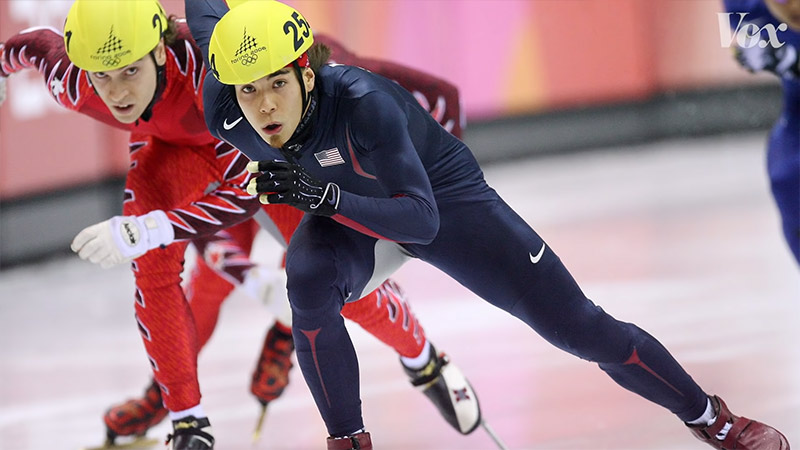
Short track speed skating is one of the most thrilling and fast-paced sports in the Winter Olympics. With tight turns, high speeds, and dramatic overtakes, it delivers edge-of-your-seat excitement for both athletes and fans.
If you’ve watched a competition, you may have noticed terms like heats, semifinals, A Final, and B Final. While the A Final often gets the spotlight, many viewers are left wondering: What exactly is the B Final in short track speed skating?
In this comprehensive guide, we’ll explore what the B Final is, how it works, why it matters, how athletes qualify for it, and its role in rankings, medals, and overall competition structure.
Understanding the Structure of Short Track Speed Skating
Before diving into the B Final, it’s important to understand how short track competitions are structured.
Short track speed skating events typically follow a multi-round elimination format:
- Heats (Preliminary Rounds)
- Quarterfinals
- Semifinals
- Finals (A Final and B Final)
Skaters compete in small groups—usually 4 to 6 athletes at a time—on a 111.12-meter oval ice track. The top finishers from each race advance to the next round.
By the time skaters reach the semifinals, only the strongest competitors remain. From there, athletes are split into two final races:
- A Final – Determines medal winners (gold, silver, bronze)
- B Final – Determines the next set of placements (typically 5th to 8th)
What Is the B Final?
The B Final in short track speed skating is a classification race for athletes who did not qualify for the A Final after the semifinals.
In simple terms:
The B Final determines the final rankings immediately below the medal positions.
If the A Final decides 1st through 4th place, the B Final usually determines 5th through 8th place (depending on the number of skaters).
It is sometimes referred to as the “consolation final.”
How Do Skaters End Up in the B Final?
To understand how athletes qualify for the B Final, let’s look at the semifinal stage.
Semifinal Structure
In most major competitions (including the Olympics and World Championships):
- There are usually two semifinal races
- Each semifinal includes 4 or 5 skaters
- The top two finishers from each semifinal advance to the A Final
- The remaining skaters are placed into the B Final
For example:
Semifinal 1 Results
- Skater A → A Final
- Skater B → A Final
- Skater C → B Final
- Skater D → B Final
Semifinal 2 Results
- Skater E → A Final
- Skater F → A Final
- Skater G → B Final
- Skater H → B Final
In this case:
- A, B, E, and F compete in the A Final
- C, D, G, and H compete in the B Final
Does the B Final Award Medals?
No.
The B Final does not award medals under normal circumstances. Medals are only awarded based on the results of the A Final.
However, the B Final still determines official placements, which can be very important for:
- World rankings
- Points in World Cup events
- National selection criteria
- Personal best career finishes
- Team scoring in certain competitions
Why the B Final Is Important?
Although it doesn’t determine medals, the B Final serves several important purposes.
1. Official Rankings Matter
In international competitions, final placement affects:
- International Skating Union (ISU) ranking points
- Olympic qualification points
- Seeding in future competitions
Finishing 5th is significantly better than finishing 8th in terms of ranking and prestige.
2. Points System in World Cup Events
In ISU World Cup competitions, athletes earn points based on their final placement.
For example:
- 1st place earns the most points
- 5th place earns more points than 8th place
Since B Final competitors are racing for 5th–8th positions, the result directly impacts the points they receive.
Tie-Breaking for Overall Titles
In season-long competitions, overall standings may be determined by accumulated points. A strong B Final performance can influence:
- Overall World Cup titles
- Qualification for major championships
- National team rankings
Redemption Opportunity
Short track is unpredictable. A skater may miss the A Final due to:
- A minor mistake
- Tactical misjudgment
- Being blocked
- Race interference
- Photo finish losses
The B Final gives athletes a chance to finish strong and end the competition positively.
How Many Skaters Compete in the B Final?
The number depends on the event and competition format.
Typically:
- If the A Final has 4 skaters, the B Final also has 4.
- If the A Final has 5 skaters (due to penalties or advancements), the B Final may vary.
In some situations, penalties or referee decisions can alter the number of skaters in either final.
Special Situations: When the B Final Can Affect Medal Outcomes
In rare cases, the B Final can indirectly influence medal standings.
Advancement Due to Penalty
If a skater in the A Final is disqualified for:
- Interference
- Impeding another skater
- Causing a crash
The referee may:
- Advance a skater from the B Final to a higher placement
- Or adjust final rankings
This doesn’t happen often, but short track is known for controversial decisions.
Strategy Differences Between A Final and B Final
The racing style in the B Final can differ slightly from the A Final.
A Final:
- Highly tactical
- Extremely cautious positioning
- Aggressive overtakes
- High-pressure environment
- Medal-focused
B Final:
- Still competitive, but slightly less pressure
- Athletes may take more risks
- Some skaters experiment tactically
- Strong push for ranking points
That said, B Finals can be just as intense as A Finals because athletes are still competing at the highest international level.
Psychological Impact of Racing in the B Final
For elite athletes, missing the A Final can be emotionally challenging.
Short track is a sport of tiny margins—hundredths of a second can determine qualification.
Competing in the B Final requires:
- Mental resilience
- Focus reset
- Motivation recovery
- Professional discipline
Many top skaters treat the B Final as an opportunity to:
- Regain confidence
- Improve their ranking
- End the event with a strong performance
Example: Olympic Short Track Event
Let’s take a 1000m Olympic event as an example.
- 32 skaters begin in heats.
- Top skaters advance through quarterfinals.
- 8 skaters reach semifinals.
- Top 4 advance to A Final.
- Remaining 4 compete in B Final.
Final ranking might look like this:
- 1st – Gold (A Final winner)
- 2nd – Silver (A Final)
- 3rd – Bronze (A Final)
- 4th – A Final
- 5th – B Final winner
- 6th – B Final second place
- 7th – B Final third place
- 8th – B Final fourth place
Even though only top 3 get medals, official Olympic results list all placements.
Is the B Final Always Held?
In most major competitions, yes.
However, in some smaller events or formats, there may not be a B Final. In such cases:
- Placement may be determined by semifinal times
- Or by finishing positions in earlier rounds
At the Olympic level and World Championships, B Finals are standard.
Difference Between Short Track and Long Track
It’s worth noting that long track speed skating does not use B Finals in the same way.
Long track:
- Races are time-based
- Skaters compete in pairs
- Final rankings are based on time
Short track:
- Head-to-head racing
- Elimination format
- Finals determine placement
The B Final is unique to sports that use elimination brackets, including short track.
Common Misconceptions About the B Final
Misconception 1: B Final Is a “Second-Rate” Race
Not true. The athletes in the B Final are still among the top 8 competitors in the event—often world-class skaters separated by tiny margins.
Misconception 2: B Final Doesn’t Matter
It absolutely matters for:
- Rankings
- Points
- Career records
- Team scoring
- Qualification
Misconception 3: B Final Is Optional
No. Skaters are expected to compete unless medically unable.
The Role of Referees in Final Assignments
Short track is known for:
- Disqualifications (DQ)
- Advancements
- Interference rulings
If a skater is unfairly blocked in a semifinal, referees may:
- Advance them to the A Final
- Even if they did not finish in the top two
This can result in:
- 5 skaters in A Final
- 3 skaters in B Final
Rules allow flexibility to ensure fairness.
Historical Context of the B Final
The B Final system was introduced to:
- Ensure complete ranking
- Provide fair classification
- Increase competitive opportunities
- Reduce randomness in elimination
Given short track’s high crash rate and interference risks, the B Final ensures athletes have more than one chance to determine final standing.
How Coaches View the B Final?
Coaches often use the B Final strategically:
- Testing race tactics
- Analyzing pacing
- Building athlete confidence
- Evaluating performance under pressure
For developing skaters, a strong B Final finish can signal readiness for future medal contention.
Spectator Perspective
From a viewer’s standpoint, the B Final can be just as entertaining:
- Less conservative racing
- More aggressive passing
- High-speed finishes
- Close margins
Many fans appreciate the depth of competition it showcases.
Summary: What Is B Final in Short Track Speed Skating?
The B Final is a classification race held after the semifinals in short track speed skating. It determines final placements immediately below medal positions—typically 5th through 8th place.
While it does not award medals, it plays a critical role in:
- Official rankings
- World Cup points
- Season standings
- Career records
- Competitive integrity
In a sport defined by razor-thin margins and dramatic moments, the B Final ensures that every top athlete receives an accurate final ranking.
Frequently Asked Questions (FAQ)
Does winning the B Final mean you almost won a medal?
Not exactly. Winning the B Final usually means you finished 5th overall. You were close to making the A Final but did not qualify from the semifinals. While it shows strong performance, medals are only decided in the A Final.
Can a skater from the B Final still win a medal?
Under normal circumstances, no. However, in rare cases involving disqualifications in the A Final, final placements may be adjusted. Even then, medals are typically awarded based on A Final results.
Why don’t they just rank semifinal losers by time instead of having a B Final?
Short track is not time-based; it is position-based racing. Conditions vary between races, so times are not directly comparable. The B Final ensures fair head-to-head competition for final placements.
Is the B Final used in every short track event?
In major international competitions like the Olympics, World Championships, and ISU World Cups, yes. Some smaller competitions may not include a B Final and instead determine placement differently.