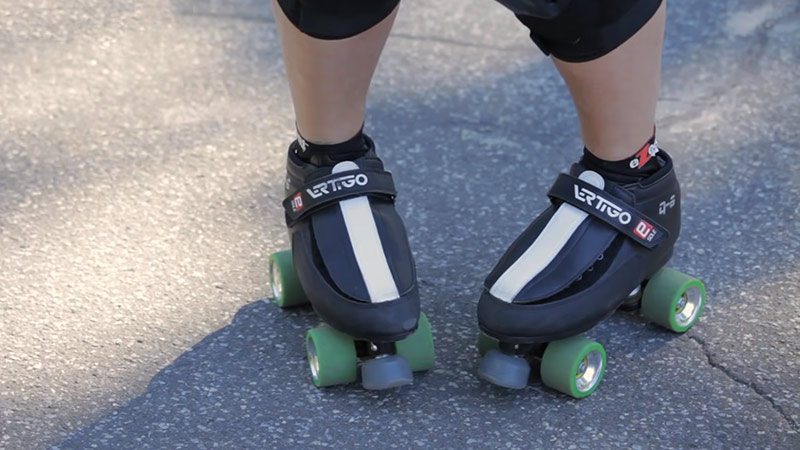
Roller skating is often seen as a fun recreational activity, a competitive sport, or even a nostalgic pastime from childhood. But from a developmental and physiological perspective, many people wonder: Is roller skating considered a fine motor skill?
The short answer is no — roller skating is primarily a gross motor skill, though it does involve certain fine motor elements. To fully understand why, we need to explore what fine motor skills are, how they differ from gross motor skills, and how roller skating fits into the broader picture of human movement and coordination.
Understanding Motor Skills: Fine vs. Gross
Before determining where roller skating belongs, it’s essential to understand the two primary categories of motor skills.
What Are Fine Motor Skills?
Fine motor skills involve small, precise movements that typically use the smaller muscles of the hands, fingers, wrists, toes, and sometimes facial muscles. These movements require coordination between the brain and small muscle groups.
Examples of fine motor skills include:
- Writing with a pencil
- Buttoning a shirt
- Tying shoelaces
- Typing on a keyboard
- Using scissors
- Picking up small objects
Fine motor skills rely heavily on precision, dexterity, and hand-eye coordination. They are often developed gradually during early childhood and refined throughout life.
What Are Gross Motor Skills?
Gross motor skills involve large muscle groups and whole-body movements. These skills are responsible for major physical actions that require strength, balance, and coordination.
Examples include:
- Walking
- Running
- Jumping
- Climbing
- Throwing
- Swimming
Gross motor skills involve the core muscles, legs, arms, and overall body movement rather than detailed finger or hand coordination.
So, Where Does Roller Skating Fit?
Roller skating is classified primarily as a gross motor skill activity.
Why?
Because it requires:
- Leg strength
- Core stability
- Full-body coordination
- Balance control
- Weight shifting
- Large-scale movement patterns
When skating, you’re engaging your quadriceps, hamstrings, glutes, calves, abdominal muscles, and even your upper body for balance.
The motion involves pushing off with one foot, gliding, maintaining balance, and coordinating direction — all hallmark characteristics of gross motor function.
However, that’s not the full story.
The Motor Demands of Roller Skating
To better understand why roller skating is primarily gross motor, let’s examine what actually happens during skating.
1. Balance and Postural Control
Balance is one of the most critical aspects of skating. Maintaining an upright position on wheels requires continuous micro-adjustments from your:
- Ankles
- Knees
- Hips
- Core muscles
These adjustments are controlled by the vestibular system (inner ear), proprioception (body awareness), and large stabilizing muscles — all part of gross motor coordination.
2. Weight Shifting
Skating requires you to shift your body weight from one leg to the other in a rhythmic pattern. This weight transfer is controlled by:
- Hip stabilizers
- Core muscles
- Large leg muscles
Weight shifting is considered a gross motor function because it relies on coordinated whole-body movement.
3. Propulsion and Stride
When you push off during skating, you activate powerful lower-body muscle groups. The skating stride involves:
- Lateral leg extension
- Gliding motion
- Knee flexion and extension
This dynamic movement pattern clearly falls under gross motor skill development.
4. Directional Changes and Stops
Turning and stopping involve coordinated body rotation and braking techniques. These movements require:
- Core engagement
- Lower-body muscle activation
- Upper-body counterbalancing
Again, these are large muscle activities — not small precision movements.
Where Fine Motor Skills Come Into Play?
Although roller skating is primarily gross motor, it does include some fine motor components in specific contexts.
1. Lacing and Adjusting Skates
Putting on roller skates requires:
- Threading laces
- Tightening buckles
- Fastening straps
These are classic fine motor tasks involving finger dexterity and hand coordination.
2. Precision Foot Control in Advanced Skating
In advanced forms of skating — such as artistic roller skating or dance skating — there are subtle ankle and toe adjustments that require refined control.
While still categorized under gross motor skills, these precise adjustments blur the line slightly by requiring controlled muscle activation.
However, they still primarily rely on larger muscle groups rather than fine hand movements.
3. Hand Movements in Performance Skating
In choreographed or artistic routines, arm positioning and hand gestures may involve refined movement patterns. While these could be seen as incorporating fine motor elements, they are secondary to the overall gross motor demands.
Why Roller Skating Is Classified as a Gross Motor Skill?
From a developmental and educational standpoint, motor skills are classified based on the dominant muscle groups involved.
Roller skating involves:
- Continuous whole-body movement
- Large muscle coordination
- Balance and stability control
- Lower-body propulsion
Because these are defining characteristics of gross motor activity, skating falls squarely into that category.
Roller Skating and Child Development
In early childhood development, professionals carefully monitor both fine and gross motor milestones.
Gross motor milestones include:
- Sitting independently
- Crawling
- Walking
- Running
- Jumping
Skating builds on these foundational gross motor abilities.
Benefits of Roller Skating for Children
Roller skating can significantly improve:
- Balance
- Coordination
- Core strength
- Leg strength
- Spatial awareness
- Reaction time
These are essential components of gross motor development.
Interestingly, strong gross motor skills often support the development of fine motor skills. For example:
- A stable core improves hand control.
- Good posture enhances writing ability.
So while skating itself isn’t a fine motor skill, it can indirectly support fine motor development.
Roller Skating and Neurological Coordination
Motor skills aren’t just about muscles — they involve the brain.
When skating, the brain processes:
- Sensory input from the feet
- Balance signals from the inner ear
- Visual cues
- Spatial positioning
This complex neurological coordination strengthens neural pathways responsible for motor planning and body awareness.
Although fine motor skills also require brain coordination, skating engages broader motor circuits associated with whole-body movement.
The Role of Proprioception
Proprioception is your body’s ability to sense its position in space.
Roller skating dramatically enhances proprioceptive awareness because:
- You must adjust constantly to stay upright.
- The wheels create a dynamic surface.
- Minor shifts can change direction or balance.
Proprioception development is closely tied to gross motor control.
Athletic Skill Classification
In sports science, activities are often classified based on:
- Muscle group involvement
- Energy expenditure
- Coordination requirements
- Movement patterns
Roller skating aligns with activities like:
- Ice skating
- Skateboarding
- Cycling
- Skiing
All of these are considered gross motor activities.
Can Roller Skating Improve Fine Motor Skills?
Indirectly, yes.
While skating does not directly train finger dexterity, it can:
- Improve core stability (which supports hand control)
- Enhance bilateral coordination
- Strengthen neural pathways for motor planning
- Increase focus and reaction time
Improved body coordination often leads to better overall motor performance — including fine motor skills.
Differences Between Fine Motor and Balance Skills
Some people mistakenly assume that because skating requires careful control, it must be a fine motor skill.
However, precision does not automatically equal fine motor skill.
The key distinction is:
Fine motor skills = small muscle precision (hands, fingers)
Gross motor skills = large muscle coordination (legs, core, whole body)
Skating requires precision — but it’s precision driven by large muscle systems.
Professional and Therapeutic Perspectives
Occupational therapists and physical therapists classify skating under gross motor activities. It is often used in therapy to:
- Improve balance disorders
- Strengthen postural muscles
- Develop coordination
- Enhance sensory integration
Fine motor therapy typically involves activities like:
- Bead threading
- Pegboards
- Hand strengthening exercises
Skating does not target these directly.
Is There Ever a Scenario Where Skating Could Be Considered Fine Motor?
In strict academic or developmental terms — no.
Even elite figure skating on wheels remains categorized as a gross motor activity because it depends on:
- Large muscle coordination
- Whole-body balance
- Dynamic movement
The presence of precision does not override the dominant muscle classification.
Why This Distinction Matters
Understanding whether an activity is fine or gross motor helps:
- Parents track developmental milestones
- Educators design physical education programs
- Therapists create appropriate intervention plans
- Athletes structure training programs
Roller skating plays an important role in physical development — just not in the fine motor category.
Final Thoughts
Roller skating is an excellent activity for improving balance, coordination, strength, and confidence. While it isn’t considered a fine motor skill, it contributes significantly to overall motor development.
If you’re looking to enhance fine motor skills specifically, activities like drawing, crafting, or playing musical instruments are better suited. But if your goal is to improve balance, body awareness, and physical coordination, roller skating is an outstanding choice.
In the end, both fine and gross motor skills are essential — and activities like skating help build the strong foundation that supports all physical movement.
Whether you’re skating for fun, fitness, or sport, you’re engaging in a powerful gross motor activity that strengthens both body and brain.