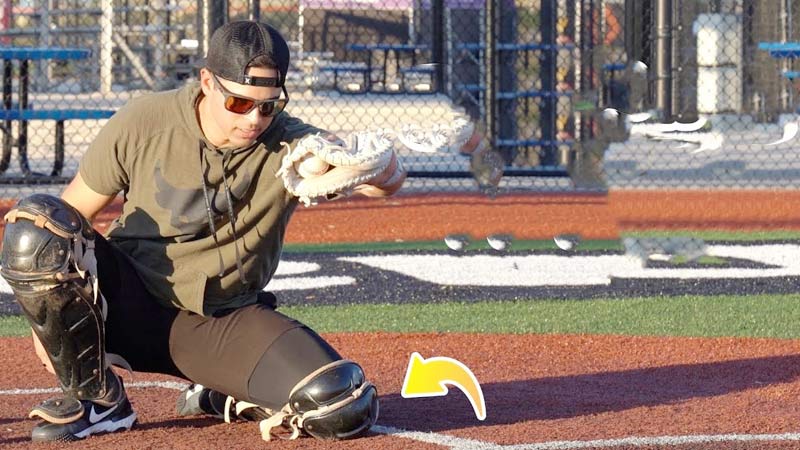
Is catching bad for your knees? It is one of the most common questions from players who wear the gear, and from parents who watch their kids squat behind home plate for hours.
The short answer is that catching does put real stress on the knee joint, and over time that stress can lead to pain or injury.
But catching does not have to ruin your knees. Most problems come from too much volume, poor mobility, weak supporting muscles, and ignoring early warning signs.
This guide explains why the catcher’s position is hard on the knees, which injuries show up most often, what the long-term picture looks like, and the practical steps baseball and softball catchers can take to keep their knees healthy for years.
Why the Catcher’s Crouch Puts Stress on the Knees
No other position asks a player to spend so much time in a deep squat. In a typical nine-inning game, a catcher drops into a crouch somewhere between 120 and 150 times and holds it for several seconds on each pitch. Add bullpen sessions, practice, and doubleheaders, and the number climbs fast.
When the knee bends past about 90 degrees, the load on the joint rises sharply. The kneecap presses harder against the thigh bone, and the back part of the meniscus, the cartilage cushion between the bones, gets squeezed. In a full squat, these forces can reach several times a person’s body weight.
Catchers also do not stay still. They shift side to side to block pitches, pop up to throw, and drop to their knees to stop balls in the dirt.
Each of these moves adds twisting and impact to a joint that is already under pressure. Repeated thousands of times a season, it is easy to see why knee complaints are so common at this position.
Common Knee Problems Catchers Face
Catcher knee pain usually falls into a few categories:
- Patellofemoral pain syndrome. A dull ache around or behind the kneecap. It tends to flare when squatting, climbing stairs, or sitting with the knees bent for a long time.
- Patellar tendinitis. Irritation of the tendon that connects the kneecap to the shin bone. It causes pain just below the kneecap, especially when springing up out of the crouch to throw.
- Meniscus tears. Deep bending combined with twisting can tear the meniscus. Signs include swelling, a locking feeling, and pain along the inside or outside of the joint.
- Bursitis. Kneeling on hard dirt again and again can irritate the small fluid sacs in front of the kneecap, causing swelling and tenderness.
- Cartilage wear. Years of heavy loading can thin the smooth cartilage on the ends of the bones, which may lead to arthritis later in life.
Many of these start as minor soreness that players push through. Left alone, a small irritation can turn into a problem that keeps a catcher off the field for weeks or months.
Does Catching Cause Long-Term Knee Damage?
Catching raises the risk of knee problems, but it does not guarantee them. Plenty of former catchers live with healthy knees, while others deal with stiffness and arthritis by middle age.
Several factors shape the outcome:
- How many years and how many games a person caught
- Past injuries, especially meniscus or ligament tears
- Body weight, since every extra pound adds load in a squat
- Strength and mobility in the hips, ankles, and legs
- Whether pain was treated early or played through
The pattern is simple: knees handle stress well when they get enough recovery and support. Trouble builds when the workload stays high year after year with little attention to conditioning or rest. Catching is a risk factor, not a guarantee of damage.
What Parents of Youth Catchers Should Know
Young players face a different set of concerns. Their bones are still growing, and the growth plates near the knee are softer than adult bone.
Heavy, repeated stress can irritate the spot where the patellar tendon attaches below the knee, a condition known as Osgood-Schlatter disease. It shows up as a tender bump and pain with running, jumping, and kneeling.
Youth catchers often play on more than one team and catch nearly every inning. That workload adds up. Coaches and parents can help by rotating catchers, limiting innings in a single day, scheduling rest days, and making sure gear fits properly.
A child who complains of knee pain more than once should not be told to tough it out. Growing knees need time to recover, and early care prevents bigger problems later.
Technique Changes That Protect the Knees
How a catcher sets up behind the plate makes a big difference in knee stress.
Try the one-knee stance
Many catchers now drop one knee to the ground with no runners on base. This takes weight off the bent knees and cuts down time in a deep squat. Players can return to a traditional crouch when runners are on and quick throws matter.
Avoid sitting too deep
A crouch where the backside nearly touches the heels puts the most pressure on the joint. Setting up slightly higher, with the thighs closer to parallel to the ground, eases the load while still giving the pitcher a good target.
Widen the base
Feet set a little wider than the shoulders and turned slightly out give the hips room to open, so the hips and knees share the work.
Stand between pitches
Rising out of the crouch while the ball goes back to the pitcher gives the knees a short break dozens of times a game.
Block with control
Dropping to the knees in a controlled motion, rather than crashing down, reduces impact on the kneecaps.
Strength and Mobility Training for Catchers
Strong muscles act as shock absorbers for the knee. When the hips, thighs, and calves do their share of the work, less force lands on the joint itself.
Useful strength exercises include:
- Split squats and reverse lunges
- Slow step-downs from a low box
- Glute bridges and hip thrusts
- Hamstring curls or Romanian deadlifts
- Side planks and lateral band walks for hip stability
Mobility matters just as much. Tight ankles force the knees to drift forward in a squat, which adds stress to the kneecap. Stiff hips do the same. Regular work on ankle flexibility and hip rotation changes how a catcher sits in the crouch.
Two or three short strength sessions a week, plus about ten minutes of mobility work before practice, is enough for most players to feel a difference within a couple of months.
Gear, Workload, and Recovery Habits
- Use knee savers. These foam wedges strap to the back of the shin guards. When the catcher squats, the pads rest under the thighs and keep the knee from bending as far, which takes pressure off the joint. They are inexpensive and used at every level of the game.
- Check the fit of your shin guards. Guards that are too long dig into the thigh and change how a catcher sits. The knee section of the guard should line up with the actual kneecap.
- Manage the workload. Catching every inning of every game, plus every bullpen, is a quick path to sore knees. Plan days off from catching, especially during tournaments.
- Warm up before you crouch. A few minutes of light movement, leg swings, and bodyweight squats prepares the joint for the work ahead.
- Recover after games. Light stretching, a short walk or easy bike ride, ice on sore spots, and good sleep all help the tissue recover before the next game.
Warning Signs That Need Medical Attention
Some soreness after a long weekend of catching is normal. Other symptoms point to an injury that needs a doctor or physical therapist:
- Swelling that appears quickly or does not go away
- A locking feeling, as if something is stuck in the joint
- The knee giving way or feeling unstable
- Pain that wakes you up at night
- Sharp pain along the inside or outside of the joint
- Soreness that lasts more than one to two weeks despite rest
Getting checked early usually means a shorter recovery. Many knee problems respond well to rest, targeted exercises, and changes in workload when they are found at an early stage.
Final Thoughts
So, is catching bad for your knees? It can be, especially when the workload is high and the body is not prepared for it.
The deep, repeated squat puts more stress on the knee than almost any other position in baseball or softball. But that risk is something players can manage.
Use a stance that limits time in a deep crouch, wear knee savers and well-fitted gear, build strength and mobility in the legs and hips, and give the knees time to recover. Pay attention to pain instead of hiding it.
Catchers who follow these habits give themselves the best chance of staying behind the plate for many seasons and walking away with healthy knees.