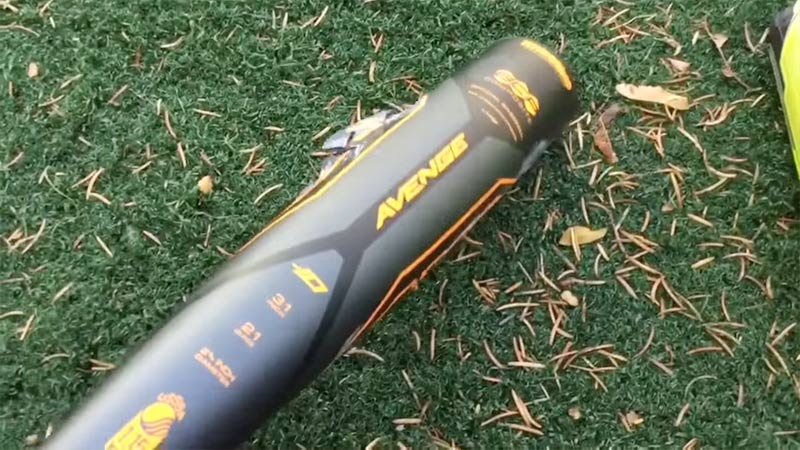
Few moments in youth and travel baseball cause as much immediate anxiety as a sudden drop in exit velocity.
You watch a player step up to the plate, execute what looks like a solid swing, connect on the sweet spot, and watch the ball fall harmlessly into shallow outfield coverage.
When a high-end composite bat costing $400 or more stops delivering the explosive distance it once produced, parents and players are immediately confronted with a high-stakes question: Has the barrel structurally failed, or is the player simply experiencing a mechanical slump?
Because composite bats are constructed from complex, layered carbon fiber and resin rather than solid metal, their degradation process is fundamentally different from traditional alloy equipment.
Recognizing what a dead composite bat sounds like—and distinguishing physical structural failure from psychological slumps or swing glitches—can save families hundreds of dollars in unnecessary equipment replacements.
Deciphering the Sound: The Definitive Acoustic Signatures
The acoustic profile of a baseball or softball bat is a direct reflection of its structural integrity. When composite materials flex and rebound efficiently, they create a distinct acoustic footprint. When those internal fiber layers break down or delaminate, the sound changes dramatically.
The Sound of a Healthy Composite Barrel
When a composite bat is functioning at peak structural health, contact with a baseball or softball produces a sharp, crisp, and explosive “crack” or resonant pop.
This lively sound is created by the “trampoline effect,” where the composite barrel wall momentarily compresses under impact and rapidly rebounds, transferring kinetic energy back into the ball. The acoustic frequency is bright, high-pitched, and clean.
The Sound of a Dead Composite Barrel
When a composite barrel suffers from internal structural degradation, resin matrix cracking, or layer separation, the lively trampoline effect collapses. Instead of a sharp pop, a dead composite bat produces a heavy, dull, flat, or muted “thwunk” sound upon impact.
Hitting a ball with a dead composite bat often yields a hollow thud that sounds strikingly similar to hitting a ball with a wet wooden stick or a flat piece of lumber.
The crisp resonance vanishes because the fractured carbon fibers can no longer store and release impact energy, causing the acoustic wave to deaden immediately upon contact.
Practical Diagnostic Tests to Verify Barrel Health
Before assuming a bat has reached the end of its lifespan, players and coaches should execute a series of field-tested physical diagnostics. These tests help isolate physical structural degradation from external variables.
1: The Handle Tap and Ground Strike Test
One of the most effective methods for testing barrel resonance is the handle tap test:
- Hold the tip of the composite barrel securely in your hand.
- Gently tap the edge of the handle or knob against a solid floor or hard ground at a 45-degree angle.
- Healthy Response: A functioning composite structure produces an echoing ping or clean, uniform vibration throughout the handle.
- Dead Response: A compromised or dead composite core yields a completely flat thump or dull “thwunk” that lacks any ringing resonance.
2: The Shake and Rattle Inspection
Hold the bat near your ear and shake it vigorously back and forth. As composite barrels age and fatigue, the resin holding the carbon layers together can break down, or internal connection pieces can detach.
- What to Listen For: If you hear a loose, shifting rattle inside the barrel—similar to small pebbles or sand sliding around—it indicates loose resin flakes, broken carbon fiber fragments, or a dislodged internal connection collar. While minor resin flakes occasionally break loose without destroying performance, a prominent rattle accompanied by a muted hit sound confirms structural breakdown.
3: Visual Inspection for Structural Cracking and Spiderwebbing
Carefully examine the exterior barrel surface under bright lighting:
- Spiderwebbing: Composite bats often go through a phase where fine, web-like hairline lines appear along the outer resin finish. In many cases, a composite bat hits its absolute peak performance—becoming extremely “hot”—right as spiderwebbing appears. However, as those lines deepen and expand across the barrel, performance will rapidly plummet as the bat dies off.
- Structural Cracks: Look for visible longitudinal or circumferential cracks that run deeper than the surface paint. Any visible structural crack that opens under hand pressure indicates that the composite wall can no longer maintain structural integrity.
4: Physical Feedback and Hand Sting
Beyond sound and visual cues, pay close attention to hand feedback during batting practice. A healthy composite barrel acts as a natural shock absorber, minimizing vibration on sweet-spot contact. When a composite barrel dies, it loses its elastic flex.
As a result, impact force bypasses the barrel and travels directly down the handle, causing severe, uncomfortable hand sting and harsh vibrations even on balls hit squarely in the center of the sweet spot.
The Break-In Period vs. True Structural Death
A common error among players and parents is confusing an unbroken, brand-new composite bat with a “dead” bat.
Unlike single-piece metal bats that are game-ready straight out of the plastic wrapper, composite bats require a structured break-in process. The tightly woven carbon fibers and resin matrix must undergo initial stress to loosen up and reach their optimal elastic potential.
- The Break-In Requirement: A new composite bat typically requires 150 to 200 hits off a tee or gentle soft-toss before the barrel becomes fully “hot” and produces its intended crisp sound.
- Proper Break-In Procedure: Rotate the bat one quarter-inch after every swing during tee work, starting at 50% swing power and gradually increasing to 100% power using real leather baseballs or softballs (never heavy rubber batting cage balls).
- Avoiding Early Mistakes: Declaring a new composite bat dead after its first week of use is often premature; the carbon fibers simply haven’t been broken in yet.
Comparing Composite Diagnostics to One-Piece Alloy Bats
It is worth noting that metal and alloy bats fail through an entirely different mechanical process than composite models.
While composite barrels fail through internal fiber cracking and delamination, single-piece metal bats suffer performance loss through flat spots, denting, or shaft bending.
The Flat Surface Roll Test for Alloy Equipment
If you are evaluating a single-piece aluminum or alloy bat alongside composite models, use the flat surface roll test:
- Lay the metal bat flat on a level table or smooth glass surface.
- Roll the bat slowly from side to side across the surface.
- Watch the gap and shadow line between the table surface and the barrel taper.
- Diagnostic Result: If the shadow edge wobbles or does not remain perfectly straight as it rolls, the metal barrel has developed subtle flat spots or a bent taper, causing it to lose pop and sound dull.
The Mental Game: Swing Glitches, Placebos, and Sales Pitches
When evaluating potential equipment failure, objective physical testing is vital because human psychology often plays a massive role in perceived bat performance.
Evaluating Performance Issues
| Physical Bat Failure | Mechanical / Mental Slump |
|---|---|
| Flat “thwunk” sound on sweet spot | Normal crisp pop on good contact |
| Internal rattle when shaken | No internal sound when shaken |
| Visible deep barrel cracks | Smooth barrel surface |
| Severe hand sting on centered hits | Poor contact due to late timing |
| Flat thump on 45-degree tap test | Echoing ping on handle tap test |
The “Swing Glitch” Phenomenon
In youth and amateur sports, hitters frequently go through temporary mechanical slumps where slight flaws creep into their swing mechanics.
A player who begins casting their hands, dropping their back shoulder, or misjudging pitch depth will experience a sudden loss of exit velocity and ball carry.
Because high-end bats carry high expectations, players naturally prefer blaming a dead bat rather than recognizing a mechanical swing glitch.
It is common to see players cycle through multiple top-tier models—such as a Hype Fire, CatX, or Victus Vandal—claiming each one has suddenly gone dead depending entirely on their mood or recent plate appearances.
The Coach Verification Test
Before spending $400 or more on a replacement barrel, perform a coach verification test:
- Have a coach, instructor, or adult take several practice swings with the bat during field practice.
- If an adult or teammate can step up and drive a ball deep into the outfield with a loud, crisp pop, the bat is structurally sound, and the issue lies in the player’s current swing timing or swing mechanics.
Beware of Unnecessary Equipment Pressure
Parents should also maintain a healthy skepticism when external sources prematurely pronounce equipment dead. It is not uncommon for hitting coaches or lesson facilities to declare a young player’s bat dead during an instruction session.
In some cases, this diagnosis can be a tactic to sell new inventory or shift focus away from stalled swing progress. Conducting the physical tests outlined above ensures you make data-driven replacement decisions.
Comprehensive Action Plan: What to Do If Your Bat Is Dead
If your bat fails the acoustic, visual, and tap tests, follow these steps to manage the situation effectively:
- Verify Warranty Status: Most major bat manufacturers offer a 12-month standard warranty from the original date of purchase for new composite equipment. If deep cracks or internal rattles occur within this window, file a claim directly with the manufacturer rather than discarding the bat.
- Document Proof of Purchase: Keep digital receipts and photos of serial numbers on file. Manufacturers require proof of purchase from authorized retailers to honor warranty replacements.
- Check Temperature Restrictions: Composite materials become brittle in cold weather. Avoid hitting composite barrels in temperatures below 60°F (15°C), as cold baseballs become denser and significantly increase the risk of premature barrel cracking.
- Avoid Heavy Cage Balls: Never use composite bats with heavy rubber batting cage balls. These dense balls exert extreme localized pressure on the barrel wall, causing internal delamination and premature structural death.
Final Verification Checklist
Before purchasing a replacement bat, review this quick diagnostic checklist:
- Acoustic Check: Does impact produce a sharp pop or a flat, dead “thwunk”?
- Handle Tap Test: Does tapping the handle at a 45-degree angle produce an echoing ping or a flat thump?
- Rattle Check: Do you hear loose internal resin or carbon fragments sliding inside when shaken?
- Visual Inspection: Are there visible deep cracks running along the barrel wall?
- Break-In Verification: Has the bat received its mandatory 150–200 break-in hits?
- Swing Verification: Has a coach or teammate tested the bat to rule out a mechanical swing glitch?
By systematically applying these physical tests and verifying swing mechanics, players and parents can confidently determine whether a composite bat is truly dead or simply waiting for a mechanical adjustment at the plate.