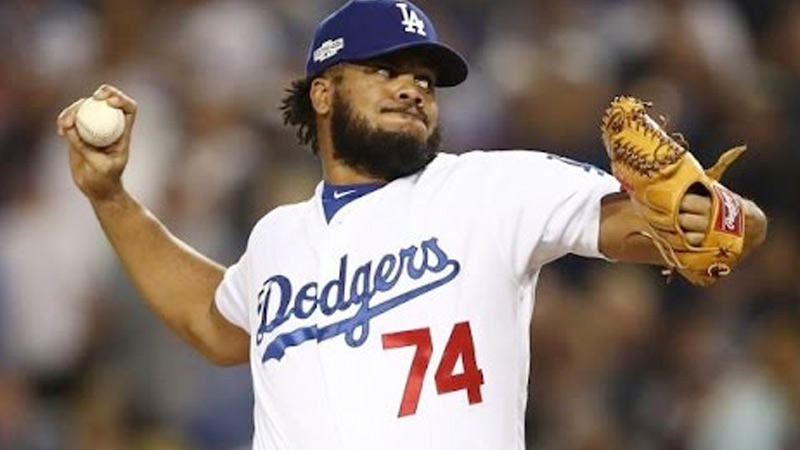
If you watch a close baseball game to the end, you will often see the same thing happen. The starting pitcher is gone, a few relievers have come and gone, and in the ninth inning one specific pitcher walks in from the bullpen to get the last three outs. That pitcher is the closer.
So, what is a closer in baseball, and why do teams put so much trust in a reliever who often pitches just one inning?
This guide explains what a closer does, how the save works, which skills the job requires, how the role developed over time, and how teams use closers today.
What Is a Closer in Baseball?
A closer is a relief pitcher whose main job is to finish games when his team holds a small lead. In most cases, the closer pitches the final inning, usually the ninth, and tries to record the last three outs without letting the other team tie or take the lead.
The closer is usually the best pitcher in the bullpen, or at least the one the manager trusts most under pressure.
A starting pitcher may throw 90 to 110 pitches over five to seven innings. A closer typically throws 15 to 25 pitches in a single inning, so he can work at full effort on every pitch.
You may also hear a closer called the “ninth-inning guy” or the “relief ace.” Older fans may remember the term “fireman,” which described relievers who came in to put out the fire when the other team had runners on base.
The Closer’s Main Job: Protecting a Late Lead
The closer has one clear goal: keep the lead and end the game. A typical closer appearance follows a simple pattern:
- His team is ahead by one, two, or three runs.
- The game reaches the ninth inning.
- The manager brings in the closer to start the inning.
- The closer gets three outs, and his team wins.
The last outs are often the hardest to get. The opposing team knows it is running out of chances, so its manager may send up pinch hitters or use pinch runners to try to tie the score. A team needs a pitcher who can handle that pressure and keep making quality pitches.
Where the closer works also depends on which team bats last. The road team’s closer pitches the bottom of the ninth. The home team’s closer pitches the top of the ninth, because if the home team still leads after that half inning, the game is over.
How a Closer Earns a Save
The save is the statistic most closely tied to the closer. Under Major League Baseball’s official scoring rules, a pitcher earns a save when he meets all of these conditions:
- He is the final pitcher in a game his team wins.
- He is not credited with the win.
- He records at least one out.
- He meets one of the following:
- He enters with a lead of three runs or fewer and pitches at least one full inning.
- He enters with the potential tying run on base, at bat, or on deck.
- He pitches at least three innings, no matter the score.
The most common save is the first type: the closer starts the ninth inning with a lead of one to three runs and finishes the game.
If a pitcher enters in a save situation and gives up the lead, he is charged with a blown save. He can still end up with the win if his team scores again before the game ends, but that is never the plan.
The save became an official MLB statistic in 1969. Chicago sportswriter Jerome Holtzman developed it because he felt wins and losses did not reflect the value of good relief work. Once the save became official, it shaped how managers used their bullpens for decades.
Other Stats Used to Judge a Closer
Saves alone do not tell the whole story. A closer on a team that rarely leads late may get few save chances, even if he pitches well. These numbers give a fuller picture:
- Save percentage: The share of save chances a pitcher converts. Strong closers often finish a season above 85 or 90 percent.
- ERA (earned run average): Earned runs allowed per nine innings. Top closers often post an ERA under 3.00, and their best seasons can fall below 2.00.
- WHIP (walks plus hits per inning pitched): How many runners a pitcher allows. Fewer runners means fewer chances for the other team to score.
- Strikeouts per nine innings (K/9): Closers tend to have high strikeout rates, since a strikeout leaves no chance for a soft hit or a fielding error.
- Walk rate: Free passes are costly in the ninth inning, so control matters.
What Makes a Good Closer?
Not every talented pitcher can handle the ninth inning. The job calls for a specific mix of physical tools and mental traits.
A Dominant Pitch
Most successful closers have at least one pitch that hitters struggle with even when they know it is coming.
For some, it is a fastball in the upper 90s. For others, it is a hard slider, a splitter, or a cutter. Mariano Rivera relied almost entirely on his cut fastball and still got hitters out at a record pace for years.
Strikeout Ability
With the tying run on third base and fewer than two outs, a ground ball or fly ball can still bring that run home. A strikeout cannot. That is why teams prefer closers who miss bats.
Command and Control
Walking the leadoff hitter puts the tying run on base and adds stress to every pitch that follows. A closer must throw strikes, especially when he falls behind in the count.
Mental Toughness
Few players face more pressure per pitch. One mistake can cost a game, and fans remember blown saves.
The best closers stay focused during the outing and move on quickly from bad nights. Coaches often say a short memory is one of the most important traits for the job.
Quick Recovery
Close games can come several days in a row. A closer needs to bounce back fast, since he may pitch three or four times in a busy week.
Closer vs. Setup Man vs. Other Relievers
A bullpen has several roles, and the closer sits at the top. Managers often plan the rest of the bullpen backward from the ninth inning.
| Role | Typical inning | Main purpose |
|---|---|---|
| Closer | 9th | Protect a small lead and record the final outs |
| Setup man | 8th, sometimes 7th | Hand a lead to the closer; often a closer in waiting |
| Middle reliever | 6th–7th | Bridge the gap after the starter leaves |
| Long reliever | Any, for several innings | Cover early exits, lopsided games, and extra innings |
| Left-handed specialist | Late, for one or two batters | Face key left-handed hitters |
The left-handed specialist role has shrunk since 2020, when MLB began requiring most pitchers to face at least three batters or finish the inning.
A Short History of the Closer Role
Relief pitching was not always a specialty. In baseball’s early decades, starters were expected to finish what they started, and relievers were often pitchers who were not good enough to start.
That began to change in the 1950s. Pitchers such as Hoyt Wilhelm and Elroy Face showed that a skilled reliever could decide games on his own.
By the 1970s, firemen such as Rollie Fingers, Goose Gossage, and Bruce Sutter were regularly called in during the seventh or eighth inning and asked to get six or more outs.
The modern one-inning closer took shape in the late 1980s. Oakland Athletics manager Tony La Russa moved Dennis Eckersley, a former starter, into the closer role and used him mostly in the ninth inning.
Eckersley became one of the best relievers in the game and won both the American League Cy Young Award and MVP Award in 1992. Other teams copied the approach, and the ninth-inning closer became standard across baseball.
Famous Closers in Baseball History
Several closers have reached the Baseball Hall of Fame, and a few names come up in almost every discussion of the role:
- Mariano Rivera: The all-time leader with 652 saves. Rivera spent his entire career with the New York Yankees and was known for his cutter and his strong postseason record. In 2019, he became the first player elected to the Hall of Fame unanimously.
- Trevor Hoffman: The first pitcher to reach 600 career saves, finishing with 601. He spent most of his career with the San Diego Padres, and his changeup was his best pitch.
- Lee Smith: Held the career saves record for more than a decade and finished with 478.
- Dennis Eckersley: Helped define the one-inning closer and is one of the few pitchers to succeed as both a starter and a reliever.
- Goose Gossage and Bruce Sutter: Two of the top firemen of their era, both known for pitching multiple innings to secure wins.
The single-season record belongs to Francisco Rodriguez, who recorded 62 saves for the Los Angeles Angels in 2008.
How Teams Use Closers Today
Saving the closer for the ninth inning is still common, but teams have become more flexible.
With more data available, some managers now use their best reliever in the highest-pressure spot of the game, even if it comes in the seventh or eighth inning.
Facing the heart of the order with runners on base can matter more than getting three outs against the bottom of the lineup in the ninth.
Some teams use a “closer by committee,” where several relievers share ninth-inning work based on matchups, rest, and recent form. This can keep arms fresh, though many pitchers prefer a defined role so they know when to get ready.
Starters also throw fewer innings than in past decades, which puts more weight on the whole bullpen. Over a 162-game season, a team may play dozens of games decided by one or two runs, and losing those late hurts both the standings and the clubhouse.
A dependable closer turns many of those close leads into wins. In the postseason, where games are tighter and every win counts more, that value only grows.
Conclusion
A closer in baseball is the relief pitcher trusted to protect a small lead and record the final outs of a game.
The role is built around the save, but good closers are measured by much more than saves, including strikeout rate, control, and how they handle pressure.
From the multi-inning firemen of the 1970s to the one-inning specialists who followed, the closer has become one of the most recognized jobs on any roster.
The next time a pitcher jogs in to start the ninth with the game on the line, you will know exactly what that job requires and why it matters.