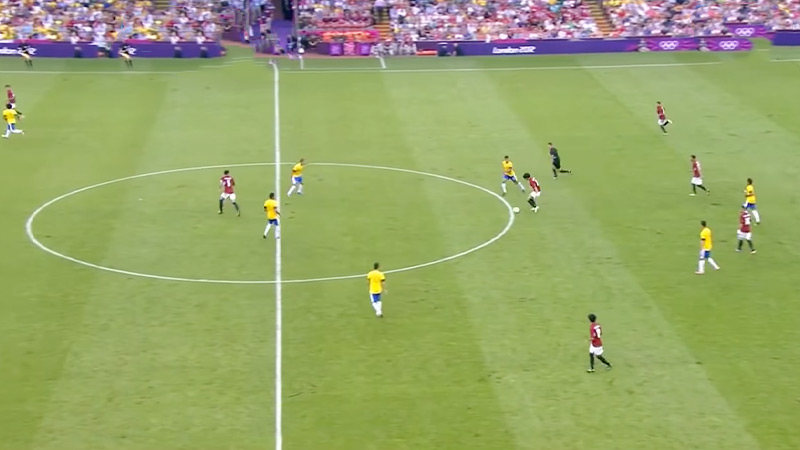
Soccer stands as the most popular sport on the planet, a game of fluid movement, high-stakes strategy, and deceptive simplicity.
Yet, beneath the grace of a perfectly weighted pass or a clinical finish lies a rigid regulatory framework that ensures fairness, safety, and competitive integrity.
These regulations, known officially as the Laws of the Game, are governed by the International Football Association Board (IFAB).
For players, coaches, and investors in the sports industry, a granular understanding of these laws is essential for navigating the complexities of the pitch.
This comprehensive analysis breaks down the essential pillars of soccer regulation, from the structural requirements of a match to the intricate nuances of disciplinary actions and tactical restarts.
The Structural Foundation: Personnel and Equipment
A match begins not with a whistle, but with the strict adherence to the physical and personnel requirements of the pitch. The integrity of the competition relies on a balanced starting point for both sides.
The 11-Player Mandate
The standard for professional soccer dictates that each team may field a maximum of 11 players at any given time. Within this unit, there is only one specialized role that must always be filled: the designated goalkeeper.
While teams can play with fewer than 11 due to injuries or disciplinary send-offs, they must always have a keeper on the field.
This numerical balance is the core of the game’s tactical geometry, allowing for enough space for creativity while maintaining a dense enough defensive structure to challenge the opposition.
Safety and Standardization of Gear
At the professional level, equipment is not merely a matter of branding; it is a matter of safety and uniformity. The most critical piece of protective gear is the shin guard.
To meet regulatory standards, these must be constructed of suitable material (such as plastic or rubber) and must be entirely covered by the player’s socks.
This prevents the guard from shifting during play and minimizes the risk of lower-limb injuries during high-impact tackles.
The Prohibition of Hand Use
The fundamental mechanical constraint of soccer is the “No Hands” rule. Outfield players are strictly prohibited from touching the ball with their hands or arms during active play.
This restriction forces the development of elite footwork, chest control, and heading ability. The goalkeeper serves as the sole exception to this rule, granted the privilege of using their hands to parry shots or catch crosses—but this authority is strictly geographically limited to their own designated penalty area.
Temporal Management: The Mechanics of the Match Clock
Time in soccer is a continuous flow, managed by the referee to ensure that the “90 minutes” of play translates into a fair amount of actual action.
The 90-Minute Standard
A standard match is divided into two equal 45-minute halves. Unlike many North American sports, the clock in soccer does not stop when the ball goes out of play.
Instead, the game operates on a running clock, which places a premium on conditioning and late-game stamina.
Stoppage Time (Added Time)
To compensate for the inevitable pauses in a fluid game, the referee calculates stoppage time at the conclusion of each half. This extra time accounts for:
- Treatment and removal of injured players.
- The administrative time taken for substitutions.
- Goal celebrations.
- Time-wasting tactics.
- Any other significant delays?
Determining the Victor and Resolving Deadlocks
Victory is straightforward: the team that scores the most goals by the final whistle is declared the winner.
In standard league play, if the score is level, the match ends in a draw. However, in knockout-style tournaments—such as the FIFA World Cup or the UEFA Champions League—a winner must be decided.
In these instances, the match moves into Extra Time, consisting of two 15-minute halves. If the deadlock remains, the game is decided by a Penalty Shootout, a high-pressure sequence of one-on-one shots from the penalty mark.
Scoring and the Physical Boundaries of Play
The objective of the game is to move the ball into the opponent’s goal, but the definition of a goal is absolute and leaves no room for ambiguity.
The Goal Line Rule
A goal is only valid when the entire ball has completely crossed the goal line, situated between the vertical posts and under the horizontal crossbar.
This “all-or-nothing” approach means that if even a sliver of the ball remains on the line, play continues.
Modern technology, such as Goal-Line Technology (GLT), is now frequently used to provide referees with instantaneous signals when this threshold is met.
Discipline and Misconduct: The Regulatory Response to Fouls
Soccer is a contact sport, but that contact must remain within the bounds of “fair play.” When a player executes a tackle that the referee deems careless, reckless, or involving excessive force, a foul is called.
Direct vs. Indirect Free Kicks
The type of restart awarded depends on the nature of the infraction:
- Direct Free Kick: Awarded for physical fouls such as tripping, pushing, or handballs. The attacking team has the right to shoot directly at the goal from the spot of the foul.
- Indirect Free Kick: Awarded for technical infractions, such as a goalkeeper handling a deliberate back-pass from a teammate’s foot. In this scenario, a goal cannot be scored until the ball has touched at least one other player after the kick is taken.
The Penalty Kick: The Ultimate Sanction
The most significant tactical shift in a match occurs when a defender commits a direct free kick foul inside their own penalty box. This results in a penalty kick, where the ball is placed 11 meters (12 yards) from the goal line.
All players except the kicker and the opposing goalkeeper must remain outside the box until the ball is struck, creating a high-probability scoring opportunity that can shift the momentum of a match instantly.
The Card System: Yellow and Red
Referees use a color-coded system to manage player behavior:
- Yellow Card: This is a formal caution. It is typically issued for persistent fouling, unsporting behavior, or dissent (arguing with officials).
- Red Card: The ultimate disciplinary tool. A red card is issued for violent conduct, severe fouls, or as a consequence of receiving two yellow cards in a single match. When a player is “sent off,” they must leave the vicinity of the pitch and cannot be replaced. Their team must play the remainder of the match with a numerical disadvantage.
The Strategic Complexity of the Offside Rule
Perhaps no rule is as misunderstood by casual observers—or as critical to tactical depth—as the Offside Rule. It exists to prevent “goal-hanging” and ensures that the attacking team must use skill to bypass the defensive line.
Defining the Offside Position
A player is in an offside position if any part of their head, body, or feet is nearer to the opponent’s goal line than both the ball and the second-to-last opponent at the moment the ball is played to them.
Typically, the goalkeeper is the last opponent, making the final defender the “line” that attackers must respect.
Crucial Exceptions to Offside
The law is not universal in every situation. A player cannot be penalized for being offside if they receive the ball directly from:
- A Throw-in.
- A Corner kick.
- A Goal kick.
- Or if they are in their own half of the field when the ball is played.
Restarts: Maintaining the Flow of Competition
When the ball exits the field of play, the game resumes through specific restart protocols based on who last touched the ball and where it exited.
- The Throw-in: When the ball crosses the sideline (touchline), the team that did not touch it last is awarded a throw-in. To be legal, the player must use both hands and deliver the ball from behind and over the head while keeping both feet on the ground.
- The Goal Kick: If the attacking team kicks the ball over the opponent’s end line (but not into the goal), the defending team is awarded a goal kick. This allows the keeper or a defender to restart play from within the goal area.
- The Corner Kick: If the defending team kicks the ball over their own endline, the attacking team is awarded a corner kick. This is a prime scoring opportunity, as the ball is placed in the corner arc and crossed into the crowded penalty area.
Conclusion: The Universal Language of the Pitch
The Laws of the Game are more than just a list of restrictions; they are the governing principles that allow soccer to be played with the same passion and fairness in a local park as in a professional stadium.
By balancing the physical nature of the sport with strict disciplinary measures and clear technical requirements for restarts and scoring, the IFAB has created a framework that has stood the test of time.
For the professional, mastering these rules is not just about avoiding fouls—it is about leveraging the laws to gain a tactical advantage.
For the fan, understanding these nuances transforms the viewing experience from a mere spectacle into a deep, analytical appreciation of the “Beautiful Game.”
Commonly Asked Questions Regarding Soccer Regulation
1. Can a goal be scored directly from a kick-off?
While the core laws focus on restarts like throw-ins and goal kicks, a kick-off is also a direct restart, meaning a goal can technically be scored directly from the center circle.
2. What happens if a ball hits a referee?
Under modern IFAB updates, if the ball hits a match official and remains on the field, but results in a change of possession, a goal, or a promising attack, play is stopped and restarted with a dropped ball.
3. Is “Added Time” the same as “Extra Time”?
No. Added Time (or stoppage time) occurs at the end of every half to account for delays. Extra Time is an additional 30-minute period used only in knockout tournaments to break a tie after the initial 90 minutes have concluded.
4. Can a player be offside if they are behind the ball?
No. The offside rule specifically measures the player’s position relative to the ball and the second-to-last opponent. If a player is behind the ball when it is passed, they are onside regardless of the defenders’ positions.
5. Why are indirect free kicks rare in the penalty box?
Most fouls in the box are physical (tripping, pushing), which trigger a penalty kick. Indirect free kicks in the box usually only occur for technical violations, like the goalkeeper holding the ball for more than six seconds or handling a deliberate back-pass.