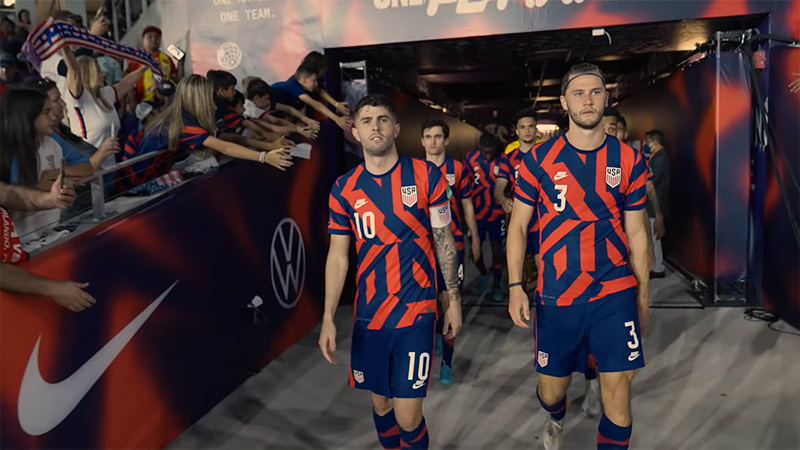
The question of whether America has a soccer team often stems from the sport’s unique historical trajectory in the United States compared to its deep roots in Europe and South America.
However, the modern reality is that the U.S. maintains a sophisticated and multi-layered soccer ecosystem.
Rather than having a single “team,” the country is represented by high-performing national squads and a rapidly expanding network of professional leagues.
From the historic dominance of the women’s national team to the strategic growth of Major League Soccer, the United States has firmly established itself as a significant player in the global football landscape.
The Global Presence of the United States National Teams
The United States is represented on the international stage by teams managed by the U.S. Soccer Federation, which oversees both the men’s and women’s programs.
These teams serve as the pinnacle of the American soccer pyramid, competing in FIFA-sanctioned tournaments and continental championships.
The distinction between the two programs is important, as each has followed a different path to international prominence.
The U.S. Men’s National Team (USMNT) and the 2026 Vision
The U.S. Men’s National Team is currently in a transformative phase as it prepares for its most significant milestone in decades: the 2026 FIFA World Cup.
As a co-host alongside Canada and Mexico, the U.S. is investing heavily in both talent and leadership to ensure a deep run in the tournament. A major signal of this ambition is the appointment of Mauricio Pochettino as the manager.
Pochettino, known for his tactical sophistication at top European clubs, is tasked with elevating a young, talented roster that features players competing in the world’s most prestigious leagues.
The goal for the USMNT is to move beyond regional success and establish themselves as a consistent threat to traditional footballing giants.
The Unmatched Legacy of the U.S. Women’s National Team (USWNT)
While the men’s side is ascending, the U.S. Women’s National Team has long been the gold standard for international soccer. They are historically one of the most successful teams in the world, boasting four World Cup titles.
This legacy of excellence continues to thrive; for instance, in April 2026, the team demonstrated its ongoing clinical edge with a 3-0 victory against Japan.
The USWNT serves as a primary driver of the sport’s popularity in the U.S., consistently drawing large television audiences and inspiring a robust youth development system that ensures a steady pipeline of world-class athletes.
The Domestic Professional Landscape: MLS and NWSL
Beyond national representation, the U.S. boasts thriving professional leagues that provide year-round competition.
These leagues have become essential for player development and for fostering local fanbases that rival those of traditional American sports like baseball or gridiron football.
| Feature | Major League Soccer (MLS) | National Women’s Soccer League (NWSL) |
|---|---|---|
| Tier | Top-tier Men’s Professional | Top-tier Women’s Professional |
| Number of Teams | 30 | 14 (Expanding) |
| Notable Clubs | Inter Miami CF, LA Galaxy, Seattle Sounders | Portland Thorns, Angel City FC |
| Reigning Champions | Inter Miami CF | Varies by Season |
| Global Standing | Rapidly rising; high-profile signings | Arguably the best women’s league in the world |
Major League Soccer (MLS): A 30-Team Powerhouse
Major League Soccer has seen exponential growth since its inception in 1996. Today, it features 30 teams across the U.S. and Canada, creating a broad geographic footprint.
The league has transitioned from a “retirement league” for aging European stars into a competitive environment that balances veteran experience with emerging homegrown talent.
The presence of Inter Miami CF, the current reigning champions, highlights the league’s ability to attract global attention.
Clubs like the LA Galaxy and Seattle Sounders FC have also built storied histories, winning multiple titles and developing passionate supporter cultures that utilize traditional chants, tifos, and community-driven celebrations.
The National Women’s Soccer League (NWSL): Global Leaders
The NWSL represents the top-tier of women’s professional soccer in the United States and is widely regarded as one of the most competitive leagues globally.
Featuring powerhouse franchises like the Portland Thorns and the high-profile Angel City FC, the league has set new benchmarks for attendance and commercial investment in women’s sports.
The NWSL’s success is a critical component of the broader U.S. soccer strategy, as it provides the platform where USWNT stars and international imports compete at the highest level, maintaining the standard of play that has made the U.S. a perennial favorite in international competitions.
The Strategic Impact of Hosting the 2026 FIFA World Cup
The 2026 FIFA World Cup is more than just a tournament; it is a catalyst for the long-term expansion of the sport within American borders.
Co-hosting this event provides the U.S. with an unprecedented opportunity to improve infrastructure, increase participation rates, and secure lucrative commercial partnerships.
The logistical scale of hosting matches across multiple North American cities will demonstrate the country’s capability to manage the world’s largest sporting event.
From a sporting perspective, the 2026 World Cup serves as the ultimate “north star” for the USMNT.
The pressure of playing on home soil, combined with the tactical direction of Mauricio Pochettino, is expected to accelerate the development of the “Golden Generation” of American players.
This period is viewed by analysts as the best chance for the U.S. to achieve a breakthrough performance that could permanently alter the global perception of American men’s soccer.
The Managerial Shift: Why Mauricio Pochettino Matters
In the professional world of soccer, the manager is often as vital as the players on the pitch. The decision to bring in a high-caliber leader like Mauricio Pochettino signals a departure from the conservative approaches of the past.
Pochettino brings a wealth of experience from the English Premier League and French Ligue 1, where he managed elite rosters and competed in the UEFA Champions League.
His appointment suggests that the U.S. Soccer Federation is no longer content with simply qualifying for tournaments.
They are seeking a sophisticated tactical identity—one characterized by high-pressing, fluid transitions, and a modern defensive structure.
For a nation that has often struggled with a cohesive “soccer identity,” Pochettino’s influence could provide the structural foundation needed for the U.S. to compete with the likes of Brazil, France, and Argentina.
Infrastructure and the Future of the American Game
While the national teams and professional leagues get the most headlines, the true strength of American soccer lies in its infrastructure.
Over the last two decades, billions of dollars have been invested in soccer-specific stadiums, state-of-the-art training facilities, and youth academies.
These academies, often run by MLS and NWSL clubs, have begun to produce players who are being scouted and signed by top European clubs at younger ages than ever before.
This shift in talent development means that the U.S. is no longer solely reliant on the collegiate system to produce professional players.
By integrating youth prospects into professional environments earlier, the U.S. is narrowing the technical gap that previously existed between American players and their international counterparts.
This systemic evolution ensures that the answer to “Does America have a soccer team?” will continue to be a resounding “Yes,” backed by a deep and sustainable pool of talent.
Frequently Asked Questions (FAQ)
Who is the most successful U.S. soccer team?
The U.S. Women’s National Team (USWNT) is the most successful, having won four FIFA World Cups and multiple Olympic gold medals.
Which American city has the best soccer team?
Success in American soccer is decentralized. In the MLS, Inter Miami CF currently holds the title of reigning champions, while the Seattle Sounders and LA Galaxy are historically among the most decorated.
In the NWSL, teams like the Portland Thorns have established a long-standing reputation for excellence.
When is the next World Cup in the U.S.?
The United States will co-host the next FIFA World Cup in 2026, alongside Canada and Mexico.
Does the U.S. have a professional league for women?
Yes, the National Women’s Soccer League (NWSL) is the premier professional league for women in the United States, featuring teams like Angel City FC and the Portland Thorns.
Conclusion: A Mature Soccer Nation
In summary, the United States does not just have a soccer team; it has a comprehensive and thriving soccer culture that spans across genders and professional levels.
The USMNT is building toward a historic 2026 World Cup under world-class leadership, while the USWNT continues to dominate as a global powerhouse.
Domestically, the MLS and NWSL provide high-level competition and a professional path for the next generation of athletes.
As the 2026 World Cup approaches, the focus is not on whether soccer will “make it” in America—it already has.
The focus is now on how far these teams can go on the world stage and how the domestic leagues will continue to evolve in an increasingly competitive global market.
For fans, investors, and players alike, the future of soccer in the United States has never looked more promising.