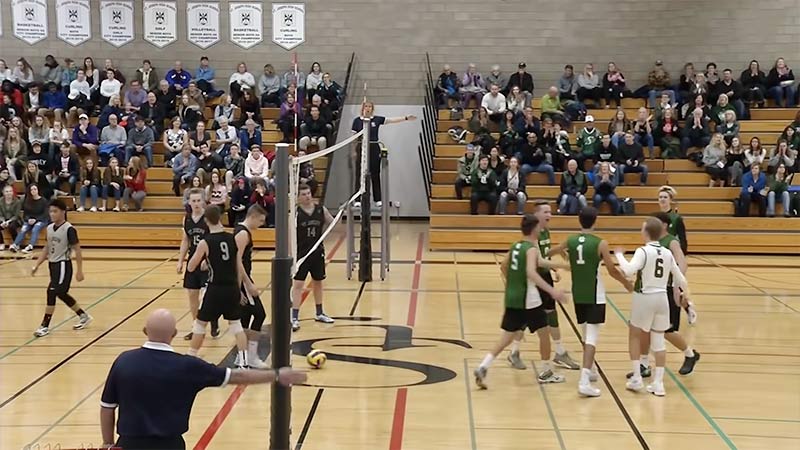
In the evolving landscape of amateur athletics, few sports have seen a more meteoric rise in participation and spectator engagement than high school volleyball.
To the uninitiated, the rapid-fire exchanges and high-flying athleticism can appear chaotic. However, beneath the surface lies a rigid, mathematically precise structure designed to reward consistency, stamina, and mental fortitude.
Whether you are a student-athlete aiming for a collegiate scholarship, a parent supporting from the bleachers, or a sports enthusiast looking to understand the mechanics of the game, mastering the scoring and match structures is essential.
This guide provides a deep-dive analysis into the regulatory standards that govern high school play, ensuring you are equipped with the knowledge to navigate every set with the precision of a world-class strategist.
The Fundamental Rhythm: Why Volleyball Shuns the Clock
Unlike football, basketball, or soccer, volleyball is not a time-constrained sport. There is no “running out the clock” or “stalling for time.”
Instead, high school volleyball is governed by a set-based structure. This fundamental difference transforms the game from a battle against time into a battle of endurance and momentum.
The Logic of the Set
In high school volleyball, matches are divided into “sets” rather than quarters, halves, or innings. This ensures that every point matters and that a team can never truly be out of a game until the final whistle blows.
Match Formats: The Best-of-Five Standard
At the varsity level, the gold standard for high school competition is the best-of-five match format. This means that the first team to win three sets is declared the winner.
This structure is designed to test a team’s depth and their ability to adjust tactics over a prolonged period.
Why Best-of-Five Matters:
- Momentum Management: A team might lose the first two sets but can still mount a comeback by winning the subsequent three.
- Strategic Depth: Coaches must manage player fatigue and rotations over a potentially long evening.
- Psychological Resilience: Winning a best-of-five match requires more than just skill; it requires the mental toughness to stay focused for over two hours of high-intensity play.
Navigating Competition Tiers: Best-of-Five vs. Best-of-Three
While the best-of-five format is the standard for most varsity matches, high school volleyball incorporates flexibility to accommodate different levels of play and tournament schedules.
The Best-of-Three Format
For junior varsity (JV), freshman teams, or weekend tournaments where multiple matches must be played in a single day, the best-of-three format is frequently utilized.
In a best-of-three scenario:
- The first team to win two sets wins the match.
- The first two sets are typically played to 25 points.
- If a third set is necessary, it serves as the deciding set.
Strategic Differences
From an SEO and strategic content perspective, it is vital to understand the “user intent” of these different formats. In a best-of-five varsity match, the “burn rate” of a team’s energy is slower.
In a best-of-three tournament match, the “sprint” is on from the first serve. There is significantly less room for error, as losing the first set puts a team’s “back against the wall” immediately.
The Mechanics of the Standard Set: The Road to 25
The scoring system in high school volleyball is built on a “rally scoring” foundation. This means that a point is awarded on every single serve, regardless of which team served the ball. This keeps the game moving at a brisk pace and ensures constant engagement.
The 25-Point Threshold
A standard set in high school volleyball is played to 25 points. However, reaching 25 is only half the battle.
The “Win-by-Two” Mandate
One of the most critical rules in the sport is the requirement for a two-point advantage to conclude a set.
If a score reaches 24-24, this is often referred to in broader volleyball circles as “deuce” (though the term is more common in tennis). The set does not end at 25; it continues until one team gains a clear two-point lead (e.g., 26-24, 27-25, etc.).
Expert Insight: The win-by-two rule is a “trust signal” for the sport’s integrity. It ensures that a team cannot win on a lucky fluke or a single officiating error at the very end of a set. It demands that the winning team proves their superiority through a sustained margin of performance.
The Deciding Set: High-Stakes Tiebreakers
When two evenly matched varsity teams reach a stalemate of two sets apiece, the match moves into the “Deciding Set”. This is the pinnacle of high school volleyball drama.
The Shift to 15 Points
Unlike the first four sets, the fifth and final set—the “deciding set”—is played to only 15 points. This shorter format increases the pressure exponentially.
In a 15-point set, a single service run or a string of unforced errors can end a team’s night before they have a chance to regroup.
Consistent Logic: The Two-Point Rule Remains
Even in this shortened sprint to 15, the two-point advantage rule remains in full effect. A fifth set could theoretically go on indefinitely (e.g., 18-16, 20-18) until the two-point margin is established.
Tactical Implications of the Fifth Set
- Fast Starts: Coaches often prioritize their strongest servers and hitters in the early rotations of the fifth set to build an early lead.
- Side Switches: In many high school jurisdictions, teams will switch sides of the court when one team reaches 8 points to ensure that neither team has an unfair advantage due to lighting, ceiling height, or court conditions.
- Timeout Management: With only 15 points available, timeouts become precious commodities used to “freeze” an opposing server or break a scoring run.
Beyond the Scoreboard: The Evolution of High School Rules
To truly understand high school volleyball, one must look at how these scoring structures align with the National Federation of State High School Associations (NFHS) guidelines.
While the core scoring mechanics (best-of-five, 25 points, win-by-two) are standard across the United States, subtle variations exist based on state-level governing bodies.
The Impact of Rally Scoring
Historically, volleyball used “side-out scoring,” where only the serving team could score. The shift to rally scoring—which is what the 25-point sets are based on—was a data-driven decision to make the game more television-friendly and predictable in length.
For high school athletics, this allowed for better scheduling of multi-game nights (e.g., JV followed by Varsity).
The Role of the Libero in Scoring
While not a scoring rule per se, the introduction of the libero (a defensive specialist) has fundamentally changed how teams reach that 25-point mark.
By allowing a defensive expert to remain on the floor, rallies have become longer and more competitive, making the path to 25 points a more grueling test of skill than in previous eras.
Applying Volleyball Strategy to Leadership
At the highest levels of corporate leadership, we often look to sports for metaphors of excellence. The structure of high school volleyball offers several key takeaways for any SEO strategist or business leader:
Iterative Success (Sets)
Don’t focus on the whole “match” at once. Focus on winning the current set. In business, this translates to hitting quarterly KPIs to achieve annual goals.
The Margin of Excellence (Win-by-Two)
Average performance isn’t enough. To “win,” you must demonstrate a clear advantage over the competition.
Agility in Shorter Cycles (The 15-Point Set)
When the market moves fast, or a project enters its final phase, you must be able to pivot to a “sprint” mindset while maintaining the same quality standards.
Enhanced FAQ: Your Questions Answered
Q: Does a high school volleyball match always last five sets?
A: No. In a best-of-five format, a match can end in “three straight” if one team wins the first three sets. The fourth and fifth sets are only played if they are necessary to determine a winner.
Q: What happens if the score is tied 24-24?
A: The game continues until one team leads by two points (e.g., 26-24). There is typically no “cap” or maximum score in high school volleyball; the teams play until the margin is met.
Q: Why is the fifth set only to 15 points instead of 25?
A: This is designed to serve as a “tiebreaker” format. It provides a high-stakes, rapid conclusion to the match, ensuring that the event concludes within a reasonable timeframe while still testing the teams’ ability to perform under pressure.
Q: Are tournament sets always to 25?
A: Not always. While most follow standard scoring, some tournament directors may choose to play sets to 21 points or use a “best-of-three” format to accommodate a large number of teams.
Conclusion: Mastering the Court
Understanding the scoring and match structure of high school volleyball is the first step toward appreciating the complexity and beauty of the sport.
From the standard best-of-five varsity match to the high-intensity deciding set to 15, every rule is crafted to ensure that the most consistent and resilient team emerges victorious.
As an athlete, use this knowledge to pace your energy and focus. As a fan, use it to anticipate the momentum shifts that make volleyball one of the most exciting sports to watch. The road to 25 points is paved with strategy, and now, you have the roadmap.