In the world of competitive athletics, the precision of one’s equipment often dictates the ceiling of one’s performance.
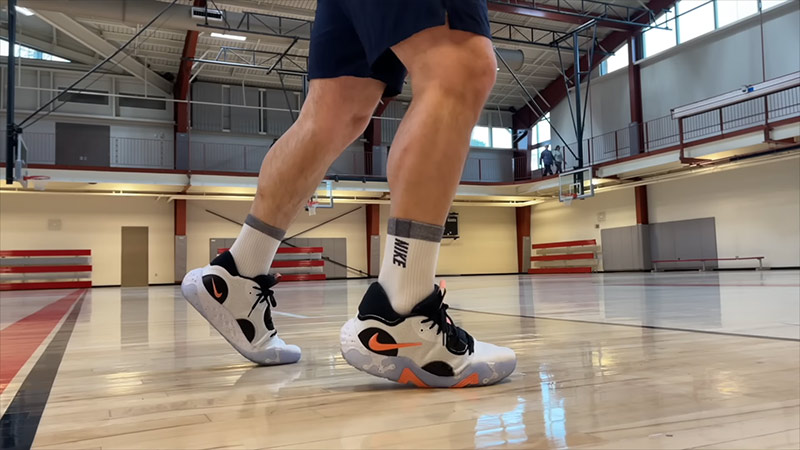
For multi-sport athletes or those transitioning from the hardwood to the hard court, a common question arises: can a high-quality basketball shoe serve as a dual-purpose tool for tennis?
While both disciplines share a common heritage of high-intensity movement, a technical analysis reveals that the engineering requirements for each are fundamentally distinct.
Understanding the nuance between these two types of footwear is not merely a matter of aesthetics; it is a critical consideration for injury prevention, fiscal responsibility, and on-court efficiency.
While basketball shoes may offer a temporary solution for the casual player, the structural demands of tennis eventually expose the limitations of basketball-specific engineering.
The Biomechanical Foundation: Overlapping Needs, Divergent Solutions
At a high level, basketball and tennis appear to share a similar physiological profile. Both sports are characterized by explosive bursts of energy, frequent lateral transitions, and a significant reliance on ankle stability.
Consequently, both types of footwear are designed to provide robust side-to-side support and protection against the rolling of the ankle.
However, the divergence begins with the specific nature of the movement patterns. Basketball is a game defined by verticality. Players require substantial impact protection for repetitive jumping and landing. Tennis, conversely, is a game of horizontal grinding.
It requires a lower center of gravity to facilitate immediate directional changes and “stop-and-start” sprints. This fundamental difference in movement dictates every aspect of shoe construction, from the density of the rubber to the height of the midsole.
The Outsole Conflict: Rubber Density and Surface Friction
The most immediate failure point when using basketball footwear for tennis is the outsole. The engineering of a basketball shoe’s grip is optimized for indoor hardwood—a surface that is relatively smooth and consistent. To provide traction on these surfaces, basketball shoes utilize a softer rubber compound.
When these soft outsoles are introduced to the abrasive, high-friction environment of a concrete hard court, the results are detrimental to the gear. The friction generated by a tennis court acts as a literal abrasive, grinding down the soft rubber at an accelerated rate.
An apt comparison is the use of specialized winter tires on hot, summer pavement; the material is simply not designed for the heat and texture of the surface, causing it to “melt” away far sooner than intended.
Tennis-specific footwear utilizes a high-density, “harder” rubber compound specifically engineered to withstand the relentless friction of concrete.
For a serious player, the rapid degradation of basketball shoes on a hard court represents a poor return on investment, as the footwear will likely require replacement long before a tennis-specific alternative would.
The “Toe Drag” Phenomenon and Structural Integrity
One of the most unique stressors in tennis is the “toe drag.” This occurs most frequently during the service motion or when a player lunges for a wide ball, scraping the front inside edge of the trailing foot across the court surface.
Tennis shoes are reinforced with extra rubber or specialized “drag guards” in this specific high-wear zone to ensure the shoe remains intact. Basketball shoes, by design, lack this targeted reinforcement.
Without this additional layer of protection, a tennis player using basketball shoes will likely rip through the upper material or the edge of the outsole in a matter of weeks, if not days.
This structural vulnerability is a primary reason why basketball shoes fail the “tennis test” in a competitive or high-frequency training environment.
Stack Height and the Risk of Instability
Performance footwear is often a balance between cushioning and “court feel.” Basketball shoes are notoriously “bulky and heavy” compared to their tennis counterparts.
This bulk is largely due to the increased midsole height—often referred to as stack height—intended to provide impact padding for jumpers.
While this extra cushioning is beneficial for a center rebounding a basketball, it can be a liability on the tennis court.
Tennis shoes are designed with a low-profile silhouette to keep the athlete’s foot as close to the court surface as possible. This low center of gravity is essential for two reasons:
- Balance: Being closer to the ground allows for more stable transitions during the aggressive, low-to-the-ground movements required in baseline rallies.
- Safety: A higher stack height increases the leverage on the ankle during a sudden lateral stop. By staying low to the ground, tennis players reduce the “tipping point” that often leads to severe ankle sprains.
Comparative Analysis: At a Glance
To better understand these technical differences, we can examine the specific feature sets of each shoe type:
| Feature | Basketball Shoes | Tennis Shoes |
|---|---|---|
| Outsole Rubber | Softer (optimized for indoor wood) | Harder, high-density (optimized for concrete) |
| Durability | Wears out quickly on hard courts | High durability; resists hard court friction |
| Primary Support | Optimized for jumping and landing | Built for quick starts and sudden stops |
| Weight & Profile | Often bulky; higher off the ground | Lighter; low-profile for better balance |
When is it Acceptable to Use Basketball Shoes for Tennis?
Despite the technical disadvantages, there are scenarios where basketball shoes are “okay” for tennis play. For a casual, recreational player who perhaps hits the court once a month for light hitting, the immediate need for a specialized tennis shoe is less pressing.
In these instances, the lateral support provided by basketball shoes is sufficient to prevent immediate injury. However, as a player’s skill level increases, so does the intensity of their footwork.
Once an athlete begins to incorporate aggressive sliding, deep lunges, and high-energy serves into their game, the transition to tennis-specific footwear becomes a necessity for both performance and safety.
Long-term Implications for Performance and Health
Choosing the wrong footwear can have cascading effects on an athlete’s physical health. The lack of proper “court feel” in a bulky basketball shoe can lead to tentative movement, as the brain perceives the instability of a high stack height.
Furthermore, the rapid wear of the outsole on a basketball shoe can lead to unpredictable traction. A shoe that “slips” when it should “grip”—or vice versa—is a leading cause of ligamentous injuries in the lower extremities.
Investing in a dedicated tennis shoe ensures that the outsole, the reinforced toe, and the low-profile midsole are all working in concert to support the specific demands of the sport.
This specialization allows the athlete to focus entirely on their tactical execution rather than worrying about the integrity of their equipment.
Frequently Asked Questions
Will basketball shoes ruin the tennis court?
Generally, no. Most modern basketball shoes feature “non-marking” outsoles. The primary victim of the mismatch is the shoe itself, which will be degraded by the court, rather than the court being damaged by the shoe.
Can I use tennis shoes for basketball?
While tennis shoes offer the lateral support needed for basketball, they lack the vertical impact protection required for consistent jumping.
Much like using basketball shoes for tennis, this is “okay” for casual play but not recommended for competitive environments where jumping is a primary movement.
Are there “hybrid” shoes available?
While some “cross-trainers” attempt to bridge the gap, they often result in a compromise that excels at neither sport. For the best experience, sport-specific footwear is always the gold standard.
Conclusion: Engineering Matters
The data is clear: while basketball footwear provides the lateral stability required for basic court movement, it fails to meet the rigorous durability and balance requirements of tennis.
The abrasive nature of hard courts, the specific demands of the toe drag, and the necessity of a low-profile center of gravity all point toward the necessity of tennis-specific equipment.
For the athlete looking to optimize their game, protect their body, and ensure the longevity of their gear, the choice is simple.
Leave the basketball shoes for the hardwood and invest in the specialized engineering that only a true tennis shoe can provide. By aligning your equipment with the specific demands of the environment, you ensure that your only focus remains on the next point.