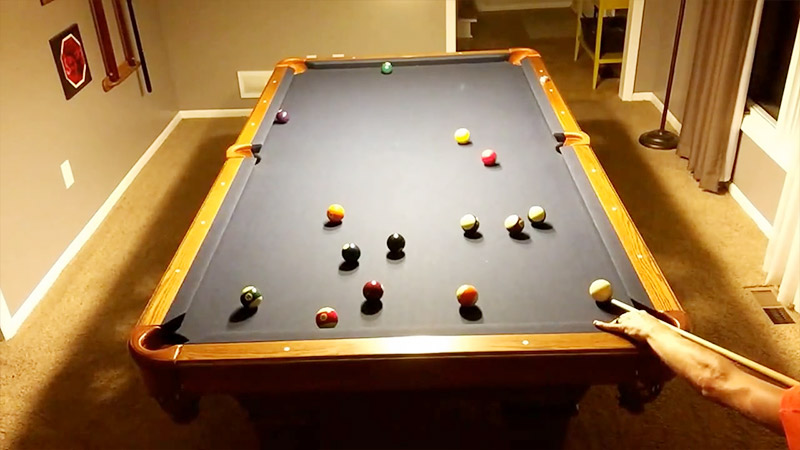
Choosing a pool table is more than a simple furniture purchase; it is an investment in a legacy of entertainment, skill-building, and aesthetic refinement for your home.
However, the most common mistake made by enthusiasts is failing to account for the physical requirements of the game itself.
A pool table that is too large for its environment doesn’t just look cramped—it fundamentally breaks the gameplay experience, forcing players to use awkward angles or “short-stroke” their shots.
In this comprehensive guide, we utilize decades of industry expertise to break down the technical requirements for every table size, from the recreational 7-foot model to the professional 9-foot tournament standard.
Whether you are designing a high-end basement lounge or a dedicated professional practice space, this data-driven analysis will ensure your room is perfectly optimized for the “Brunswick standard” of play.
The Foundation: Why Room Dimensions Are Non-Negotiable
Before browsing finishes or feels colors, you must understand the “Active Play Zone.” A pool table’s footprint is only the starting point.
The real measurement begins at the edge of the playing surface and extends outward to accommodate the length of a cue and the player’s backswing.
Beyond the Table: Planning for Gameplay and Comfort
A truly functional game room prioritizes gameplay, comfort, and aesthetics. If a player’s cue hits a wall during a critical shot, the integrity of the game is lost.
To avoid this, you must account for the standard cue length of 58 inches. This traditional insight serves as the baseline for all professional room size recommendations.
The First Step: Strategic Room Measurement
Success in game room design follows a simple rule: Measure twice, buy once.
How to Measure for Success
- Identify the Center Point: Determine exactly where the table will sit. This is usually centered under a dedicated light fixture.
- Account for Obstacles: Measure from the edge of the playing area to the nearest wall, support pillar, or piece of furniture (such as bar stools or cue racks).
- The Clearance Rule: You need enough space not only for the table but for the full extension of a cue around its entire perimeter.
Understanding Table Sizes & Player Profiles
Not all tables are created equal. The size you choose should align with your “Player Profile”—whether you are looking for casual family fun or a tournament-grade training environment.
The 7-Foot Table: The Recreational Powerhouse
- Dimensions: 38″ x 76″ playing area.
- Best For: Small-to-medium rooms, casual players, or beginners.
- The Experience: Smaller tables keep the game fast-paced and fun, making them ideal for family dens or multi-purpose residential spaces where square footage is at a premium.
The 8-Foot Table: The Home Game Room Standard
- Dimensions: 44″ x 88″ playing area.
- Best For: The traditional home game room.
- The Experience: This is the most popular choice for residential settings. It offers a balanced playing surface that challenges experienced players while remaining accessible for guests.
The Oversized 8-Foot Table: The Serious Contender
- Dimensions: 46″ x 92″ playing area.
- Best For: Serious home play and experienced enthusiasts.
- The Experience: Known as the “Pro 8,” this size offers a playing surface similar to a 9-foot table but fits into slightly more restrictive spaces. It is the perfect compromise for those who want a professional feel without the commercial room requirements.
The 9-Foot Table: The Tournament Standard
- Dimensions: 50″ x 100″ playing area.
- Best For: Professional players and dedicated billiards halls.
- The Experience: This is the official size for competitive play. It requires a dedicated, large room to allow for full-range shots and an authentic billiards experience.
The Data: Minimum Room Requirements
To ensure your space meets the highest standards of play, refer to the following dimensions based on a standard 58-inch cue.
| Table Size | Playing Area | Min. Room Length | Min. Room Width |
|---|---|---|---|
| 7 Foot | 38″ x 76″ | 13′ 0″ | 16′ 0″ |
| 8 Foot | 44″ x 88″ | 13′ 0″ | 17′ 0″ |
| Oversize 8 Foot | 46″ x 92″ | 13′ 6″ | 17′ 6″ |
| 9 Foot | 50″ x 100″ | 14′ 0″ | 18′ 0″ |
(Data sourced from Brunswick Billiards Room Size Guide)
The “Gap” Strategy: Navigating Tight Spaces with Shorter Cues
What happens if your dream table is an 8-foot model, but your room is six inches too narrow? You don’t necessarily have to size down the table. By strategically using shorter cues, you can optimize a restricted space without sacrificing the table size you desire.
- Mid-Size Cues (52″): Perfect for rooms with minor obstacles. For an 8-foot table, a 52-inch cue reduces the minimum room width requirement to 15’6″.
- Short Cues (48″): The ultimate solution for “Extremely Tight Locations” like basements with support pillars or multi-purpose rooms. Using 48-inch cues can allow a 7-foot table to function in a space as small as 11’6″ x 14’6″.
Room Aesthetics and Integrated Design
A pool table is a statement piece that defines the room’s visual identity.
- The Centerpiece Effect: Larger tables, such as the legendary Gold Crown VII, act as a dramatic focal point, signaling a commitment to quality and tradition.
- Space Harmony: In multi-functional rooms, a smaller 7-foot table helps maintain an open, airy feel.
- Complementary Furniture: To truly meet Fortune 500 standards for interior design, consider the “peripheral zone.” A well-appointed room includes coordinated bar stools, pub tables, and cue racks that match the table’s craftsmanship.
The Brunswick Legacy: Why Quality Matters
When you choose a table, you are participating in a history that spans generations. Brands like Brunswick Billiards have been trusted by champions since 1845.
The Gold Crown VII, for instance, represents the pinnacle of tournament-grade design, favored by professionals for its unparalleled consistency and durability.
Investing in a high-quality table ensures that the dimensions you plan for today remain relevant for decades. Cheap, non-standard tables often warp or provide inconsistent play, rendering your careful room planning moot.
Enhanced FAQ: Expert Answers for Complex Spaces
Q: Can I put a pool table in a room with a support pillar?
A: Yes. If a pillar obstructs a specific shot, you can keep a 48-inch “shorty” cue on hand specifically for those rare instances where the pillar interferes with a full 58-inch stroke.
Q: Does the rug size matter?
A: While not a requirement for gameplay, a rug should ideally be large enough to accommodate the table and the area where players stand to shoot. This protects your flooring and adds a layer of acoustic dampening to the room.
Q: How much space is needed for a cue rack?
A: Wall-mounted cue racks require almost zero floor space but do require “pull-out” room. Ensure the rack is placed in a location where a 58-inch cue can be removed vertically or horizontally without hitting the ceiling or a nearby table.
Conclusion: Making Your Final Decision
Finding the perfect pool table is a balance of mathematical precision and personal style. By adhering to the minimum room requirements and understanding the nuances of cue clearance, you ensure that every game played in your home is one of comfort and professional quality.
Ready to transform your home? Trust the dimensions used by champions. Whether you are leaning toward the recreational versatility of a 7-foot table or the professional prestige of a 9-foot Gold Crown, your space deserves the best.
Download our [Printable Room Planning Guide] or [Find a Dealer] today to begin your journey toward the ultimate home game room experience.