
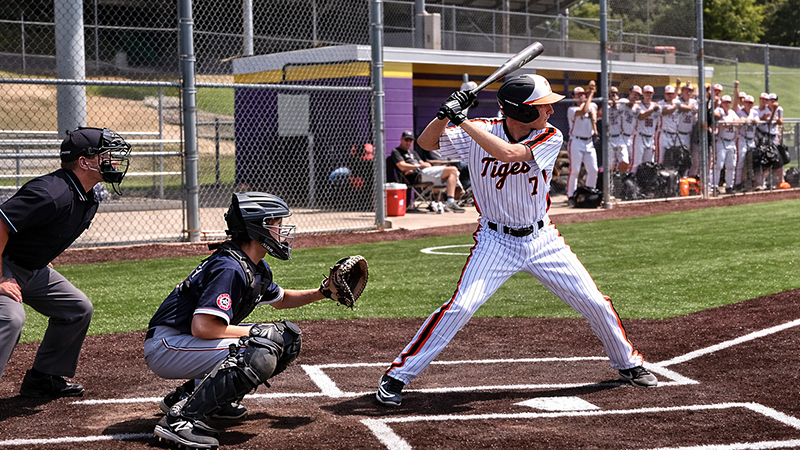
In the world of professional sports, few traditions are as strictly codified yet strategically significant as the batting order of teams in baseball.
Whether you are a lifelong fan or a newcomer from abroad, one of the first things you notice is the rhythmic split of an inning. But who bats first, the home or away team?
Understanding this fundamental rule offers a fascinating glimpse into the game’s enduring complexity, historical roots, and the high-stakes strategies employed by managers.
The Fundamental Rule: Top and Bottom of the Inning
In baseball—spanning Major League Baseball (MLB), Minor League Baseball, college, and most amateur levels—the rule is absolute: the visiting (away) team always bats first.
This structure divides every inning into two distinct halves:
- The “Top” Half: The visiting team takes its turn at the plate while the home team defends the field.
- The “Bottom” Half: The home team takes its turn to bat, and the visiting team moves to the field to defend.
This consistent application ensures that the game has a predictable flow, regardless of whether it is played in a local park or a massive MLB stadium.
The Strategic Power of the “Last At-Bat”
The most significant implication of the visiting team batting first is that the home team always bats last. This isn’t just a matter of tradition; it provides a tangible tactical benefit known as the “last at-bat advantage”.
1. The Walk-Off Win
One of the most thrilling moments in sports is the “walk-off.” Because the home team bats in the bottom half of the final inning, if they score the winning run, the game ends immediately.
They “walk off” the field as victors without needing to complete the three outs of the half-inning. Conversely, a visiting team can never hit a walk-off home run; they must always record three defensive outs in the bottom of the inning to secure a win.
2. Knowing the Target
Batting second allows the home team to know exactly how many runs are required to tie or win the game. This information shapes their offensive strategy.
For example, if it is the bottom of the 9th and the home team is down by one run, they might prioritize “small ball”—bunt, steal, or sacrifice fly—to tie the game, whereas the away team in the top of the 9th must simply score as many as possible to build a cushion.
3. Game Management and Pitching
The structure allows home-team managers to make more informed decisions regarding pitching changes and substitutions.
In the National League, specifically, a road team manager might have to decide whether to pull a dominant pitcher for a pinch hitter early in a close game, whereas the home manager can wait to see the outcome of the visitor’s inning before making that same high-stakes call.
Historical Context: Why Do We Play This Way?
The tradition of the visiting team batting first dates back to the very early days of the sport. While now codified in the official rules, its origins were more practical and, surprisingly, social.
- The Politeness Factor: Some historical accounts suggest the rule was adopted because the home team was being “polite” by allowing their guests the first opportunity to bat.
- Practicality: In the 19th century, allowing the home team to have the final opportunity to score was seen as a logical way to ensure the home crowd saw a definitive conclusion to the game.
- Codification: Over time, what began as a custom became an official rule of the game, remaining a staple of the sport’s identity through centuries of evolution.
Statistical Insights: Does It Really Help You Win?
Is the advantage of batting second real, or is it purely psychological? Data suggests the impact is significant. Statistical analyses of professional baseball show that home teams win approximately 53.9% to 54% of the time.
Factors contributing to this winning percentage include:
- Familiarity: Players are more comfortable in their own stadium, from the dirt on the mound to the height of the outfield walls.
- Crowd Support: The home crowd’s energy, especially during a high-stakes bottom of the 9th, can provide a massive psychological boost.
- Strategic Adjustments: As noted, the ability to respond to the visiting team’s performance gives the home team a measurable edge in late-game decision-making.
Psychological Factors and Game Dynamics
The order of batting heavily influences the psychological flow of a match.
Pressure on the Visiting Team
The visiting team often feels an added pressure to adopt an aggressive start. Because they know they will not have the “final word” in the 9th inning, they often try to set a dominant tone early to put the home team on their heels.
Fan Engagement and Momentum
The game starts with a specific ritual: the entire starting lineup of the home team runs onto the field to be cheered by their fans as they take their defensive positions. This helps the home team prioritize a strong defensive focus to maintain control of the game early on.
Exceptions to the Rule: When Things Change
While the “Away Team First” rule is standard, there are specific scenarios where the order might vary or be determined differently.
Neutral Sites
For games played at neutral locations (such as certain international series or tournament rounds), a coin toss or pre-determined tournament rules designate which team acts as the “home” team.
Spring Training
In MLB spring training, managers occasionally agree to alter the batting order for practice purposes, ensuring certain players get specific at-bats regardless of the score.
Exhibition and Charity Games
These matches often follow unique rules designed for entertainment value rather than strict competition.
Youth and Local Leagues
Some amateur levels may vary in who bats first based on logistical needs or regional customs.
Famous Historical Moments Under This Rule
The “last at-bat” advantage has produced some of the most legendary moments in baseball history.
- 1986 World Series (Game 6): The New York Mets capitalized on being the home team to stage a dramatic comeback against the Boston Red Sox in the bottom of the 10th inning, eventually winning on a famous error.
- 2001 World Series (Game 7): The Arizona Diamondbacks secured a historic title with a walk-off hit in the bottom of the 9th inning, perfectly illustrating why the advantage of batting last is so coveted.
International Baseball Standards
The tradition of the visiting team batting first is not limited to North America. International competitions, including the World Baseball Classic (WBC) and the Olympics, adhere strictly to the same “top/bottom” structure.
While local leagues in other countries might have slight variations based on regional customs, the global standard remains consistent with the American professional model.
Modern Adaptations and Data Analytics
In the modern era, data analytics and advanced metrics have deepened our understanding of the batting order.
While the core rule of the visiting team batting first remains intact, managers now use sophisticated data to decide how to align their defense and bullpen to counteract the inherent advantage the home team holds in the final frames.
Conclusion: A Defining Element of the Game
Whether you view it through the lens of historical politeness or modern strategic management, the rule of who bats first is a defining element of baseball’s charm.
It creates a unique tension—a race for the visitor to score early and a calculated response for the home team to finish the job.
As the sport continues to evolve with technological advances, the fundamental rhythm of the “top” and “bottom” of the inning remains an unbreakable thread in the fabric of America’s pastime.
The next time you see the home team run out to their positions at the start of the first inning, you’ll know it’s not just a tradition—it’s the start of a deep-seated strategic battle.






I totally agree with you. As one might expect, the visiting team will be the opener. And, since a baseball game’s inning is divided into two parts, the visiting team will bat in every first half.