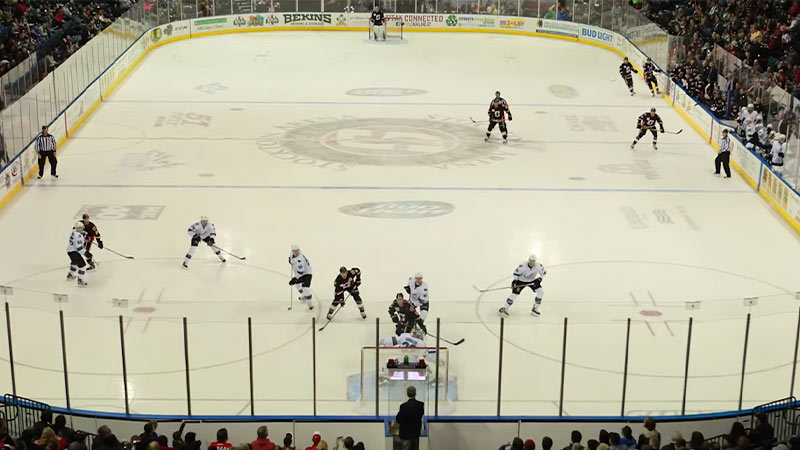
In the fast-paced ecosystem of professional ice hockey, regulations are engineered to preserve continuous gameplay, reward strategic positioning, and penalize passive defensive tactics.
Among the foundational rules governing game flow and ice management, few regulations carry as much tactical significance as icing.
Understanding what constitutes icing—along with its various technical applications, exceptions, and strategic consequences—is essential for players, coaches, analysts, and casual enthusiasts alike.
This comprehensive guide breaks down the mechanics of icing, explores how rule variations operate across different competitive tiers, details the precise conditions required to trigger or wave off a call, and examines how modern teams navigate the tactical liabilities associated with committing an icing violation.
What Is Icing in Ice Hockey? Fundamental Principles
At its core, icing in ice hockey is a procedural rule designed to prevent defending teams from indiscriminately clearing the puck down the entire length of the rink simply to escape high-pressure defensive scenarios or waste valuable game time.
Icing occurs when a player shoots, bats, or deflects the puck from their own half of the ice—specifically from behind the center red line—all the way past the opposing team’s goal line without the puck being touched by any player along its trajectory.
Without the icing rule, teams facing overwhelming offensive pressure in their own zone could continuously dump the puck to the far end of the ice without consequence.
This would severely disrupt game flow, degrade the entertainment value of the sport, and eliminate the strategic necessity of executing clean breakout passes under pressure.
By penalizing unprompted full-ice clears, the governing bodies of hockey force teams to rely on skillful puck movement, skating agility, and structured tactical exits.
Core Requirements: What Constitutes an Icing Call?
To fully grasp how officiating crews assess icing during live action, one must understand the four distinct conditions that must simultaneously exist.
If any single condition fails to materialize, the play remains live or results in a different rule application altogether.
Condition 1: Point of Origin
The trajectory of the puck must originate from behind the center red line. The center red line bisects the rink into two halves.
For an icing infraction to be eligible, the shooting player’s stick-to-puck contact—or the point of deflection or batting—must take place entirely on their team’s defensive side of this center red line.
If a player crosses the center red line even by a fraction of an inch before releasing the puck, the play is considered a legal dump-in and icing cannot be called.
Condition 2: Trajectory and Distance Covered
The puck must travel the full remaining length of the rink and completely cross the opposing team’s goal line. The goal line is the red line extending across the width of the ice at the mouth of the net.
It is important to distinguish the goal line from the end boards; the puck does not need to physically strike the boards, but it must cross the red plane of the goal line.
Condition 3: No Intermediate Touch
Throughout its travel down the ice, the puck must remain completely untouched by any player from either team. This includes both offensive teammates and defensive opponents.
If an offensive player touches or deflects the puck down ice, or if a defending player manages to tip or control the puck before it crosses the goal line, the potential icing sequence is instantly negated.
Condition 4: The Puck Does Not Enter the Net
A crucial technical distinction involves the net itself. If a puck shot from behind the center red line travels the entire distance and accidentally enters the opposing team’s net, icing is not assessed.
Instead, the play results in a legitimate goal awarded to the shooting team. Icing applies strictly to pucks that cross the goal line outside the net perimeter without scoring.
Evolution of Rules: The Three Types of Icing
Hockey regulations have evolved over decades to balance game speed, player safety, and spectator enjoyment.
Outside of the provided notes, international bodies such as the IIHF, along with North American leagues like the NHL and youth associations, have refined icing mechanics to minimize high-speed board collisions.
As a result, three primary variations of the icing rule exist or have historically existed across competitive hockey.
Hybrid Icing (Professional Standards)
Hybrid icing represents the modern standard used in the NHL and numerous professional leagues worldwide.
Designed to preserve the exciting footrace for the puck while drastically reducing dangerous, full-speed crashes into the end boards, hybrid icing relies on linesmen judging a race to the end-zone face-off dots.
Under hybrid icing, as the puck travels down the ice, the linesman monitors the speed and trajectory of the defending skater and the attacking skater as they pursue the puck.
The imaginary line connecting the two end-zone face-off dots serves as the decision checkpoint:
- Defensive Priority: If the defending player reaches the imaginary line between the face-off dots first, the linesman blows the whistle and calls icing.
- Offensive Priority: If the attacking player reaches the face-off dots first, or if the race is too close to call, the icing is waved off, allowing play to continue without interruption.
No-Touch / Automatic Icing (Amateur Standards)
No-touch icing, often referred to as automatic icing, is predominantly enforced across youth, amateur, and recreational hockey leagues. In this format, player positioning and footraces are completely removed from the equation.
The moment the puck crosses the red plane of the opposing team’s goal line untouched, the officiating linesman immediately blows the whistle to halt play.
By eliminating any incentive for players to sprint toward the end boards at full speed, automatic icing provides maximum protection against impact injuries for non-professional athletes.
Touch Icing (Historical Context)
Touch icing is the traditional variation that governed hockey for nearly a century. Under classic touch icing rules, the puck crossing the goal line did not automatically stop play; rather, a defending player had to physically make contact with the puck behind the goal line to complete the icing call.
If an attacking player touched the puck first, icing was negated and play continued. While highly dramatic, touch icing resulted in numerous severe injuries when skaters collided with the boards at top speeds while battling for touch control.
Consequently, touch icing has been almost entirely phased out of organized hockey in favor of hybrid and automatic systems.
Operational Exceptions: When Is Icing Waved Off?
Even when a puck is shot from behind the center red line and crosses the opposing goal line untouched, specific gameplay contexts dictate that icing must be waved off by the officiating crew, allowing action to proceed seamlessly.
1. Shorthanded Situations (Penalty Kills)
The most common structural exception occurs when a team is killing a penalty. If a team is playing shorthanded—meaning they have fewer players on the ice than their opponent due to a serving penalty—they are legally permitted to shoot the puck down the full length of the ice without incurring an icing violation.
This exception offers necessary tactical relief to defending teams coping with a numerical disadvantage. Note that outside of the provided notes, this exception applies only to the shorthanded team; the team on the power play remains subject to standard icing rules.
2. Goaltender Involvement
Goaltenders directly influence icing calls through their positioning and actions. If the opposing goaltender leaves their crease or makes an overt movement or attempt to play the puck as it travels down the ice, the linesman will immediately wave off the icing call.
This rule prevents goaltenders from feigning disinterest or artificially baiting an icing stoppage when they actively engage with the puck’s line of movement.
3. Intended Pass vs. Direct Shot
In elite professional competitions such as the NHL, linesmen maintain discretion regarding pass intentions.
If the linesman determines that the puck was hit as an intended, reasonable pass to a teammate—and the receiving player narrowly missed controlling it—rather than a deliberate full-ice dump, icing may be officially waved off to keep the pace of play active.
4. Unreasonable Play by Defenders (Avoidable Icing)
Defending players are required to make a reasonable effort to play the puck if it is within their reach.
If a linesman judges that a defending skater had a fair, clear opportunity to touch or control the puck before it crossed the goal line, but deliberately chose to let it pass by to force an icing call, the linesman will wave off the icing.
This prevents defensive teams from artificially engineering stoppages when they could have legally played the puck.
Strategic Consequences: What Happens After an Icing Call?
An icing infraction carries immediate tactical penalties designed to disadvantage the offending team and reward the non-offending team.
Understanding these consequences highlights why elite coaches place such high emphasis on controlled puck movement.
Immediate Stoppage of Action
The moment an icing condition is confirmed, the linesman blows the whistle, bringing play to an immediate halt.
Defensive Zone Face-Off Location
Following an icing call, the face-off does not take place at center ice or in a neutral area. Instead, the face-off is moved all the way back to one of the two end-zone face-off dots inside the defensive zone of the team that committed the icing violation. This grants the non-offending team immediate, high-leverage offensive positioning right next to the opponent’s net.
Player Substitution Restriction (No Line Change)
Perhaps the most punishing strategic consequence of committing an icing violation is the line change restriction. The offending team is strictly forbidden from substituting any players on the ice before the ensuing face-off.
Skaters who were on the ice when the icing occurred must remain on the ice, regardless of how exhausted they might be after a grueling defensive shift.
Meanwhile, the non-offending team is allowed to make a complete line change, bringing fresh, top-tier offensive players onto the ice to exploit the tired defenders.
This procedural penalty frequently leads to sustained offensive pressure and high-danger scoring chances.
Summary
Mastering the rules of icing provides crucial clarity into hockey’s tactical depth. From controlling shift fatigue to optimizing defensive exits, managing the risk of an icing penalty is a cornerstone of modern team strategy.
- Puck Management: Defensemen must prioritize controlled breakout passes rather than unforced full-ice clears.
- Fatigue Exploitation: Teams facing exhausted opponents who have iced the puck should deploy their best offensive units for the ensuing defensive-zone face-off.
- Rules Awareness: Recognizing exceptions—such as goaltender movement or penalty kill exemptions—allows teams to make smarter split-second decisions on the ice.