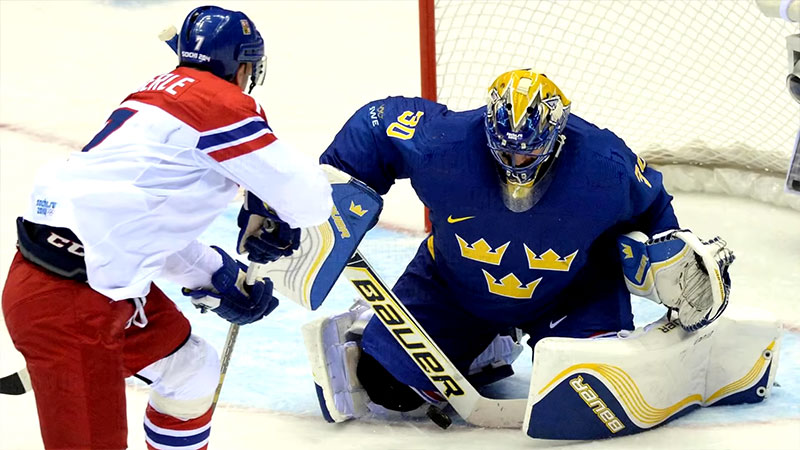
When watching a professional hockey game, fans quickly spot distinct letters stitched onto the upper front chest of select players’ sweaters.
While the letter “C” universally signifies the team Captain across multiple sports, the letter “A” carries a unique status exclusive to ice hockey.
Among casual spectators, media commentators, and even lifelong fans, significant debate and confusion persist regarding what this letter officially stands for.
Understanding the precise meaning, regulatory privileges, and strategic dynamic represented by the letter “A” is essential for anyone seeking a deeper mastery of hockey.
This comprehensive analysis examines the official rulebook definitions, on-ice communication privileges, league governing body variations, historical positional bans, and off-ice cultural impacts of the Alternate Captain.
Clarifying Terminology: Alternate Captain vs. Assistant Captain
The most common point of confusion surrounding hockey leadership letters is whether the “A” stands for “Alternate Captain” or “Assistant Captain”.
While fans and television broadcasters frequently use the term “Assistant Captain” in casual conversation, the letter “A” strictly stands for Alternate Captain.
The Rulebook Reality
A thorough review of the official National Hockey League (NHL) rulebook reveals that the term “Assistant Captain” does not appear a single time in relation to player designations. The rulebook exclusively uses the title Alternate Captain.
The designation “Alternate” reflects the literal function of the role: the player serves as an alternate representative to perform official captaincy duties when the designated Captain is off the ice, on the player bench, in the penalty box, or unavailable due to injury or illness.
Sweater Construction and Design Integration
The “A” patch is sewn directly onto the front upper chest of the hockey player’s garment, typically on the left or right side depending on team jersey aesthetics and shoulder patch layouts.
League regulations require the letter to be crafted in a contrasting color relative to the primary body of the garment so that on-ice officials can immediately identify designated leaders from a distance during fast-paced play.
Within hockey culture, these garments are traditionally referred to as “sweaters” rather than “jerseys”. This historic terminology dates back to the early origins of the sport, when games were played strictly outdoors on frozen ponds and open-air rinks during harsh winter months, requiring players to wear heavy knitted woolen sweaters for warmth.
On-Ice Authority: Referee Communication Protocols and Rulebook Mechanics
While fans often view the “A” patch as a badge of honor or leadership, it carries specific, legal functions under the rules of the game.
In hockey, leadership letters are not merely ceremonial honors; they confer exclusive communication rights with game officials.
Official Communication Rights with Referees
Under standard hockey regulations, only the official team Captain and designated Alternate Captains hold the legal right to discuss rule interpretations with referees during game stoppages.
Standard roster players who do not wear a “C” or an “A” are prohibited from initiating discussions with referees regarding penalty calls, goal reviews, or rule clarifications.
When an on-ice incident requires official clarification—such as a major penalty assessment, a match penalty, a contested goal under video review, or an all-out bench-clearing brawl—the referee will summon team leaders to communicate the officiating crew’s decision. The Alternate Captain steps into this primary communication role whenever:
- The team Captain is currently sitting on the bench during play stoppage.
- The team Captain is serving a penalty in the penalty box.
- The team Captain has suffered an injury or illness and is absent from the lineup.
- The franchise has chosen not to name an official Captain for the season.
Navigating the Referee Crease Perimeter
When discussions between game officials and team representatives take place, strict geographic boundaries must be maintained on the ice.
Official rulebooks designate the referee crease—a semi-circular area located in the neutral zone directly opposite the player benches—as the designated meeting area for game officials during stoppages.
Captains and Alternate Captains must gather strictly around the outer perimeter of the referee crease. Not even designated leaders are permitted inside the physical boundary of the referee crease itself.
Furthermore, all non-designated players must remain near their respective player benches and are strictly barred from approaching the referee crease area.
Risking Unsportsmanlike Conduct Penalties
Having the authority to speak with officials does not grant leaders the freedom to debate or berate referees.
The designated Captain and Alternate Captains are expected to act as professional liaisons, receiving officiating explanations from the referees and relaying those directives back to their head coaches and bench staff.
If an Alternate Captain abuses these speaking privileges by aggressively arguing calls, shouting, or demonstrating poor sportsmanship, the referee is authorized under NHL Rule Section 6.1 to assess a 2-minute unsportsmanlike conduct penalty against the player.
Governing Body Regulations & Roster Limits
The rules governing how many Alternate Captains a hockey team can designate depend on the specific league, jurisdiction, and governing body. Roster flexibility allows head coaches and front offices to distribute leadership responsibilities in several ways.
National Hockey League (NHL) Leadership Rules
Under official NHL regulations, a team has two choices for game-day roster leadership designations:
- Standard Leadership: Designate one official Captain (“C”) and up to two Alternate Captains (“A”).
- Alternate Leadership: Designate three Alternate Captains (“A”) and no Captain (“C”).
An NHL team is never permitted to wear four “A” patches simultaneously, even if no player wears a “C”. If a team operates without a Captain, three Alternate Captains share all on-ice and off-ice captaincy duties.
A famous historical example of this structure occurred during the 1969–70 NHL season with the Boston Bruins.
The Bruins elected not to name an official Captain for the season, instead assigning “A” patches to three core veterans: Johnny Bucyk, Phil Esposito, and Ed Westfall.
When the Boston Bruins captured the Stanley Cup championship in 1970, Bucyk—as the most senior Alternate Captain—was given the honor of accepting the Stanley Cup trophy on behalf of the organization.
League Rules Comparison Breakdown
Different hockey associations maintain subtle rule variations regarding roster limits for leadership letters:
National Hockey League (NHL):
- Maximum Captains allowed: 1
- Maximum Alternates (with Captain): 2
- Maximum Alternates (without Captain): 3
- Total Designated Leaders per game: 3
International Ice Hockey Federation (IIHF) & USA Hockey:
- Maximum Captains allowed: 1
- Maximum Alternates (with Captain): 2
- Maximum Alternates (without Captain): 2 (A Captain designation is mandatory under strict IIHF and USA Hockey amateur regulations)
- Total Designated Leaders per game: 3
Canadian Major Junior (CHL: OHL, QMJHL, WHL) & Hockey Canada:
- Maximum Captains allowed: 1
- Maximum Alternates (with Captain): Up to 3
- Maximum Alternates (without Captain): 3 (A fourth Alternate is explicitly prohibited if no Captain is named)
- Total Designated Leaders per game: Up to 4
Positional Restrictions and the Historic “Durnan Rule”
While any skater (forward or defenseman) can be appointed as an Alternate Captain, strict positional prohibitions exist regarding who can wear the “A” on their sweater during official competition.
Goaltenders and Bench Staff Restrictions
Under modern professional hockey rules, goaltenders, head coaches, and bench managers are explicitly forbidden from serving as on-ice Captains or Alternate Captains. Consequently, only active forwards and defensemen are eligible to wear the “C” or “A” patches.
The Origin of the “Durnan Rule”
The prohibition against goaltenders carrying leadership letters was not always in place. In early NHL history, six goaltenders held the title of official team Captain.
However, during the late 1940s, Montreal Canadiens star goaltender Bill Durnan was named team Captain and regularly exercised his right as Captain to skate the full length of the ice to consult with referees during stoppages.
Opposing teams and coaches quickly complained that Durnan was utilizing his captaincy privileges strategically as an unpenalized delay tactic.
By slowly skating out of his goal crease to chat with officials in the neutral zone, Durnan allowed his tired teammates extra time to rest on the bench while effectively killing the opposing team’s momentum.
To close this tactical loophole, the league enacted an official rule change ahead of the 1948–49 NHL season, formally prohibiting goaltenders from wearing the “C” or “A” or exercising on-ice referee communication rights. This restriction remains known throughout hockey history as the “Durnan Rule”.
Modern Goalie Leadership: The Roberto Luongo Precedent
Despite the Durnan Rule, goaltenders remain vital dressing room leaders. A famous modern adaptation occurred prior to the 2008–09 NHL season when the Vancouver Canucks named superstar goalie Roberto Luongo as their official team Captain.
Because league regulations prevented Luongo from wearing the “C” on his sweater or speaking to officials during games, the Canucks implemented a creative workaround:
- Luongo served as the official team leader in the locker room and off the ice.
- Luongo incorporated a painted “C” onto the artistic design of his goalie mask.
- Three designated skaters wore “A” patches on their sweaters to handle all required on-ice referee communications during game stoppages.
Locker Room Leadership, Rotational Assignments, and Cultural Symbolism
Beyond technical rulebook duties and referee interactions, the Alternate Captain plays an essential role in defining team culture and locker room cohesion.
Selecting the Alternate Captain
Head coaches and organizational management select Alternate Captains based on dynamic qualities that go beyond goal-scoring statistics. Primary selection factors include:
- Work Ethic and Accountability: Setting an uncompromising standard during practices, off-ice conditioning, and high-pressure game situations.
- Emotional Maturity: Maintaining poise under pressure and keeping teammates focused during adversity.
- Mentorship: Guiding younger prospects as they transition into professional hockey careers.
- Locker Room Consensus: In some organizations, players vote directly to choose their Captains and Alternates.
Rotational “A” Patches and Trial Runs
Unlike the primary Captain, who usually retains the “C” permanently across full seasons, teams frequently rotate Alternate Captain designations.
Coaches often assign Alternate Captain patches on a home-and-away basis, naming two permanent home Alternates and two distinct road Alternates to distribute leadership responsibilities across a broader core of players.
Additionally, coaching staffs utilize rotational “A” patches as leadership trial runs for promising young players. Granting an emerging player the opportunity to wear the “A” for select games acts as a controlled test to evaluate their maturity, communication skills, and readiness for future primary leadership roles.
The Internal Dynamics of Patch Changes
In professional hockey locker rooms, jersey patch modifications carry intense emotional and symbolic weight. Adding an “A” to a player’s sweater serves as an explicit public promotion, recognizing their growth and elevating their stature within the organization.
Conversely, stripping a veteran of their “A” patch signals a public demotion, often reflecting a shift in team direction, cultural realignment, or accountability measures.
Conclusion & Key Takeaways for Hockey Fans
Understanding the function of the Alternate Captain elevates the fan viewing experience. The next time you attend a live game or watch a broadcast, keep an eye on stoppages in play.
When whistles blow and tempers flare, watch who steps up to the perimeter of the referee crease.
The players wearing the “A” on their sweaters represent the strategic bridge between coaching staff directives, on-ice officiating clarity, and locker room accountability.
Key Action Items for Hockey Enthusiasts:
- Spot the Leaders: Look for the contrasting “A” stitched on the upper chest during game stoppages to see who manages team-referee communications.
- Track Rotations: Notice how coaches shift “A” patches between home and road games or assign them to young stars during leadership trial runs.
- Use Official Terminology: Correct fellow fans by sharing that the “A” officially stands for Alternate Captain, preserving the authentic heritage and rulebook accuracy of the sport!