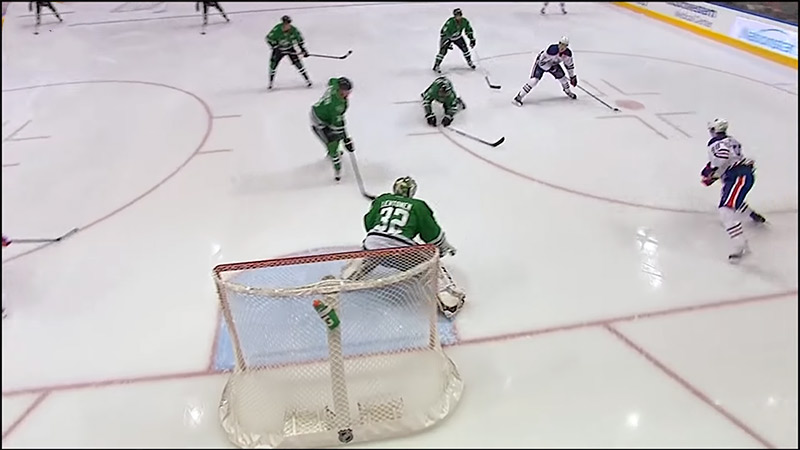
Few sights in professional sports match the spontaneous jubilation of an ice hockey hat trick. The instant a single player nets their third goal of the game, play grinds to a halt, the arena siren blares, and hundreds of caps descend from the stands onto the ice sheet below. It stands as one of the most distinctive fan traditions in modern athletics.
Beyond the visual spectacle, the hat trick represents a milestone of individual offensive supremacy. Scoring three goals against elite defensive structures and goaltenders requires a combination of timing, precision, shot selection, and finishing skill.
This guide explores the official rules, rich history, distinct variations, historic records, and player development strategies behind one of hockey’s greatest achievements.
Official NHL Rulebook Framework & Goal Eligibility
In its basic form, a hat trick occurs when a single player scores three goals within a single game. However, understanding how the feat is evaluated within official league statistics requires examining specific rulebook nuances.
- Timeframe and Game Flow: The three goals do not need to occur within a single period, nor do they need to be scored back-to-back without opposing goals in between. A player can score in the first period, the third period, and complete the achievement in overtime.
- Goal Types: Every goal type registered in regulation or overtime counts toward an official hat trick. This includes even-strength goals, power-play conversions, short-handed markers, penalty shots, deflected pucks, and empty-net goals.
- The Shootout Exclusion: Goals scored during a game-ending shootout do not count toward a player’s official game statistics or a hat trick. If a player scores two goals during regulation and nets a shot during the shootout tiebreaker, their official game tally remains at two goals.
When a player scores a fourth goal in the same contest, it is classified as a four-goal performance or referred to in fan lore as a “Texas hat trick”. Five-goal games remain exceptionally rare in modern professional hockey.
Historical Origins & Tradition Development
While the physical practice of throwing hats onto the ice is unique to hockey, the term itself was inherited from another sport.
From 19th-Century Cricket to the Ice
The phrase “hat trick” originated in English cricket in 1858. Bowler H.H. Stephenson successfully retired three consecutive batsmen with three successive deliveries.
In recognition of this rare accomplishment, fans held a collection and presented Stephenson with a new hat. The term subsequently spread across global sports to describe any three-part achievement in a single event.
The Toronto Hat Shop Wager (1946)
Hockey’s connection to physical headwear traces back to a famous wager in Toronto. In January 1946, Chicago Blackhawks forward Alex Kaleta visited the shop of Toronto hatter Sammy Taft prior to a game against the Maple Leafs.
Kaleta took a liking to a fedora but lacked the funds to purchase it. Taft offered a proposition: if Kaleta scored three goals that evening against Toronto, Taft would gift him the fedora for free.
Kaleta went on to score four goals during the game. Local sports journalists reported on the bet, and Taft turned the event into an ongoing promotion, offering a free hat to any Maple Leafs player who scored three goals in a home game. The story gained national traction, cementing the association between three-goal games and free headwear.
1858: Cricket origin (H.H. Stephenson presented with a hat)
  │
1917: Harry Hyland records the first official hockey 3-goal game
  │
1946: Alex Kaleta & Sammy Taft wager in Toronto establishes headwear tie-in
  │
1950s–Present: Fans adopt physical hat-throwing tradition across arenas
Regional Traditions and Milestones
Other regional stories contributed to the tradition’s spread:
- The Montreal Chapter: In Montreal, the renowned hat shop Henri Henri presented free fedoras to players who scored three or more goals at the Montreal Forum, rewarding legends such as Maurice “Rocket” Richard.
- Junior Hockey Influence: The Guelph Biltmore Mad Hatters junior franchise, sponsored by a local hat manufacturer, actively promoted giveaways for three-goal performances in 1947.
- First Recorded Game: Archival hockey records credit Harry Hyland with the first official three-goal performance in NHL history during the league’s inaugural 1917 season.
Classifications & Spectrum of Hat Tricks
Over the decades, hockey culture has developed distinct terminology to classify various types of scoring accomplishments.
The Natural Hat Trick
A natural hat trick is achieved when a single player scores three consecutive goals for their team without any other player from either side scoring in between.
Because it requires uninterrupted individual scoring dominance over an extended stretch of play, the natural hat trick is regarded as far more challenging to execute than a standard hat trick.
The Gordie Howe Hat Trick
A Gordie Howe hat trick occurs when a player records one goal, one assist, and one fighting major in the same game. Named after the Hall of Fame forward celebrated for combining scoring skill with physical toughness, this metric highlights all-around physical impact.
Ironically, archival research reveals that Gordie Howe achieved this specific combination only twice during his long career, both occurring during the 1953–54 season against Toronto.
The record holder for Gordie Howe hat tricks is Rick Tocchet with 18, followed by Brendan Shanahan with 17.
Multi-Goal Milestones & Fan Slang
| Term | Definition | Historic Benchmark |
|---|---|---|
| Natural Hat Trick | 3 consecutive goals by one player without intervening goals by either team | Achieved across regulation or overtime periods |
| Texas Hat Trick | 4 goals scored by a single player in one game | Accomplished by Auston Matthews in his NHL debut (2016) |
| Double Hat Trick | 6 goals scored by a single player in one game | Darryl Sittler (1976, 10-point night); Joe Malone (twice in 1920) |
| Five-Goal Display | 5 goals scored in 5 distinct ways | Mario Lemieux on Dec 31, 1988 (EV, PP, SH, PS, EN) |
| Referee Hat Trick | Slang for a player taking 3 penalties against one team in a single game | Informal fan term |
Historical Records & Legendary Feats
The NHL record books feature astonishing displays of single-game and career scoring efficiency.
Career Leaders
- Wayne Gretzky (50 Career Hat Tricks): Wayne Gretzky holds the all-time NHL record with 50 regular-season hat tricks. Over his career, Gretzky averaged a hat trick roughly once every 24 games. He also holds the playoff record with 10 postseason hat tricks.
- Mario Lemieux (40 Career Hat Tricks): Lemieux ranks second all-time. On December 31, 1988, Lemieux delivered what many consider the most complete offensive game in history, scoring five goals in five different situational modes: even-strength, power-play, short-handed, penalty shot, and empty-net.
- Mike Bossy (39 Career Hat Tricks): While third in total career hat tricks, Bossy boasts the highest per-game efficiency rate in league history, averaging a hat trick once every 19 games played.
- Alex Ovechkin (34 Career Hat Tricks): Ovechkin stands as the active leader in multi-goal performances, sitting fourth on the all-time list.
Single-Season and Speed Benchmarks
- Single-Season Record: Wayne Gretzky recorded 10 hat tricks in a single season on two separate occasions (1981–82 and 1983–84).
- Fastest Hat Trick in History: On March 23, 1952, Chicago Blackhawks forward Bill Mosienko scored three goals in 21 seconds against the New York Rangers at Madison Square Garden. This milestone has stood for over seven decades and is widely considered unbreakable.
- Runner-Up Speed Record: Jean Béliveau scored three goals in 44 seconds in 1955. In modern play, Brayden Point recorded three goals in 91 seconds in 2018.
Statistical Rarity & Game Dynamics
While hat tricks are widely celebrated, statistical analysis demonstrates how rare they are in modern professional hockey.
Across a standard 1,312-game NHL regular season, teams typically combine for 100 to 120 hat tricks in total. This translates to a hat trick occurring in roughly 6% to 8% of all scheduled contests.
Season Hat Trick Frequency (NHL Regular Season)
| Season | Hat Tricks | % of Games |
|---|---|---|
| 2021–22 | 102 | 7.8% |
| 2022–23 | 96 | 7.3% |
| 2023–24 | 115 | 8.8% |
| 2024–25 | 77 | 5.9% |
Goalies Shutouts vs. Hat Tricks
A common misconception among casual viewers is that individual multi-goal games occur frequently. In reality, fans are more likely to watch a goaltender record a shutout than see a skater score a hat trick.
For example, during the 2024–25 season, the NHL saw a notable dip in multi-goal games, recording just 77 hat tricks across 1,312 games—well below the league’s total shutout numbers for that year.
Why Completing a Hat Trick Is Difficult
- Defensive Adjustments: Once an elite scorer nets two goals, opposing coaches immediately adjust defensive pairing match-ups, increasing physical pressure and limiting open ice.
- Goaltender Tracking: Professional goaltenders analyze shooter habits as games progress, narrowing down angles and closing weakness windows exploited earlier in the match.
- Conditioning Demands: Maintaining high-speed skating mechanics and shot power through the third period and overtime requires top-tier cardiovascular conditioning.
What Happens to the Hats? Arena Logistics and Community Impact
When headwear rains down onto the ice, it triggers a structured operational response from stadium operations.
3rd Goal Scored ──> Ice Delay & Hat Shower ──> Staff Clean Rink with Shovels
                                                      │
                                                      ▼
Player Collects Keepsakes ◄── Lost & Found Window ◄── Hats Bagged & Sorted
                                       │
                                       ▼
                         Unclaimed Hats Donated to Charity
- Ice Clearing: Play stops immediately while venue staff sweeps the rink surface using wide snow shovels and large storage bags. Clearing hundreds of caps typically takes three to five minutes.
- Player Mementos: Before the collected bags leave the ice area, stadium staff allow the scoring player to select one or two caps from the pile as personal souvenirs to commemorate the night.
- Lost-and-Found Hold: The remaining headwear is bagged, labeled, and placed in the arena’s lost-and-found department for three to five days. Fans who regret throwing a favorite cap can reclaim it with arena staff.
- Charity Distribution: All unclaimed hats are cleaned and donated to local community shelters and charitable organizations. Some arenas also build permanent glass display cases to showcase hats collected from memorable franchise hat tricks.
Skill Mechanics: How Elite Players Build Finishing Ability
Scoring three goals in a high-speed professional game is rarely the result of luck alone. It requires specific technical mechanics developed over years of dedicated training.
Shooting Accuracy and Quick Release
Top goal scorers distinguish themselves not just by shot speed, but by release speed—the fraction of a second it takes to transfer weight and launch the puck off the blade. A rapid release catches goaltenders before they can set their feet or adjust their angle, turning low-danger chances into goals.
Off-Ice Training Repetitions
Mastering these micro-skills requires thousands of shooting repetitions outside of scheduled team practices. Elite players build shot power and muscle memory using specialized home practice setups.
By training on synthetic surfaces like PolyGlide Synthetic Ice, athletes can practice skating, edge control, weight transfer, and shooting mechanics directly from home.
Accumulating extra shooting repetitions year-round builds the subconscious muscle memory required to convert scoring chances in high-pressure game environments.
Summary
The hat trick stands as one of the most exciting traditions in world sports, bridging historic lore with elite modern athleticism.
From its 1858 origins in English cricket to the 1946 Toronto hat shop bet, the achievement has evolved into a visual celebration that unites entire arenas.
Whether executed through a blinding 21-second blitz or built across regulation and overtime, scoring three goals in a single contest requires exceptional skill, instinct, and relentless practice.
For players striving to reach that level, mastering the required quick release and finishing accuracy begins long before game day—built through dedicated home training setups, extra repetitions, and an unyielding commitment to shot development.