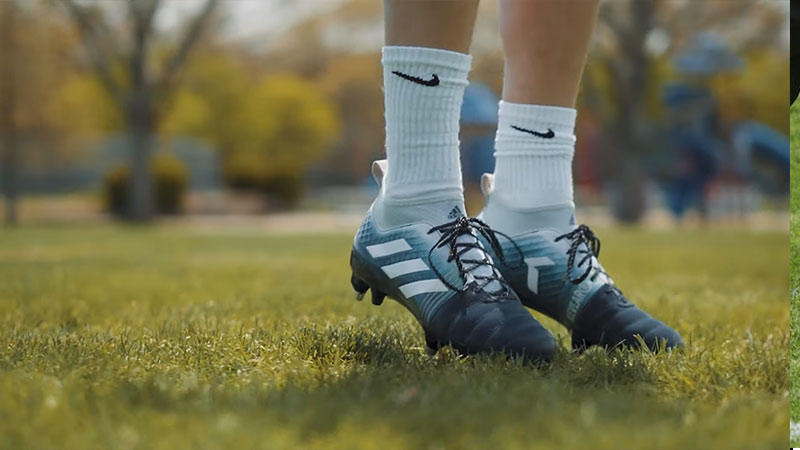
The transition between field sports often prompts a fundamental question regarding equipment: can the footwear designed for the precision of soccer be effectively and safely utilized for the high-impact environment of rugby?
For athletes, parents, and coaches managing the costs and logistics of multi-sport participation, understanding the intersection of performance, safety, and regulation is essential. While the short answer is that soccer cleats are permissible in rugby under specific conditions, the decision to wear them involves a complex analysis of player position, pitch conditions, and strict adherence to international safety standards.
This comprehensive analysis explores the technical requirements for rugby footwear, the biomechanical differences between soccer and rugby movements, and the regulatory framework that dictates what is allowed on the field of play.
The Functional Intersection: When Soccer Design Meets Rugby Demands
In the modern athletic landscape, footwear has become highly specialized. However, soccer and rugby share a common ancestry that allows for some overlap in gear.
The primary consideration when determining if a soccer boot is suitable for rugby is not merely the brand or the aesthetic, but the functional design of the outsole and the safety profile of the studs.
The Role of the Backs: Prioritizing Speed and Agility
For players in the “backs” positions—including fly-halves, centers, wings, and fullbacks—the physical demands of the game closely mirror certain aspects of soccer.
These athletes require lightweight footwear that facilitates explosive acceleration, high-speed sprinting, and rapid changes of direction.
Soccer cleats are frequently ideal for these specific roles because they are engineered for lightweight speed rather than the heavy, sustained pushing power required in other areas of the game.
The flexibility offered by a soccer-style boot allows a winger to maintain agility during a sidestep or a counter-attack.
Because backs are less involved in the static, high-pressure environment of the scrum, the lower profile and reduced weight of a soccer cleat do not significantly compromise their safety or performance. In these instances, the crossover between the two sports is at its most seamless.
The Challenge for Forwards: The Necessity of Stability
In contrast, the “forwards”—the players who make up the scrum—face a vastly different set of physical requirements. Forwards are tasked with engaging in scrums, rucks, and mauls, where the primary objective is to generate and resist immense horizontal force.
General consensus among the athletic community, including insights from experienced players, indicates that soccer cleats typically lack the heavy ankle support and deep grip necessary for these high-pressure phases of play.
A forward wearing soccer cleats may find themselves at a significant disadvantage during a scrum. Soccer boots are designed for a “flick” or “snap” motion of the foot to strike a ball, whereas a rugby forward needs a stable platform to “drive” through the turf.
Without the reinforced heel counters and high-traction stud configurations found in dedicated rugby boots, forwards risk losing their footing, which can lead to a collapsed scrum or a loss of possession in a ruck.
The Regulatory Framework: Safety Standards and Stud Compliance
The most critical factor in determining whether a soccer cleat can be used for rugby is its compliance with safety regulations.
Rugby is a high-contact sport, and the governing bodies have established rigorous standards to prevent injuries caused by improper footwear.
Even if a boot is marketed as a soccer cleat, it must meet the following criteria to be legal for rugby competition.
Prohibition of the Toe Cleat
One of the most definitive rules in rugby footwear is the ban on “toe cleats.” This design, commonly found in American football cleats, features a single stud or blade located at the very tip of the toe to aid in forward drive.
In rugby, this feature is strictly prohibited because of the danger it poses to other players during rucks and tackles.
When a player is on the ground, a lone toe stud can cause severe lacerations or puncture injuries. Therefore, any soccer cleat that incorporates a toe stud—or any boot that resembles an American football-style toe-blade configuration—will be deemed illegal.
Stud Dimensions and Material Geometry
World Rugby and local officiating bodies have specific measurements that all studs must adhere to. These rules ensure that the pressure applied by the stud is distributed safely and that the stud itself does not become a weapon.
- Width Requirements: To prevent studs from becoming too sharp or needle-like, they must be at least 10mm wide at the ends. This ensures that any contact with an opponent’s skin results in a blunt impact rather than a cut.
- Length Limitations: To protect the player’s joints and prevent the foot from becoming too deeply embedded in the turf (which can lead to ACL or ankle injuries), the maximum allowable length for a stud is 21mm.
The Evolution of Blades and Hybrid Studs
Modern soccer footwear often utilizes “bladed” studs or hybrid configurations that mix plastic and metal. While these are common on soccer pitches, they are scrutinized heavily in rugby.
Referees have the explicit authority to ban any footwear that features sharp or bladed plastic/metal hybrid studs.
If a blade has become worn down to a sharp edge or if the design is inherently dangerous to other players, the athlete will be required to change their footwear before taking the field.
Match Day Protocols: The Referee’s Inspection
Every competitive rugby match begins with a formal equipment check. This is a non-negotiable ritual where the referee inspects the footwear of every player.
This process is designed to ensure that the game remains as safe as possible for all participants.
During this inspection, a referee will typically run their hand over the bottom of a player’s boots to check for:
- Sharp Edges: Metal studs that have developed “burrs” or sharp ridges from walking on concrete or gravel must be filed down or replaced.
- Missing Studs: A missing stud can leave a sharp, exposed metal housing that is extremely dangerous.
- Prohibited Designs: As noted, the presence of a toe stud or an illegal blade shape will result in the player being barred from the pitch until they secure compliant footwear.
For players choosing to use soccer cleats, it is highly recommended to inspect the studs 24 hours before a match.
If the studs are interchangeable, replacing worn soccer studs with rugby-standard aluminum studs can often make a soccer boot “rugby-legal” while maintaining the desired lightweight feel.
Strategic Considerations: Performance Gaps and Long-term Use
While soccer cleats can serve as a functional bridge for those entering the sport, it is important to recognize the performance gaps that emerge over time.
Ankle Support and Lateral Stability
Rugby involves significantly more lateral contact than soccer. A player in a ruck or maul may have several hundred pounds of weight leaning against them from various angles.
Soccer boots, particularly those designed for speed, often have very thin uppers made of synthetic materials to reduce weight.
While this is great for sprinting, it provides almost no protection for the small bones of the foot and very little lateral stability for the ankle. Dedicated rugby boots often feature a higher cut or reinforced midfoot sections to mitigate these risks.
Durability in the “Pack”
The environment of a rugby pitch—often muddy and high-torque—can be incredibly taxing on footwear.
Soccer boots are not always built to withstand the shearing forces of a 900kg scrum. Forwards who consistently use soccer cleats may find that the outsoles delaminate or the stud housings fail much faster than they would on a soccer pitch.
Technical Comparison: Soccer Cleats vs. Dedicated Rugby Boots
| Feature | Soccer Cleat (Speed Model) | Dedicated Rugby Boot (Forward) |
|---|---|---|
| Primary Goal | Lightweight agility & ball feel | Traction & pushing power |
| Outsole | Flexible, thin | Rigid, reinforced |
| Stud Count | Often 6 to 11 | Typically 8 or more (for stability) |
| Ankle Support | Low-cut for mobility | Often higher or reinforced |
| Toe Stud | Rarely present | Strictly prohibited |
| Compliance | Must be checked for stud width | Pre-certified for rugby standards |
Maintenance and Safety Checklist for Multi-Sport Athletes
If you have decided to use soccer cleats for your next rugby season, following this checklist will ensure you remain compliant with the rules and minimize your risk of injury.
- Remove the Toe Stud: If your boots have any stud at the very front tip of the sole, they cannot be used.
- Verify Stud Dimensions: Use a caliper or ruler to ensure your studs are at least 10mm wide at the tip and do not exceed 21mm in length.
- Check for Sharpness: Frequently inspect metal studs for burrs. Use a fine-grit sandpaper or a metal file to smooth any sharp edges that could cause lacerations.
- Evaluate the Surface: If you are playing on a hard, sun-baked pitch, “firm ground” (FG) soccer cleats with molded plastic studs are usually acceptable. However, on soft or muddy pitches, you will likely need the longer metal studs common in rugby to maintain traction.
- Assess Your Position: If you have been moved from a wing position to the scrum (e.g., as a flanker), reconsider your footwear. The change in physical demand may necessitate a move to a more stable rugby-specific boot.
Conclusion: Making the Right Choice for Your Game
In the debate over whether soccer cleats are suitable for rugby, the answer is a nuanced “yes,” provided the athlete prioritizes safety and positional requirements.
For backs and agile players, the lightweight nature of soccer footwear offers a distinct performance advantage on the pitch.
However, for the forwards who anchor the scrum, the lack of stability and grip in soccer-specific designs can be a significant hindrance.
Ultimately, the most important aspect of any rugby footwear is its adherence to safety regulations.
By ensuring your studs meet the 10mm width and 21mm length requirements and confirming the absence of a prohibited toe stud, you can step onto the pitch with confidence.
Whether you choose a specialized rugby boot or a compliant soccer cleat, your focus should remain on performance, safety, and the integrity of the game.