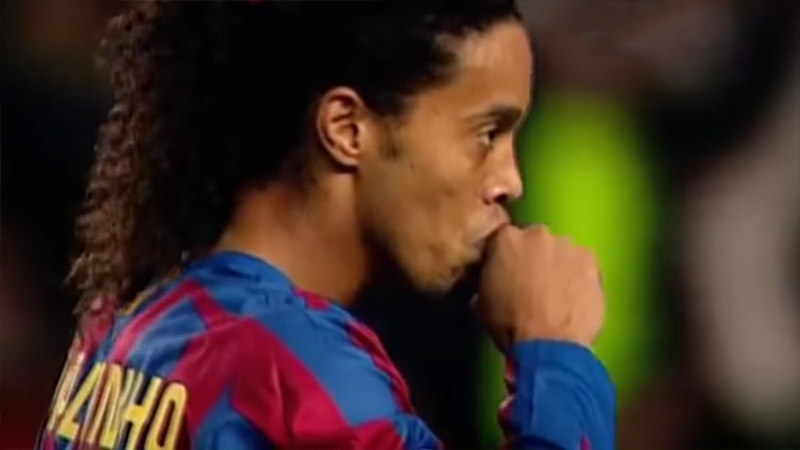
Ronaldinho Gaúcho remains one of the most beloved figures in football history, celebrated for a career defined by a signature smile and unmatched technical mastery.
His journey from the local neighborhoods of Brazil to the pinnacle of global sport is a testament to natural talent nurtured through discipline and early exposure.
To understand his rise, one must look back to his formative years in Porto Alegre, where his obsession with the ball began.
This exploration details the specific milestones of his early development, from his first touches on the street to his professional debut at Grêmio.
The Unofficial Start: Street Soccer and Futsal Roots
Before he ever stepped onto a professional pitch, Ronaldinho’s skills were forged in the demanding environments of street soccer and futsal.
Developing Close-Control Mastery
Ronaldinho began playing informally in his early childhood, utilizing the streets and beaches of Porto Alegre to hone his ball control.
Growing up in one of the more challenging areas of the city, he spent countless hours playing futsal and beach football, which are credited with developing his unique dribbling abilities.
Futsal, in particular, played a critical role; the small, heavy ball and tight spaces required the lightning-fast reflexes and close control that would later become his trademark on the international stage.
A Natural Affinity for the Ball
His passion for the sport was a family legacy, as his father, João de Assis Moreira, was a former footballer and shipyard worker who encouraged his early interest.
By the time he was a young child, it was evident that Ronaldinho possessed a natural talent that set him apart from his peers. He often played against older children, a challenge that forced him to adapt and innovate with the ball at his feet.
Joining the Grêmio Academy in 1987 (The Official Start)
While he played informally from his earliest years, Ronaldinho’s organized football journey officially began in 1987 when he was just seven years old.
The Grêmio Youth Setup
Following the path of his older brother, Roberto Assis, Ronaldinho joined the youth academy of his local hometown club, Grêmio.
This move marked his transition from recreational street play to a structured environment where his talent could be professionally refined. At this stage, he was already demonstrating a level of technical proficiency that suggested a bright future in the sport.
Earning the “Ronaldinho” Moniker
By 1988, at the age of eight, he began playing in competitive youth club matches. It was during this period that he earned the nickname “Ronaldinho,” which translates to “little Ronaldo”.
This was because he was frequently the youngest and smallest player on the field, a physical disadvantage he overcame with superior agility and skill. The name stayed with him throughout his career, becoming synonymous with footballing magic.
The Impact of Family and Early Adversity
The trajectory of Ronaldinho’s career was deeply influenced by his family dynamics and a significant personal tragedy that occurred during his childhood.
The Loss of His Father
When Ronaldinho was only eight years old, his family experienced a devastating blow when his father, João, tragically passed away. João died from a head injury and drowning in a swimming pool at the family’s new home.
This loss occurred just as the family had moved to a nicer area of Porto Alegre following Roberto’s professional signing with Grêmio.
Roberto Assis: The Mentor and Guardian
In the wake of their father’s death, Ronaldinho’s older brother, Roberto, stepped into a paternal role.
Roberto was nine years senior to Ronaldinho and was a talented footballer in his own right, but he eventually sacrificed some of his own career aspirations to manage and support his younger brother.
Roberto became Ronaldinho’s agent and mentor, ensuring that the young prodigy remained focused on his development despite the family’s grief. This strong family bond remained a cornerstone of Ronaldinho’s life throughout his professional years.
The Meteoric Rise: From Youth Prodigy to Global Sensation
As Ronaldinho moved through his early teens, his performances began to attract significant attention from the Brazilian media and international scouts.
The Legendary 23-Goal Performance
At the age of 13 in 1993, Ronaldinho gained his first major media spotlight through a staggering individual performance. During a match against a local team, his side won 23–0, and remarkably, Ronaldinho scored every single goal in the game.
This feat highlighted his overwhelming dominance at the youth level and signaled that he was a generational talent.
International Youth Success
Ronaldinho’s progress continued at a rapid pace, leading to his involvement with the Brazilian national youth teams.
- Youth Debut: He made his youth international debut at age 15 in 1995.
- World Champion: In 1997, at age 17, he led the Brazil U-17 national team to victory in the FIFA U-17 World Championship held in Egypt.
- Emerging Star: His performances in these tournaments established him as one of the most promising young players in the world.
Professional Debut and the Breakthrough Year
The transition from the youth academy to the senior professional stage occurred when Ronaldinho was 17 years old.
Debuting for Grêmio (1998)
In 1998, Ronaldinho made his official senior professional debut for Grêmio during a Copa Libertadores match. Stepping onto the field for his first-team debut was the culmination of over a decade of training that began in the streets and futsal courts of his youth.
Even as a teenager, he showed the composure and creativity required to compete at the highest level of South American football.
The 1999 Breakthrough Season
The following year, 1999, served as Ronaldinho’s true breakthrough into superstardom. During this season, he displayed incredible statistical output for Grêmio, scoring 58 goals and providing 20 assists in 121 appearances.
His performances were so dominant that they led to his first senior cap for the Brazil National Football Team on June 26, 1999. He capped off this incredible year by winning the Copa América with the senior national team at just 19 years old.
Transitioning to European Dominance
Ronaldinho’s success in Brazil made a move to Europe inevitable, though his path to the continent’s biggest clubs was not without its complications.
The Arsenal Transfer That Wasn’t
Before signing with a French club, Ronaldinho nearly joined the Premier League side Arsenal. However, the transfer collapsed due to work permit issues; at the time, he had not played enough international matches to meet the requirements for a non-EU player in the United Kingdom.
Signing with Paris Saint-Germain
In 2001, at the age of 21, Ronaldinho officially moved to Europe, signing a five-year contract with Paris Saint-Germain (PSG) for a fee of €5 million. This marked the beginning of a 17-season professional journey across some of the world’s most famous clubs.
Club / Team | Years | Age | Apps | Goals |
|---|---|---|---|---|
Grêmio | 1998–2001 | 17–21 | 125 | 58 |
Paris Saint-Germain | 2001–2003 | 21–23 | 77 | 25 |
FC Barcelona | 2003–2008 | 23–28 | 207 | 94 |
AC Milan | 2008–2011 | 28–30 | 95 | 26 |
CR Flamengo | 2011–2012 | 30–32 | 72 | 28 |
Atlético Mineiro | 2012–2014 | 32–34 | 85 | 27 |
Querétaro FC | 2014–2015 | 34–35 | 29 | 8 |
Fluminense FC | 2015 | 35 | 9 | 0 |
Brazil National Team | 1999–2013 | 19–33 | 97 | 33 |
A Legacy Defined by Joy and Excellence
Ronaldinho’s career was not just about the numbers; it was about the way he played the game.
Individual and Team Honors
Throughout his career, Ronaldinho achieved almost every major honor available in the sport. He won the FIFA World Cup in 2002, the UEFA Champions League with Barcelona in 2006, and the Copa Libertadores with Atlético Mineiro in 2013.
Individually, he was twice named FIFA World Player of the Year (2004, 2005) and won the Ballon d’Or in 2005.
Retirement and Final Contribution
Ronaldinho officially announced his retirement on January 16, 2018, via his brother Roberto. At nearly 38 years old, he concluded a career that had spanned 796 appearances and 299 goals across all levels.
His journey, which started in 1987 in a youth academy, remains a benchmark for aspiring players who dream of combining professional excellence with the pure joy of play.
Frequently Asked Questions
At what age did Ronaldinho start playing organized soccer?
Ronaldinho joined the Grêmio youth academy in 1987 when he was seven years old.
When did Ronaldinho make his professional debut?
He made his first-team professional debut for Grêmio in 1998 at the age of 17.
What was Ronaldinho’s first major international success?
His first major international trophy was the FIFA U-17 World Championship in 1997, where he led the Brazil youth team to victory.
Why was he called “Ronaldinho”?
The name means “little Ronaldo,” a nickname he received at age eight because he was the youngest and smallest player on his youth team.
How many goals did Ronaldinho score for Grêmio before moving to Europe?
He scored 58 goals for Grêmio between 1998 and 2001.
Elevate Your Appreciation for the Game
The story of Ronaldinho reminds us that greatness begins with a passion for the fundamentals. Whether it’s on a dusty street or a manicured stadium pitch, the “little Ronaldo” proved that technique and joy are the ultimate tools for success.
To dive deeper into the history of football’s greatest legends and stay updated on modern tactical evolutions, explore our comprehensive guides and expert insights.
Join our community of football enthusiasts today and never miss a story behind the beautiful game.