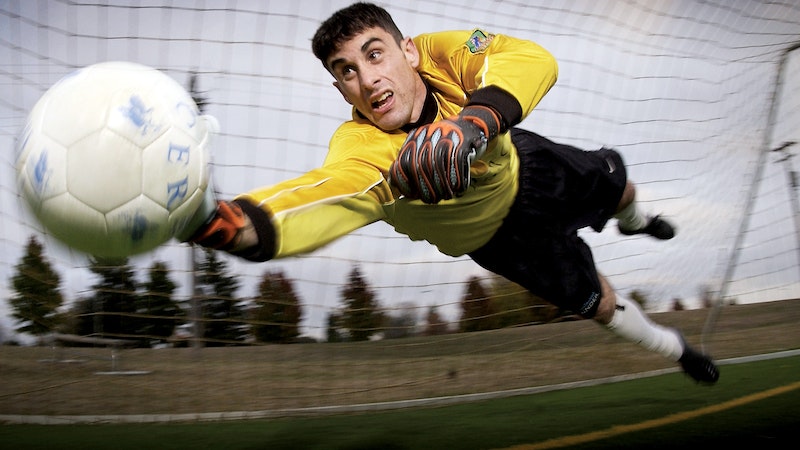
In the world of global sports, few moments carry the electric intensity of a soccer ball hitting the back of the net. While the emotional reaction is universal, the technical definition of a goal is governed by strict, objective criteria established by the Laws of the Game.
A goal represents the ultimate objective of every match, serving as the primary metric for victory and tactical execution. Understanding what constitutes a legal score is essential for players, coaches, and fans alike.
This comprehensive guide breaks down the physics, rules, and technicalities that transform a simple kick into a match-defining point.
The Legal Definition of a Scorching Goal
The fundamental requirement for a goal in soccer is rooted in the precise positioning of the ball relative to the field’s boundaries. According to the Laws of the Game, a goal is officially awarded only when the whole of the ball completely crosses the goal line.
This line is situated between the two vertical goalposts and beneath the horizontal crossbar. If the ball enters this specific frame and clears the line entirely, it is recorded as a single point on the scoreboard.
The Whole Ball Requirement
One of the most frequent points of contention in professional matches is whether the ball actually crossed the line. The rule is absolute: the entire circumference of the ball must pass the rear edge of the goal line.
If even a microscopic portion of the ball is still overhanging the line, the play continues, and no goal is awarded.
This “all or nothing” approach ensures that there is a clear physical threshold for scoring, though it often leads to dramatic moments where goal-line technology must intervene to provide a definitive ruling.
Absence of Offenses
A goal is not merely a physical event; it is a legal one. For a goal to stand, the scoring team must not have committed any offense or violation of the rules during the buildup or the final strike.
Common offenses that can lead to a goal being disallowed include handballs, fouls against defenders, or an attacking player being in an offside position.
The referee and the assistant referees are responsible for ensuring that the play leading up to the score was conducted within the spirit and letter of the law.
Physical Specifications and Equipment Standards
The theater where every goal is scored—the goal frame—must meet rigorous international standards to ensure fairness across different matches and leagues. These specifications define the target that every striker aims for and every goalkeeper protects.
- Professional Dimensions: In adult professional matches, the standard goal frame is established at a width of 24 feet and a height of 8 feet. These dimensions provide the necessary space for high-scoring games while remaining small enough for a skilled goalkeeper to defend.
- Post and Bar Construction: The posts and the crossbar must be made of approved materials (usually aluminum or steel) and must be white in color to provide maximum visibility against the pitch and the crowd.
- The Status of the Net: While fans often associate the “bulge of the net” with a goal, the net itself is not legally required by the Laws of the Game. Nets are used for convenience to catch the ball and provide a clear visual indicator that a goal has been scored, but a goal can technically be awarded even if no net is present, provided the ball passes through the legal frame.
Diverse Scenarios for Scoring
In a dynamic match, goals can originate from various phases of play. Each scenario has its own set of rules regarding how the ball is put into the net and who is credited with the score.
| Scoring Type | Technical Description | Key Requirement |
|---|---|---|
| Open Play | A goal scored during active, continuous gameplay from a pass, cross, or direct shot. | No fouls or offsides in the buildup. |
| Penalty Kick | A direct shot taken from the penalty mark (12 yards out) following a specific foul in the box. | The goalkeeper must remain on the line until the ball is kicked. |
| Own Goal | An accidental occurrence where a player puts the ball into their own team’s goal. | The goal is credited to the opposing team’s total. |
| Direct Free Kick | A restart where a player can score directly from the kick without the ball touching another player. | Awarded for “direct” foul offenses. |
Legal Contact and Physical Mechanics
The mechanics of scoring are defined by which parts of the body a player can use to propel the ball toward the target. This distinction is what separates soccer from many other field sports.
Players are permitted to use any part of their body to score a goal, provided it is not their hands or arms. This includes the feet, shins, thighs, torso, and head.
Scoring with the head is particularly common during corner kicks and crosses, where aerial prowess is a significant advantage.
However, if a player uses their hand or arm—even accidentally in some attacking contexts—to direct the ball into the net, the goal will be disallowed, and a free kick will be awarded to the defending team.
The Evolution of Scoring Verification
As the stakes of professional soccer have risen, the methods used to verify goals have become increasingly sophisticated. While the basic rules remain unchanged, the tools used to enforce them have undergone a digital revolution.
Goal-Line Technology (GLT)
In top-tier leagues, Goal-Line Technology has removed the “human error” factor from the scoring equation. Using a series of high-speed cameras and magnetic sensors, GLT can track the ball’s position to within millimeters.
When the whole of the ball crosses the line, an encrypted signal is sent to the referee’s watch, which vibrates and displays the word “GOAL.”
This ensures that the technical requirement of the ball clearing the line is met with 100% accuracy, even when a goalkeeper appears to have clawed the ball back.
Video Assistant Referee (VAR)
The VAR system acts as a secondary layer of oversight. While GLT handles the physical crossing of the line, VAR focuses on the “no offense” clause of the scoring rule.
VAR officials review video footage to check for clear and obvious errors related to offsides, fouls in the buildup, or missed handballs.
This multi-step verification process ensures that the integrity of the score is maintained, though it has added a new layer of suspense to the celebration process.
The Role of the Referee and Assistant Referees
Despite the rise of technology, the on-field referee remains the final authority on whether a goal has been scored. The coordination between the officiating crew is a highly synchronized process designed to cover all angles of the pitch.
Signaling a Goal
When a goal is scored, the referee will signal by pointing their arm toward the center circle, indicating that the game will restart from the kickoff spot.
The assistant referee (linesman) will sprint down the touchline toward the corner flag to confirm they did not see any fouls or offsides that would invalidate the goal. This visual communication is the primary way the decision is relayed to the players and the spectators.
Managing Disputes
In matches without high-end technology, the referee must rely on their positioning and the input of their assistants. If there is uncertainty about whether the whole ball crossed the line, the officials must make a split-second judgment call.
Traditionally, the benefit of the doubt is not automatically given to the attacker; the referee must be certain the ball crossed the line to award the point.
Strategic and Tactical Impact of Scoring
A goal is more than just a point; it is a tactical catalyst that completely alters the flow of a match. Understanding the mechanics of the goal allows teams to build strategies around high-probability scoring opportunities.
Protecting the Lead
Once a goal is scored, the tactical landscape shifts. The team in the lead may adopt a more defensive “low block” posture, prioritizing the protection of their own goal over attacking.
Conversely, the trailing team is forced to take more risks, committing more players forward, which often creates space for counter-attacks. This “game state” psychology is a fundamental element of elite soccer management.
Expected Goals (xG)
Modern data analytics has introduced the concept of “Expected Goals” (xG), which assigns a numerical value to the quality of a scoring chance based on the shot’s location, the type of assist, and the pressure from defenders. This metric helps analysts understand how “likely” a goal was to occur.
By understanding the laws of the goal—such as the dimensions of the frame—analysts can determine that shots from the center of the box have a significantly higher mathematical probability of resulting in a score than long-range efforts from tight angles.
Frequently Asked Questions About Soccer Goals
Can a goalkeeper score a goal?
Yes, a goalkeeper can score a goal using their feet or head, just like any other player. If a goalkeeper throws the ball directly into the opponent’s goal, however, it is generally not allowed, and a goal kick is awarded to the opposing team (depending on the specific league’s interpretation of hand-handling rules).
What happens if the ball hits a referee and goes in?
Under current FIFA Laws, if the ball touches a match official and then goes into the goal, or if the team in possession changes, the play is stopped. A “dropped ball” is then used to restart the game. A goal cannot be scored directly off a referee.
Is a goal awarded if the ball pops or deflates?
If the ball becomes defective (bursts) while in play, the game is stopped, the ball is replaced, and the game is restarted with a dropped ball.
If the ball bursts exactly as it crosses the goal line, the referee must determine if the ball was intact when the entirety of it crossed the line.
Conclusion: The Precision of the Score
The beauty of soccer lies in its simplicity, yet the mechanics of the goal are a masterclass in precision. From the 24×8 foot dimensions of the professional frame to the requirement that the whole ball must clear the line, the rules are designed to make every score feel earned.
Whether it is a thunderous strike from open play or a high-pressure penalty kick, the goal remains the heartbeat of the sport. By mastering these rules, fans and players gain a deeper appreciation for the narrow margins that separate victory from defeat on the pitch.
To stay updated on the latest shifts in soccer regulations and tactical trends, consider subscribing to our weekly newsletter or downloading our comprehensive “Match Day Rules Guide” for your next local tournament. Understanding the game is the first step to truly enjoying the world’s most popular sport.