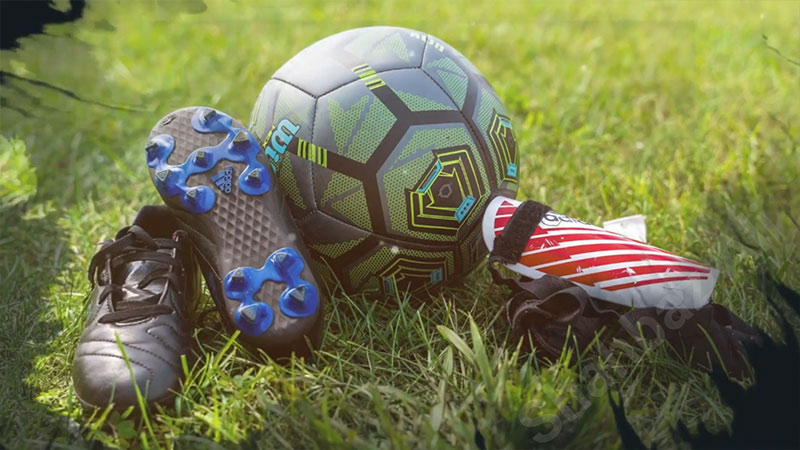
Entering the world of soccer requires more than just a passion for the game; it necessitates a strategic approach to selecting gear that balances safety, performance, and regulatory compliance.
Whether you are a parent preparing a child for their first league or an adult looking to join a competitive club, understanding the landscape of equipment is the first step toward success on the pitch.
Proper gear does not just enhance your technical ability—it serves as a critical barrier against injury and a catalyst for athletic development. This guide breaks down the essential tools every player needs to excel in the beautiful game.
The Foundation of Play: Mandatory FIFA Match-Day Gear
When participating in official matches, players must adhere to specific regulations regarding their attire. FIFA Law 4 explicitly mandates five specific items that constitute the basic compulsory equipment for every player: a jersey, shorts, socks, shin guards, and footwear.
These requirements are designed to ensure a standardized look for team identification and, more importantly, to maintain a baseline of safety during high-impact play.
The jersey and shorts should be constructed from high-quality, moisture-wicking synthetic materials. These fabrics are engineered to pull sweat away from the skin, allowing for rapid evaporation, which helps regulate body temperature during intense physical exertion.
Unlike traditional cotton, which absorbs moisture and becomes heavy, modern match kits remain lightweight throughout the full 90 minutes of play.
While team colors are dictated by club registration, the fit should allow for a full range of motion without being overly baggy, which could be exploited by opponents during challenges.
The Importance of Soccer Socks
Soccer socks are often overlooked, but they perform two vital functions. First, they are required to fully cover the shin guards to meet league safety standards.
Second, they are typically longer and thicker than standard athletic socks to provide compression and prevent blisters during the repetitive lateral movements common in soccer.
Professional-grade socks often feature reinforced heels and toes to withstand the friction generated inside a cleat.
Mastering the Pitch: Choosing the Right Soccer Cleats
Footwear is arguably the most critical investment a player will make. The primary purpose of soccer cleats is to provide traction and stability, preventing slips that could lead to ligament or muscle injuries.
However, the “best” cleat is entirely dependent on the surface you intend to play on.
| Surface Type | Recommended Footwear | Key Characteristics |
|---|---|---|
| Natural Grass | Firm Ground (FG) Cleats | Fixed plastic or rubber studs for optimal grip on dry or slightly damp soil. |
| Artificial Turf | Turf Shoes | Dozens of small rubber nubs that provide traction on shallow, carpet-like surfaces. |
| Indoor Courts | Indoor Shoes | Flat, non-marking rubber soles designed for gym floors or polished concrete. |
Engineering for Performance
Selecting the right stud pattern is essential for injury prevention. Using Firm Ground cleats on a hard indoor surface can lead to ankle rolls, while wearing indoor shoes on wet grass will result in a total loss of traction.
Beyond the soleplate, players should consider the upper material of the boot. Synthetic leathers offer a consistent touch and are generally more water-resistant, whereas K-leather (kangaroo) or high-end calfskin provides a more natural feel and molds to the shape of the foot over time.
For modern players, weight is also a factor; “speed boots” are designed to be ultra-lightweight, while “control boots” may have extra padding or texture on the strike zone to assist with passing accuracy.
Protection Standards: The Role of Shin Guards
In a sport where the lower legs are constantly exposed to high-velocity impacts and “studs-up” challenges, shin guards are non-negotiable. Their primary role is to protect the tibia—the shin bone—from fractures and severe bruising.
To be effective, they must meet the safety standards of your specific league and must be covered completely by your socks during play.
Styles and Fitment Options
There are two primary styles of shin guards available today: slip-in guards and ankle guards. Slip-in guards are favored by advanced players for their lightweight feel and freedom of movement; they are typically held in place by a compression sleeve or athletic tape.
Ankle guards, conversely, feature additional padding around the malleolus (the bony part of the ankle) and a stirrup that goes under the foot. These are highly recommended for younger players or defenders who are frequently involved in heavy tackling.
Regardless of the style, the guard should cover the area from just above the ankle to about two inches below the knee for maximum protection without hindering joint flexibility.
Selecting the Perfect Soccer Ball for Your Development
The soccer ball is the core of the game, yet many players use the wrong size during their formative years, which can negatively impact technical development.
Sizing is primarily determined by the age of the player to ensure the weight and circumference are appropriate for their physical strength.
- Size 3: This is the smallest standard match ball, intended for players under the age of 8. It allows young children to practice proper kicking mechanics without the ball being too heavy for their joints.
- Size 4: Used for youth players between the ages of 8 and 12. It serves as a transition size, preparing the athlete for the weight of a professional ball.
- Size 5: This is the international standard size for all players aged 13 and older, including adult leagues and professional levels.
Beyond size, the construction of the ball matters. “Match balls” are often thermally bonded to prevent water absorption and ensure a perfectly spherical shape for consistent flight.
“Training balls” are generally more durable, featuring stitched panels designed to withstand hours of repetitive drills on various surfaces.
Specialized Gear for the Last Line of Defense
Goalkeepers require a unique set of equipment because their role involves high-speed collisions with the ground and the ball.
The most iconic piece of equipment is the goalkeeper glove, which provides a layer of latex for enhanced grip and foam padding for hand protection.
Modern gloves often include “finger-save” technology—plastic spines that prevent the fingers from bending backward when stopping a powerful shot.
Specialized Apparel for Goalkeepers
Unlike outfield players, goalkeepers often benefit from specialized padded apparel. Padded jerseys and pants are designed with foam inserts at the elbows and hips to cushion the impact during dives and aerial saves.
This protection is particularly vital when playing on hard ground or artificial turf, where the risk of abrasions (often called “turf burn”) is significantly higher.
Elevating Your Skills: Essential Training Tools
While match-day gear is defined by rules, training gear is defined by your goals. To move beyond being a participant and toward becoming a high-level athlete, specific tools are required to sharpen footwork, agility, and technical proficiency.
Developing Technical Mastery
Training cones are perhaps the most versatile tool in a player’s arsenal. They can be used to set up boundaries for small-sided games or arranged in intricate patterns for dribbling drills that improve spatial awareness and ball control.
Similarly, agility ladders are a staple for modern training, focusing on neuromuscular coordination and “fast feet.” By performing specific patterns through the ladder, players can significantly improve their lateral quickness and explosive acceleration.
Solo Practice and Skill Retention
For players who want to practice outside of team sessions, rebounders are invaluable. A rebounder acts as a static teammate, returning the ball at various angles to help a player work on their first touch, passing accuracy, and volleying skills.
This repetitive feedback loop is essential for building the muscle memory required to perform under the pressure of a real match.
Maintenance and Organization for the Serious Athlete
Owning the right equipment is only half the battle; maintaining it ensures longevity and consistent performance. A ball pump is an essential accessory, as even the best soccer balls lose air pressure over time due to temperature changes and use.
Correct air pressure is vital for ensuring the ball has a consistent flight path and a predictable bounce.
Professional Logistics
A dedicated soccer bag is recommended for organizing your gear, separating clean clothes from muddy cleats, and ensuring you never arrive at a match missing a vital piece of equipment like a shin guard.
Furthermore, elite players often use “recovery footwear,” such as slides or sandals, to wear before and after games.
This practice protects the delicate studs on your cleats from being worn down on asphalt or concrete and allows your feet to breathe after being compressed in tight boots during a match.
Finally, never underestimate the importance of a reusable water bottle. Hydration is a pillar of performance; even slight dehydration can lead to a decrease in cognitive function and an increase in the risk of muscle cramps.
Frequently Asked Questions
Is it okay to wear football or baseball cleats for soccer?
No. Soccer cleats are designed without a “toe stud,” which is common in baseball and American football. A toe stud can be dangerous during soccer tackles and is often banned by referees for safety reasons. Additionally, soccer-specific boots are designed for a better “feel” on the ball.
How do I know if my shin guards fit correctly?
A properly fitted shin guard should cover the majority of the area between your ankle and your knee. If the guard is too small, it leaves the bone exposed; if it is too large, it will restrict your ability to flex your foot and may cause discomfort during running.
Why do I need different balls for different ages?
Using a ball that is too large or heavy for a young player can lead to poor technique—such as “toe-poking” the ball to move it—and can put undue stress on developing muscles and tendons.
Final Thoughts on Your Soccer Journey
Investing in the right soccer equipment is an investment in your athletic future. By prioritizing the mandatory “Big Five” for match days—the jersey, shorts, socks, shin guards, and footwear—you ensure that you are ready to compete safely and legally.
However, the transition from a beginner to an elite player often happens in the “gaps”—the hours spent with training cones, agility ladders, and rebounders.
By selecting gear tailored to your playing surface and age, and by maintaining that gear with the right tools, you set the stage for a successful and injury-free experience on the pitch.
Whether you are aiming for a professional career or simply enjoying a weekend league, the right equipment remains the foundation of every great performance.