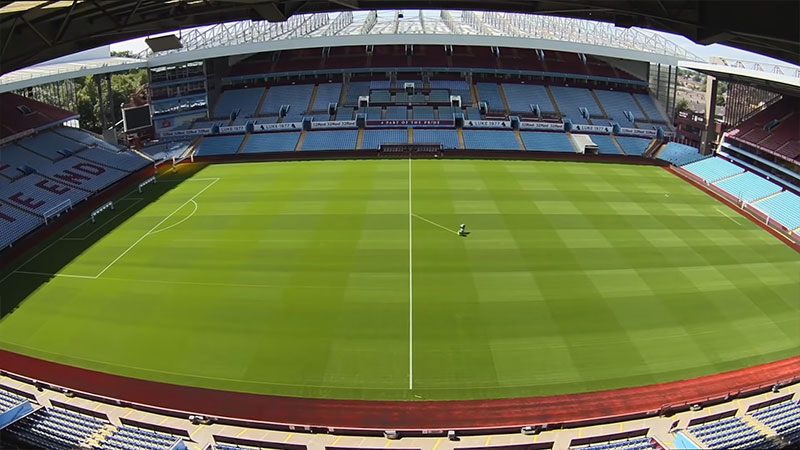
In the world of global athletics, terminology often serves as a bridge between tradition and modern regulation. For many enthusiasts, particularly in North America, the term “soccer field” is the standard descriptor for the field of play.
However, across the Atlantic and throughout much of the international community, this area is strictly referred to as a “pitch”.
This linguistic distinction is more than a regional preference; it is a reflection of the sport’s deep historical roots and the meticulous standards set by governing bodies like FIFA and the International Football Association Board (IFAB).
The Linguistic Divide: Pitch vs. Field
Understanding why soccer terminology differs so significantly between British and American English requires a look at the shared history of the language. While the two regions share many cultural touchpoints, sport remains a primary area of disagreement.
A Tale of Two Dialects
The word “soccer” itself was actually a 19th-century British invention, created as an abbreviation for “association football”.
While the British eventually moved away from the term “soccer,” opting for “football,” the term “pitch” remained the standard for the ground itself.
In contrast, American fans typically use “field,” largely because the word “pitch” is so synonymous with baseball, specifically the action of throwing a ball toward home plate.
Professional Recognition
Despite these regional variations, “pitch” remains the official designation in professional and international contexts. It describes the large rectangular space delineated by specific white markings that allow referees to enforce the laws of the game with precision.
Without these consistent markings and the standardized terminology that defines them, the sport would quickly descend into tactical chaos.
The Historical Origins of the Word “Pitch”
The etymology of the word “pitch” reveals a fascinating connection between soccer and other traditional English sports. The term is not an arbitrary label but a functional description of how playing surfaces were once prepared.
The Etymology of Piccan
The word “pitch” can be traced back to the Old English word piccan, which literally means to “fix or plant” something firmly into the ground.
This definition was central to the early organization of sports in England, where playing areas had to be physically established before a match could begin.
The Cricket Connection and Winter Evolution
During the 1800s, soccer was often played on the same grounds used for cricket. In cricket, the central strip of the field is called a pitch because players had to “pitch” or drive the stumps into the soil to set up the game.
When association football was formalized in 1861, it was largely intended to provide cricketers with a way to stay fit during the wet winter months.
Because these athletes were already using the “pitched” cricket grounds, they naturally carried the terminology over to soccer.
Technical Anatomy: Marking the Field of Play
A professional pitch is a sophisticated arrangement of zones and boundaries, each serving a specific regulatory purpose.
These markings ensure that the game is played fairly and that key events, such as penalties or corners, are handled with mathematical accuracy.
- The Perimeter (Touchlines and Goal Lines): The longer boundaries of the rectangle are known as touchlines, while the shorter ends are the goal lines.
- The Penalty Area: Commonly called the “18-yard box,” this area is where the goalkeeper is permitted to handle the ball and where specific fouls result in a penalty kick.
- The Goal Area: The “6-yard box” located inside the penalty area serves as the zone for goal kicks.
- The Center Circle and Halfway Line: These markings divide the pitch into two equal halves and dictate where players must stand during a kickoff.
- The Penalty Arc: This is the curved line on the edge of the penalty area that ensures players remain the required distance away from the kicker during a penalty kick.
Professional Dimensions and IFAB Regulations
While every soccer pitch must be rectangular, the actual dimensions can vary significantly depending on the level of play and the specific stadium’s constraints. The International Football Association Board (IFAB) provides the framework for these measurements.
Standard Professional Dimensions
The following table outlines the recommended and required dimensions for professional and international play based on current regulations:
| Feature | Professional (Recommended) | International Range |
|---|---|---|
| Length (Touchline) | 105 metres (115 yards) | 100–110 metres |
| Width (Goal Line) | 68 metres (74 yards) | 64–75 metres |
| Goal Size | 7.32m wide x 2.44m high | Fixed at 8 yards x 8 feet |
| Penalty Spot | 11 metres from goal | Fixed at 12 yards |
Why Stadium Sizes Vary
The flexibility in IFAB regulations allows for clubs to adapt to their specific environments. For instance, a world-renowned venue like Manchester United’s Old Trafford can accommodate a massive, high-spec pitch due to its 74,000-capacity infrastructure.
Conversely, smaller clubs in lower leagues may have fields squeezed into tight urban residential areas, resulting in dimensions that are closer to the minimum requirements.
Surface Standards and Maintenance
The quality of the playing surface is a critical factor in the speed and safety of a soccer match. A pitch must be level and green, providing a consistent bounce and roll for the ball.
Natural vs. Artificial Turf
Historically, natural grass has been the gold standard for professional soccer. However, advancements in technology have led to the rise of artificial turf, particularly in regions where the climate makes maintaining natural grass difficult.
Artificial surfaces, often called 3G pitches, are particularly popular for amateur leagues and 7-a-side games.
Maintenance and Consistency
Consistency across the board is essential for the integrity of the sport. Professional groundskeepers work tirelessly to ensure the turf is kept at a specific height and that the drainage systems prevent the surface from becoming waterlogged.
A poorly maintained pitch can lead to unpredictable ball movements and an increased risk of injury for the players.
The Physical Demands of a Full-Size Pitch
Playing on a professional soccer pitch is a feat of extreme physical endurance. The sheer size of the area requires athletes to possess elite levels of stamina and spatial awareness.
The 1.86 Acre Challenge
The average adult soccer field covers approximately 81,000 square feet, which translates to roughly 1.86 acres. Covering this much ground over a 90-minute match is physically taxing, often resulting in players running several miles per game.
For many athletes, the ability to manage their energy while navigating this massive space is what separates professionals from amateurs.
Tactical Implications of Pitch Size
The dimensions of a pitch also influence a team’s strategy. A wider pitch allows teams to utilize wingers and stretch the opposing defense, while a narrower pitch often leads to more congested, central gameplay.
Coaches must often tailor their tactics based on whether they are playing on a “large” or “small” professional pitch.
Alternatives for Smaller Games
Recognizing that not everyone is equipped to handle the physical demands of a full 11-a-side pitch, the sport has evolved to include various smaller-sided formats. These games offer the same strategic depth but on a more manageable scale.
- 7v7 Games: Often played on artificial 3G pitches, these games are ideal for recreational players and youth development.
- Futsal: This is a globally popular indoor version of the sport played with five players per team on a much smaller court.
- 5-a-Side: Common in urban areas, these matches are often played on fenced-in courts, emphasizing quick passing and high-intensity movement.
Frequently Asked Questions
What is the difference between a pitch and a field?
Technically, there is no difference in the physical space; “pitch” is the standard term in British English and international professional contexts, while “field” is preferred in North American English.
Why do some pitches look larger than others?
IFAB regulations allow for a range of lengths (100–130 yards) and widths (50–100 yards). This allows stadiums to be built within different geographical and financial constraints.
How big is an average adult soccer field?
The average adult field is roughly 81,000 square feet or 1.86 acres.
Is the goal size always the same?
Yes, in professional 11-a-side soccer, the goal size is fixed at 7.32m (8 yards) wide and 2.44m (8 feet) high.
Conclusion: The Canvas of the Beautiful Game
The soccer pitch is far more than just a plot of grass; it is a meticulously regulated environment steeped in history and designed for peak athletic performance.
From its origins as a shared space for cricketers to its modern status as a high-tech arena, the pitch remains the fundamental foundation of the sport.
Whether you call it a pitch or a field, the consistency of its markings and the demands of its dimensions ensure that the “beautiful game” can be played with the same passion and precision in any corner of the globe.
Understanding the nuances of the pitch not only enhances your appreciation for the players’ physical feats but also deepens your understanding of the tactical mastery required to succeed on such a vast and storied stage.