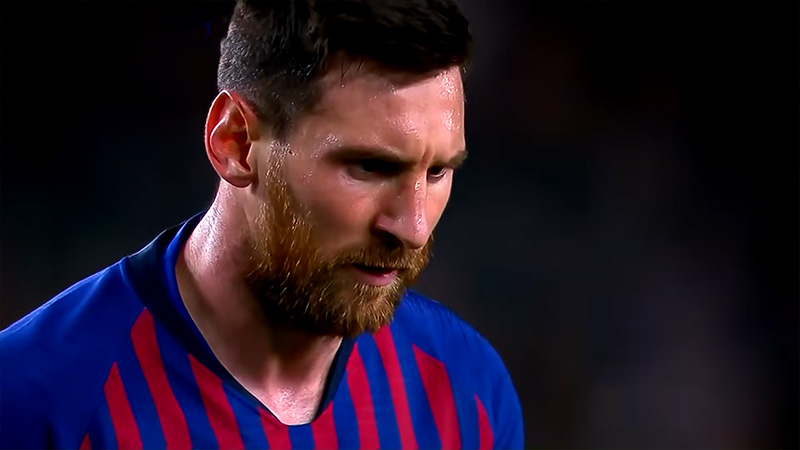
Lionel Messi’s ascension to the pinnacle of world football began in the dusty neighborhood pitches of Rosario, Argentina. While he is now a global icon, his journey started with a simple passion shared by his family.
Understanding when Messi started playing soccer requires looking back to 1991, a pivotal year when a four-year-old boy first laced up his boots.
This early start was not merely a hobby; it was the foundation of a career defined by resilience, technical brilliance, and an unwavering commitment to the sport that would eventually lead him across the Atlantic to Barcelona.
First Steps: Lionel Messi’s Initiation at Grandoli (1991)
The story of Lionel Messi’s professional trajectory is inseparable from his early childhood environment in Rosario. At the tender age of four, Messi was introduced to organized soccer through Grandoli, a small local club where the community lived and breathed the sport.
This initial exposure provided more than just physical exercise; it offered a structured environment where his natural affinity for the ball could be observed and nurtured by those closest to him.
The Influence of Jorge and Celia Messi
At Grandoli, the coaching was a family affair, as his father, Jorge, served as the primary instructor for the youth teams. However, the most significant catalyst for Messi’s early entry into competitive play was his grandmother, Celia.
History records that she was the one who persistently urged the local coaches to allow Lionel to play against boys who were significantly older and larger than he was.
This early experience against superior physical opposition was crucial in developing the low center of gravity and quick decision-making that would define his later career.
Technical Foundations at Age Four
Starting at such a young age allowed Messi to internalize the mechanics of ball control before most children had even begun primary school. While his peers were learning basic social skills, Messi was already navigating the tactical nuances of small-sided games.
The technical proficiency he displayed at Grandoli served as the first indicator that he possessed a talent that transcended typical childhood development.
The Rise of the “Machine of ’87” at Newell’s Old Boys
In 1994, at the age of six, Messi transitioned from neighborhood play to a more formal competitive environment by joining Newell’s Old Boys.
This move marked a significant step in his professionalization, as Newell’s is one of Argentina’s historically significant clubs, known for a sophisticated youth scouting network.
Dominance in Youth Football
During his six-year tenure at Newell’s Old Boys, Messi was the centerpiece of a legendary youth squad known as the “Machine of ’87”. This team earned its moniker through sheer dominance, reportedly remaining unbeaten for a staggering period of three years.
The cohesion and tactical discipline of this group allowed Messi to refine his role as a playmaker and prolific scorer, often outclassing opposition through sheer technical volume.
Statistical Milestone Overview
The following table outlines the critical milestones during Messi’s formative years in Argentina, highlighting the rapid progression from a local participant to an elite youth prospect.
| Age | Milestone | Team | Key Achievement |
|---|---|---|---|
| 4 | First Organized Team | Grandoli | Coached by his father, Jorge. |
| 6 | Major Youth Academy | Newell’s Old Boys | Joined his boyhood club. |
| 7–12 | “Machine of ’87” | Newell’s Old Boys | Unbeaten for three consecutive years. |
| 13 | International Move | FC Barcelona | Relocated to Europe for La Masia. |
Navigating the Growth Hormone Deficiency Challenge
The trajectory of Messi’s career faced a significant hurdle when he was diagnosed with a growth hormone deficiency. This medical condition threatened to cap his physical potential, making it difficult for local clubs to justify the expensive long-term investment required for his treatment.
In the late 1990s, the economic climate in Argentina added a layer of complexity to this situation, as the costs of the necessary hormone therapy were substantial.
The Decision to Seek European Investment
By the time Messi was 13, it became clear that his future required a club with the financial resources and vision to support his medical needs alongside his athletic development.
While domestic clubs recognized his talent, the commitment to pay for his medical treatments was the deciding factor that eventually opened the door to Europe.
This period represented a major risk for the Messi family, as it necessitated a complete relocation to a different continent.
FC Barcelona’s Strategic Intervention
FC Barcelona’s scouting department, led by figures who recognized Messi’s unique profile, made a historic decision in 2000. The club agreed to facilitate Messi’s move to Spain and, most importantly, cover the costs of his growth hormone deficiency treatments.
This agreement was not just a sports contract; it was a comprehensive support package that ensured Messi could reach his full physical and professional potential.
Transitioning to Europe: The La Masia Years
At age 13, Messi officially joined La Masia, the famed youth academy of FC Barcelona. The move from the familiar streets of Rosario to the Mediterranean coast of Spain was a culture shock that would have overwhelmed most teenagers.
However, the structured environment of La Masia provided the perfect laboratory for Messi to blend his Argentinian flair with the “tiki-taka” philosophy of Catalonia.
Adapting to the Spanish Style
In Spain, the emphasis shifted from the physical, often rugged style of Argentinian youth soccer to a system focused on positioning, rapid passing, and tactical intelligence.
Messi’s ability to adapt his game—maintaining his world-class dribbling while integrating into a complex passing system—set him apart from other prospects.
His progression through the various age groups at Barcelona was exceptionally rapid, as he frequently moved up categories to face older, more experienced players.
The Path to the First Team
The time spent in the youth academy was shorter than expected because his talent was undeniable. Coaches quickly realized that Messi’s understanding of the game was on par with seasoned professionals.
This period served as a final polishing phase, where his physical growth (aided by his treatments) finally began to catch up with his immense technical ability.
The Professional Breakthrough: Senior Debuts
The transition from a youth prospect to a senior professional happened in two distinct stages between 2003 and 2004. These milestones confirmed that the investment made by Barcelona three years prior was destined to yield historic returns.
The Informal Debut against FC Porto
On November 16, 2003, at the age of 16, Messi made his first appearance for the Barcelona senior team in a friendly match against FC Porto.
Although the match was not part of an official competition, it allowed the coaching staff to see how the teenager would handle the speed and physicality of professional adults. His performance reinforced the internal belief that he was ready for the next level.
The Official Competitive Debut
Messi’s official league debut occurred on October 16, 2004, when he was 17 years old. Coming on against RCD Espanyol, he became one of the youngest players to ever represent the club in a competitive fixture. This moment marked the end of his journey as a “prodigy” and the beginning of his era as a professional mainstay.
Analytical Perspective: Why Messi’s Early Start Matters
Analyzing Messi’s career through a strategic lens reveals that his early start at age four was a competitive advantage.
The concept of “deliberate practice” suggests that the sheer volume of hours Messi spent with the ball between the ages of four and thirteen created a level of muscle memory that is nearly impossible to replicate later in life.
The Benefits of Early Multi-Environment Training
By playing at Grandoli and Newell’s before moving to Barcelona, Messi experienced two very different footballing philosophies.
The Argentinian “pibe” style—focused on individual brilliance and overcoming adversity—combined with the disciplined, possession-based approach of La Masia created a hybrid player.
This dual education is a key reason why Messi possesses both world-class finishing and elite playmaking abilities.
Resilience and the Medical Journey
The challenge of his growth hormone deficiency should not be viewed merely as a setback. Instead, it likely contributed to his mental fortitude.
Navigating the uncertainty of his health and the pressure of a cross-continental move at 13 forced a level of maturity that most athletes do not develop until much later in their careers.
Frequently Asked Questions
What was the first team Messi ever played for?
Lionel Messi joined his first organized team, Grandoli, at the age of four in 1991. He was coached there by his father, Jorge Messi.
How long did Messi play for Newell’s Old Boys?
Messi played for Newell’s Old Boys for six years, from 1994 to 2000, starting when he was six years old.
Why did Messi move to Barcelona at age 13?
The move was primarily driven by his need for growth hormone deficiency treatments, which FC Barcelona agreed to fund as part of his recruitment to their youth academy.
When did Messi make his professional debut?
Messi made his informal debut at age 16 in 2003 and his official competitive debut in La Liga at age 17 in October 2004.
Conclusion: The Foundation of a Legend
A timeline of relentless progression answers the question of when Messi started playing soccer. From the age of four at Grandoli to his professional debut at seventeen, every stage of his development was marked by a commitment to excellence and a support system that believed in his potential.
His journey demonstrates that while natural talent is essential, the combination of an early start, elite training environments, and the resilience to overcome physical challenges is what creates a global icon.
Today, Messi’s story remains the gold standard for youth development and professional transition in the world of sports.