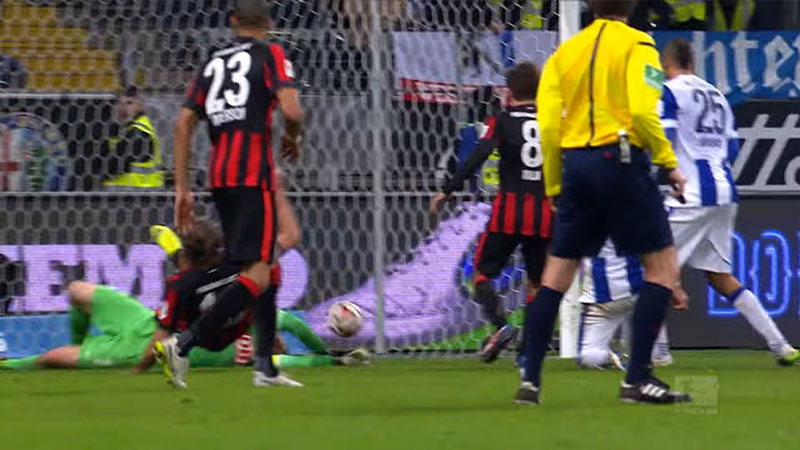
In the fast-paced world of professional soccer, terminology often carries as much weight as the action on the pitch. When a commentator exclaims that a player has “secured a brace,” they are highlighting a specific milestone of individual excellence.
Simply put, a brace occurs when a single player scores two goals within a single match. While the term is a staple of global football culture, its roots extend far beyond the stadium, blending linguistic history with the evolution of the sport.
Understanding this achievement requires looking at timing, technicality, and the historical “hunting” of goals.
Understanding the Technical Definition of a Brace
To the casual observer, two goals might seem like a simple statistic, but in the context of professional sports, it represents a significant shift in game momentum. A brace is defined strictly as a single player finding the net twice in one game.
This feat is widely respected because it demonstrates consistency and the ability to capitalize on multiple scoring opportunities within a high-pressure environment.
Timing and Match Context
One of the most important technical aspects of a brace is the timing of the goals. Unlike a “natural hat-trick” in some other sports, the goals in a soccer brace do not need to be scored consecutively.
A striker could score in the opening minute and then again in the final seconds of stoppage time, and the achievement remains a brace.
As long as both goals are recorded before the final whistle blows, the milestone is officially recognized. This flexibility allows for various tactical narratives, such as a player scoring early to lead and late to clinch the victory.
Recognized Methods of Scoring
The laws of the game dictate how these goals can be scored, and for a brace, any legal body part is acceptable. This includes the feet, the head, or even the chest, provided no handball violation occurs.
A player might score their first goal with a powerful header from a corner kick and their second with a composed left-footed finish in open play. Both contributions are tallied together to form the brace, showcasing the player’s versatility as a goal-scorer.
The Penalty Shootout Exception
While a brace is generally straightforward, there is a critical distinction made in official record-keeping regarding penalty shootouts.
If a player scores a goal during the 90 minutes of regulation or the 30 minutes of extra time, and then scores again during a post-match penalty shootout, this does not constitute a brace.
| Goal Type | Counts Toward a Brace? |
|---|---|
| Regulation Time Goal | Yes |
| Extra Time Goal | Yes |
| Penalty Kick (During Game) | Yes |
| Penalty Shootout (Post-Game) | No |
Official records and statistics typically separate shootout goals from match-play goals. This ensures that a brace reflects the player’s performance during the active flow of the game rather than the isolated, static nature of a tie-breaking shootout.
This distinction is vital for analysts and enthusiasts who track historical data and player valuations, as match-play goals are often viewed as more difficult to achieve.
The Historical Etymology of the Brace
The term “brace” is not native to the sport of soccer; rather, it was borrowed from ancient linguistic traditions and outdoor pursuits. The evolution of the word provides a fascinating look at how language adapts to describe modern entertainment.
Linguistic Roots in Old English and French
The word “brace” finds its origins in the Old English and Middle French languages. Historically, it was derived from words meaning “a pair” or, more literally, “two arms”. This linguistic foundation implies a sense of holding something together or a symmetry of two parts.
In early English usage, it was common to refer to things that came in pairs—such as pistols or architectural supports—as a “brace.” This established the word as a standard descriptor for “two” long before it reached the sporting world.
The Hunting Legacy and Soccer Adoption
The transition of “brace” into the sporting lexicon happened largely through the influence of 19th-century hunting culture.
Hunters traditionally used the term to describe a pair of animals, such as pheasants or rabbits, that were caught or shot together during a single outing. When a hunter returned with two birds, they were said to have a “brace of birds.”
As soccer grew in popularity during the 1800s, fans and journalists began looking for colorful metaphors to describe the action on the field. The image of a striker “hunting” for goals became a popular trope.
Consequently, when a player successfully “bagged” two goals, the hunting terminology was a natural fit. By the late 19th century, the term had been fully adopted by soccer fans to describe the act of a single player scoring two goals in a match.
The Global Scoring Hierarchy
A brace is often the first major milestone a player reaches on their way to legendary status in a single match. However, the terminology of the sport provides a specific ladder of achievement as the goal count increases.
From the Brace to the Hat-trick
While the brace is the foundation of multiple-goal performances, the hat-trick is arguably the most famous milestone in the sport, representing three goals by a single player.
The jump from two to three goals is often seen as the difference between a great performance and a career-defining one. In many leagues, scoring a hat-trick entitles the player to take the match ball home as a trophy.
Advanced Scoring Terms
For elite players who exceed the three-goal mark, the terminology becomes even more specialized. These terms are used less frequently due to the extreme difficulty of the feat:
- Haul or Poker: This refers to a player scoring four goals in a single match. “Poker” is particularly common in Spanish and continental European football circles.
- Glut or Repoker: This represents the rare achievement of five goals in a single match.
- Double Hat-trick: This is the pinnacle of individual scoring in a single game, occurring when a player finds the back of the net six times.
Understanding this hierarchy allows fans to appreciate the relative rarity and difficulty of each achievement. While a brace is common enough to be seen regularly throughout a season, it remains the essential building block for every higher scoring feat.
The Tactical Significance of a Brace
From a coaching and tactical perspective, a player scoring a brace usually indicates a failure in the opposition’s defensive structure or a significant mismatch in individual skill.
When one player is allowed to score twice, it often forces the opposing manager to make immediate tactical adjustments, such as switching to a man-marking system or introducing defensive substitutes.
For the player, scoring a brace provides a massive psychological boost. The “momentum” of the first goal often leads to increased confidence, making the second goal more likely.
Statistical analysis in modern football often looks at “expected goals” (xG) to see if a player’s brace was the result of high-quality chances or exceptional individual finishing from difficult positions.
Frequently Asked Questions
Does an own goal count toward a brace?
No. An own goal is credited to the player who last touched the ball before it entered their own net, but it does not count toward that player’s scoring tally for a brace. For a brace to be recognized, the goals must be scored against the opposing team.
Is a brace less impressive than a hat-trick?
While a hat-trick is statistically rarer and involves more goals, a brace is often more tactically significant in tight, low-scoring games. A brace that turns a 0-1 deficit into a 2-1 victory is often valued more by fans and teammates than the third goal in a 4-0 blowout.
Can a defender score a brace?
Absolutely. While braces are most commonly associated with strikers and attacking midfielders, defenders can and do score braces, often through set-piece situations like headers from corners or long-range strikes. A defender scoring a brace is usually considered a standout performance of the week.
How often do braces occur in professional leagues?
On average, a brace occurs in approximately 10% to 15% of professional matches, depending on the league’s scoring environment. It is common enough to be a regular part of the game’s narrative but difficult enough that it remains a highlight for any player’s season.
Strategic Impact on Player Valuation
In the modern era of data-driven recruitment, the frequency with which a player scores braces can significantly impact their market value. Scouts look for “multi-goal threat” players—those who have the fitness and clinical edge to remain dangerous for the full 90 minutes.
A player who consistently records braces is often viewed as more valuable than one who scores the same total number of goals but spreads them out across more matches, as the ability to dominate a single game can be the difference-maker in tournament knockout stages.
The brace remains one of the most elegant and satisfying milestones in soccer. It bridges the gap between a standard goal-scoring performance and the rarified air of the hat-trick.
By understanding its requirements, its rich history, and its place in the broader scoring hierarchy, fans can deeper appreciate the “hunt” for goals that defines the beautiful game.
Whether it is a header in the first half or a strike in the final minute, the brace will always be a symbol of individual brilliance on the pitch.