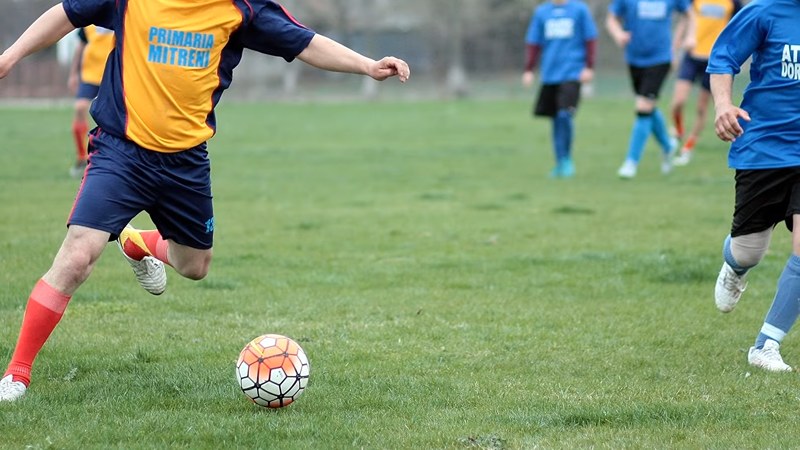
In the sophisticated ecosystem of modern soccer, the forward position stands as the most prestigious and demanding role on the pitch.
Often described as the “heartbeat of the attack,” these players are tasked with a complex blend of clinical execution, tactical intelligence, and physical resilience.
While historical definitions once limited the forward to being a mere “goal-poacher,” contemporary tactical frameworks have transformed the position into a multifaceted discipline that requires contribution in every phase of play.
Forwards are frequently the match-winners who can alter the momentum of a game with a single decisive action, which explains why they remain the most iconic figures in global sports.
Defining the Forward: Taxonomy and Tactical Roles
To understand what a forward does, one must first distinguish between the broad category of “forward” and the specialized roles within that designation.
While the terms are often used interchangeably, a striker is typically a specific type of forward who remains central to capitalize on scoring opportunities, whereas “forward” encompasses a wider variety of attacking profiles.
The modern game utilizes several distinct forward archetypes to solve specific tactical challenges:
- The Center-Forward (Number 9): Positioned at the highest point of the formation, this player serves as the focal point of the attack. Their primary objectives are to occupy center-backs, time runs into the box, and finish chances created by the midfield.
- The Target Forward: A variation of the number 9 who utilizes physical strength to hold up play and bring teammates into the attack. They are essential for teams that rely on aerial duels and physical presence to disrupt defensive lines.
- The Winger (Wide Forward): Operating in the wide channels, these players use speed and dribbling mastery to create 1v1 situations against full-backs. Their role involves delivering crosses into the box or cutting inside to generate shots from the half-spaces.
- The Second Striker: Often playing in the “hole” just behind the main striker, this player links the midfield to the attack. They are characterized by their ability to arrive late in the box and provide creative support.
- The False Nine: A tactical innovation where the forward drops deep into the midfield, pulling center-backs out of position and creating numerical overloads. This role demands exceptional vision and playmaking ability, as seen in the historical performances of Lionel Messi or Francesco Totti.
Core Responsibilities: Beyond the Goal Tally
The primary objective of any forward remains putting the ball in the back of the net, as every goal has the potential to change the course of a match. However, elite performance in 2026 is judged by a much broader set of responsibilities.
1. Creating and Finishing Opportunities
Forwards must possess the instinct to be in the right place at the right time. This involves following every shot, attacking the goal line, and anticipating rebounds from the goalkeeper.
Beyond finishing, they are expected to create danger by running behind defenders and stretching the opposition’s shape.
2. Connecting the Attack
A forward serves as a vital link in the team’s progression. By holding up the ball and playing quick one-twos, they allow the midfield to push forward into attacking positions.
Efficient communication is a hallmark of this responsibility, as forwards must use verbal and non-verbal cues to signal their intent to the passer.
3. Occupying the Defensive Line
By constantly moving and threatening the space behind the defense, forwards keep center-backs pinned in position.
This prevents defenders from stepping into the midfield to assist their own team’s build-up, thereby creating space for attacking midfielders to operate.
4. The Defensive Mandate: Pressing from the Front
The most significant evolution in the modern game is the requirement for forwards to act as the first line of defense.
Today’s coaches view a forward who does not defend as a tactical liability. By leading the high press, forwards disrupt the opponent’s build-up, close passing lanes, and force mistakes that can be immediately converted into scoring chances.
The Psychological Framework of an Elite Forward
Success at the highest level of attacking play is as much a mental challenge as it is a physical one. The following psychological traits distinguish world-class forwards:
- Unwavering Confidence: Forwards must maintain a high level of self-belief, especially when enduring a goal drought. Confidence allows a player to take the risks necessary to break down a compact defense.
- “Cold-Blooded” Composure: This refers to the ability to remain calm under extreme pressure. While a long-range shot carries little expectation, a 1v1 situation with the keeper requires a “cold-blooded” mentality to execute the finish accurately.
- Tactical Patience: Forwards often go long stretches of a game without touching the ball, particularly when the opponent dominates possession. World-class players stay alert and ready during these periods, knowing that one single chance can turn the game on its head.
- Alertness and Anticipation: A forward must constantly scan the pitch to understand the positions of teammates and defenders. This awareness allows them to anticipate where a pass will be played and react before the defender can intervene.
Physical and Technical Benchmarks
The physical demands on a forward are characterized by high-intensity actions and sudden bursts of power.
Physical Power and Speed
While general athleticism is important, “soccer speed” involves sudden directional changes and explosive acceleration over short distances.
Forwards also require the functional strength to shield the ball, using their body to protect possession against physically imposing defenders.
This strength is not necessarily about muscle mass but about using one’s center of gravity and body positioning to win fouls and retain the ball.
Technical Mastery and Improvisation
Precision in finishing is the ultimate differentiator. However, elite forwards also possess the technical skill to improvise in tight spaces.
This includes the ability to control the ball with any part of the body—chest, thigh, or either foot—and to take improvised shots from unconventional angles when a clear line of sight to the goal is unavailable.
The Science of Movement: Finding the “Blind Side”
Great forwards succeed not just because of their shot, but because of their movement without the ball. They view the field as a series of zones and look for the “architecture” of the defense to exploit.
- Double Movements: A forward may check short toward the ball to draw a defender out of the line, only to suddenly sprint into the space vacated behind them.
- Blindside Runs: By drifting into the defender’s blind spot—the area where the defender cannot see both the ball and the attacker—the forward can make a run that is nearly impossible to track.
- Timing the Arrival: In crossing situations, the secret is waiting for the ball to be delivered before committing to the run, ensuring they meet the ball at its highest point or in the optimal scoring zone.
Global Performance Metrics
To ground these tactical theories in reality, one can look at the performance data of elite attackers during the 2023/24 and 2024/25 seasons.
Top Performers in Finishing (European Big 5 Leagues 2023/24):
- Harry Kane (Bayern Munich): Recorded an exceptional 1.57 goals per 90 minutes with a 37% conversion rate.
- Erling Haaland (Manchester City): Averaged 1.14 goals per 90 minutes, serving as a primary example of the clinical number 9.
- Kylian Mbappé (PSG): Maintained a high output of 1.30 goals per 90 minutes while also featuring heavily in chance creation.
Top Performers in Chance Creation (MLS 2024/25):
- Anders Dreyer (San Diego FC): Leads with 1.8 key passes per 90 minutes.
- Martín Ojeda (Orlando City SC): Contributes 1.7 key passes per 90 minutes, highlighting the creative responsibility of modern forwards.
These statistics demonstrate that the elite modern forward must balance the “glamour” of finishing with the “utility” of playmaking.
Strategic Training for Forward Excellence
Developing into a world-class forward requires training that replicates the speed and pressure of a live match. Static shooting drills are insufficient; instead, training must incorporate decision-making and active opposition.
1. Finishing Under Pressure
In this drill, a forward starts near the penalty area with a defender closing in. They must scan their surroundings, receive a pass, and shoot within a strict time limit (usually two seconds). This builds the “cold-blooded” composure required in matches where time and space are limited.
2. Dribble-and-Shoot Circuits
These exercises combine high-tempo ball control with a final clinical action. Forwards weave through cones to simulate tight defensive blocks before transitioning into a power-based or precision-based finish.
3. Combination Play and Small-Sided Games (SSGs)
SSGs with specific rules—such as extra points for goals scored via one-twos or third-man runs—encourage forwards to link play with their teammates. These games also emphasize the “five-second rule” for counter-pressing, training forwards to immediately hunt for the ball after possession is lost.
4. Aerial Target Practice
This involves alternating in-swinging and out-swinging crosses from both flanks. Forwards practice timing their runs to attack the near or far post, focusing on heading technique and body alignment to direct the ball away from the keeper.
Frequently Asked Questions
What is the main difference between a striker and a forward?
While often used as synonyms, “forward” is a general term for any attacking player. A “striker” is a specific role within that category, typically referring to the central attacker whose primary focus is scoring.
How has the forward role changed in the last decade?
The most significant change is the defensive workload. In the past, forwards might rest while their team defended; today, they are expected to be the most active players in the team’s defensive pressing scheme.
Do forwards need to be tall?
No. While height helps for target forwards like Harry Kane or Robert Lewandowski, smaller players like Lionel Messi or Sergio Aguero have dominated the position by using their low center of gravity, speed, and technical improvisation to outmaneuver defenders.
Why is movement without the ball so important?
Studies show that center-forwards spend the vast majority of their energy on high-intensity actions without the ball, such as making decoy runs or pressing defenders. Effective movement creates the space needed for the finish to even occur.
Conclusion: The Path to Elite Status
Mastering the forward position is a pursuit that demands holistic development across tactical, technical, and mental disciplines.
It requires the courage to take responsibility for the team’s results and the humility to perform the “unseen” work of pressing and sacrificing for the collective.
Whether operating as a traditional number 9 or a creative false nine, the goal remains the same: to dismantle the opponent’s defense and inspire the team to victory.
For those willing to put in the work on the training ground—mastering the timing of a run or the precision of a weak-foot finish—the reward is the opportunity to lead the line and decide the biggest moments in the world’s most beautiful game.