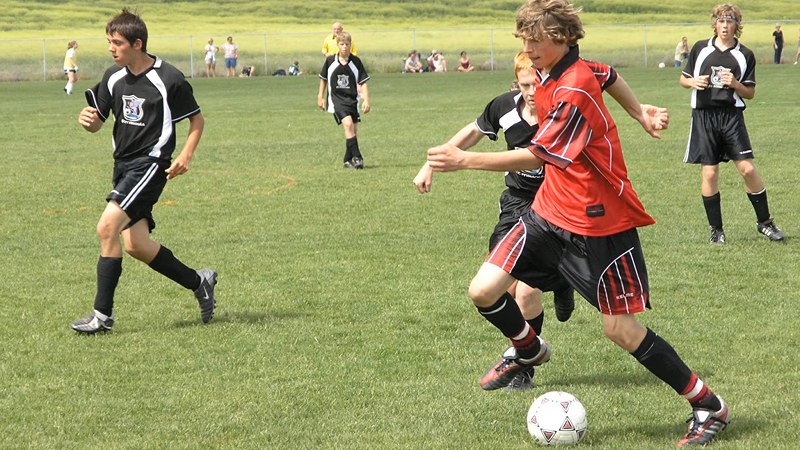
In the high-stakes world of professional soccer, while forwards capture the headlines and goalkeepers the highlights, the midfield acts as the essential “engine room” of the team.
Positioned strategically between the defensive backline and the attacking front, midfielders are the primary architects of a match’s rhythm.
They are responsible for maintaining possession, orchestrating transitions, and providing a tactical shield that prevents opposition breakthroughs.
Understanding what a midfielder does is key to grasping the tactical complexity of the sport, as these players are often the true deciders of victory.
The Strategic Engine: Navigating the Core Responsibilities
Midfielders are the most versatile athletes on the pitch, tasked with a dual mandate that requires them to be both the first line of attack and a vital layer of defense.
Unlike specialized roles like the goalkeeper, a midfielder’s impact is measured by their ability to influence every phase of play. Their primary goal is to connect the defense and attack, ensuring the ball moves fluidly from the backline to the scoring threats up front.
Mastering Possession and Orchestrating the Attack
When a team is in possession, the midfielder transforms into a playmaker. Their role is to receive the ball from defenders and distribute it effectively to the forwards. This requires more than just passing; it involves controlling the tempo—the speed at which the game is played.
By choosing when to slow the game down through short, lateral passes or speed it up with a sudden through-ball, midfielders dictate how the opposition must react.
They are responsible for creating scoring opportunities, often utilizing precise long-range switches or “line-breaking” passes that unlock stubborn defenses.
The Tactical Shield: Defensive Transitions
Out of possession, the midfield serves as the team’s security detail. They act as a screen for the defense by intercepting passes, blocking shooting lanes, and making tactical tackles to disrupt the opponent’s momentum.
A successful midfielder does not just wait for the ball to come to them; they actively work to regain possession and immediately launch new counter-attacks.
This defensive diligence is crucial because a breakdown in the midfield often leaves the backline exposed to high-speed attacks.
Specialized Roles Within the Midfield Hierarchy
The modern game has evolved beyond a generic “midfielder” label. To dominate at the highest levels, teams utilize specialists who focus on specific tactical niches.
| Midfielder Type | Primary Function | Key Focus Areas |
|---|---|---|
| Defensive (CDM) | Protects the backline | Tackling, intercepting, and shielding the defense. |
| Central (CM) | Balanced “all-rounder” | Linking play, maintaining possession, and team balance. |
| Attacking (CAM) | Creative playmaker | Delivering assists, through-balls, and scoring goals. |
| Box-to-Box | High-energy engine | Contributing to both ends of the pitch for 90 minutes. |
| Wide (RM/LM) | Flank specialist | Providing width, crossing, and supporting fullbacks. |
The Anchor: The Defensive Midfielder (CDM)
The defensive midfielder is the “last line of defense” before the opposition reaches the back four. Players in this role, such as Sergio Busquets, are legendary for their composure under pressure and their ability to read the game.
A top-tier CDM excels at “screening”—positioning themselves to block passing lanes and winning the ball back through timely challenges.
The importance of this role is best illustrated by Manchester City’s Rodri; without him, his team’s win percentage in the Premier League significantly dropped, showcasing how a single defensive anchor can stabilize an entire world-class squad.
The Creative Spark: The Attacking Midfielder (CAM)
Attacking midfielders operate in the “No. 10” role, playing closer to the opposition’s goal. They are the most forward-minded players in the middle of the park, responsible for the “final pass” that leads to a goal.
Modern examples like Jude Bellingham or Florian Wirtz demonstrate that these players must also possess “extraordinary running power” to be in the right place at the right time.
Historically, this role has been home to the greatest talents in history, including Pelé, Zidane, and Diego Maradona, whose ability to dribble past entire defenses remains the gold standard for creative play.
The Lifeblood: Central and Box-to-Box Midfielders
Central midfielders are often described as the “lifeblood” of a soccer team. They must possess the endurance to track back and defend one moment, then surge forward to support an attack the next.
This “box-to-box” mentality was perfected by players like Steven Gerrard, who could influence a game’s outcome almost single-handedly through sheer work rate and technical skill.
Current stars like Declan Rice exemplify this balance, proving equally effective at winning the ball back and driving the team forward with powerful runs.
The Physical and Mental Blueprint of an Elite Midfielder
To succeed in the “engine room,” a player must possess a unique blend of elite fitness and high-level cognitive processing.
Endurance and the 13km Standard
Midfielders cover more ground than any other player on the pitch. It is standard for a professional midfielder to run between 10 and 13 kilometers during a 90-minute match.
This endless stamina is vital because they must constantly adjust their positioning to support teammates at both ends of the pitch. A drop in fitness levels often leads to gaps in the midfield, which savvy opponents will quickly exploit.
Cognitive Mastery: Vision and “Scanning”
Technical skill is useless without the mental ability to use it. Elite midfielders engage in “scanning”—constantly checking their surroundings to identify teammates, opponents, and open space before the ball even reaches them.
This spatial awareness allows them to make split-second decisions under intense pressure. When a midfielder has great vision, they can “unlock” a defense that appears impenetrable by spotting a passing lane that others miss.
Technical Essentials: First Touch and Passing Range
In the crowded central areas of the pitch, space is a luxury. Therefore, a midfielder’s first touch is their most important technical asset; it must be perfect to keep the ball away from encroaching defenders.
Furthermore, they must possess a diverse passing range. This includes the ability to execute short, rapid combinations to escape a high press and the power to hit long-range “switches” to change the point of attack instantly.
The Strategic Value of Possession and Recycling
A frequently overlooked aspect of a midfielder’s job is “recycling” possession. If a forward pass isn’t available, or if the team needs to protect a lead, the midfield must keep the ball and move it safely. This requires immense composure, as opponents will often press the midfield aggressively to force a turnover.
By maintaining possession, midfielders tire out the opposition and control the emotional “feel” of the game, ensuring their team remains in the driver’s seat.
How to Develop Midfield Excellence: Training and Drills
Becoming a top-tier midfielder requires dedicated practice in high-pressure scenarios. Training should focus on the following key areas:
- Dribbling in Tight Spaces: Practice maneuvering through “cones” or small-sided games to simulate the crowded nature of the central pitch.
- Quick Turns: Developing the ability to receive the ball with your back to the goal and turning quickly to face the attack.
- First-Touch Accuracy: Using wall-passes or partner drills to ensure the ball is under control immediately upon arrival.
- Scanning Drills: Practicing looking over your shoulder before receiving a pass to build a mental map of the field.
Frequently Asked Questions (FAQ)
What is the difference between a winger and a wide midfielder?
While both play on the flanks, a wide midfielder (RM/LM) typically has more defensive responsibilities, such as supporting their fullback and helping control the center of the pitch. Wingers are generally more focused on one-on-one attacking and staying high up the field.
Who is the best midfielder in soccer history?
This is a subjective debate, but names like Luka Modrić (Ballon d’Or winner), Diego Maradona, and Zinedine Zidane are frequently cited for their era-defining control and creativity. Modern players like Rodri have also entered the conversation due to their immense tactical importance.
How many midfielders are typically on a team?
This depends on the formation. A standard 4-4-2 uses four midfielders, while a 4-3-3 uses three specialists (usually one defensive and two central/attacking). The choice of formation dictates whether the midfielders focus more on width or central dominance.
Conclusion: The Decisive Force on the Field
While they may not always receive the individual accolades of the high-scoring forwards, midfielders are the tactical glue that holds a soccer team together.
From the tireless “box-to-box” runners to the composed defensive “anchors,” these players define the success of their teams through sheer work rate, vision, and technical mastery.
Whether you are an aspiring player or a dedicated fan, recognizing the intricate work done in soccer’s “engine room” is the first step toward truly understanding the beautiful game. To master the midfield is, quite literally, to master the game itself.