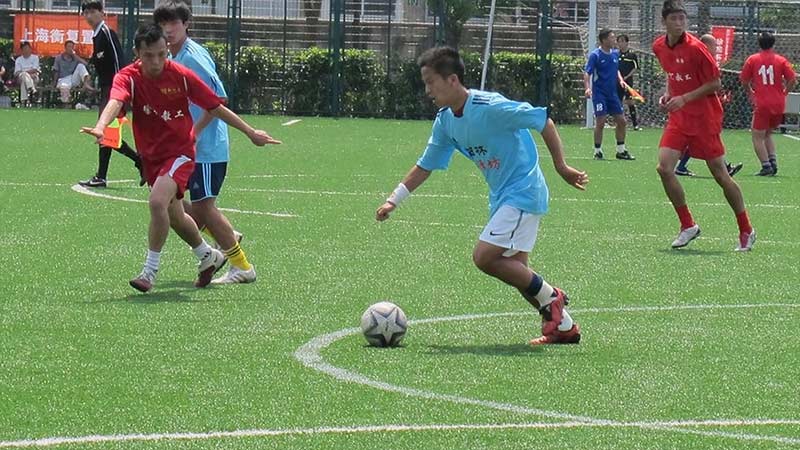
Stepping onto a high school soccer pitch represents a significant milestone in an athlete’s journey. It is the moment where youth recreation transforms into competitive athletics.
To perform at this level, players must move beyond basic gear and align with official regulations that mirror the professional world.
Central to this transition is the equipment itself, the soccer ball. High schoolers exclusively use a Size 5 ball, the official standard for individuals aged 12 and older.
Understanding the exact dimensions and regulatory requirements is essential for players and coaches to ensure match-day readiness. This guide provides a definitive look at the technical standards and global benchmarks required for match play.
Technical Specifications for High School Match Play
For a ball to be legally permitted in a high school match, it must adhere to strict technical parameters. These are not merely suggestions; they are requirements enforced by governing bodies such as the National Federation of State High School Associations (NFHS) and FIFA to ensure a consistent playing experience.
The physical properties of an official Size 5 ball are measured by its circumference and weight. According to established standards, a match ball must meet the following criteria:
| Feature | Official Specification |
|---|---|
| Ball Size | Size 5 |
| Circumference | 27–28 inches (68–70 cm) |
| Weight | 14–16 ounces (410–450 grams) |
| Recommended Age | 12+ (High School to Adult) |
These measurements ensure that the ball responds predictably when struck, maintaining a balance between aerodynamics and durability.
A ball that is too light may flutter in the wind, while one that is too heavy can increase the risk of injury during headers or long-distance strikes.
Understanding the Governing Bodies
The NFHS is the primary body that sets the rules for high school sports in the United States. While they often align with FIFA (the international governing body for soccer), they have specific “Authentication Marks” that must be visible on the ball for varsity competition.
This mark serves as a guarantee that the ball has been tested for roundness, water absorption, and pressure retention.
The Progression of Soccer Ball Sizes
The journey to using a Size 5 ball is a multi-year process. Soccer organizations utilize different ball sizes to match the physical development and skill level of growing children. High schoolers have completed this progression, having moved through several smaller sizes.
The Role of the Size 4 Ball
Before entering the high school ranks, players typically spend their middle school years (ages 8–12) using a Size 4 ball. This ball has a circumference of 25–26 inches and is designed to help developing players gain better control.
Because younger players have smaller feet and less leg strength, the slightly reduced mass of a Size 4 ball allows them to practice technical maneuvers without the physical strain of a full-sized adult ball.
Junior Development with Size 3
For players under the age of 8, the Size 3 ball is the standard. This is the smallest ball used in actual match play. At this stage, the focus is entirely on fundamental engagement with the sport.
The Size 3 ball is light enough for very young children to kick comfortably, encouraging them to develop a love for the game while building basic motor skills.
The Strategic Use of “Mini” or Skills Balls
Even at the high school level, players do not exclusively interact with Size 5 balls during their training cycles.
Coaches often incorporate Size 1 and Size 2 balls, commonly referred to as “Skills” or “Mini” balls. These are not used for matches but serve a vital purpose in a high schooler’s training regimen.
Developing Technical Precision
Size 1 and 2 balls are used by players of all ages to refine technical footwork and close-control drills. Because the surface area is so much smaller, the margin for error is significantly reduced.
A high school athlete practicing juggling or rapid-fire dribbling with a Size 2 ball must exhibit much higher precision than they would with a Size 5.
Enhancing Concentration and Reflexes
Training with a smaller ball forces the brain and body to synchronize more tightly. When a player transitions back to the official Size 5 match ball after a session with a skills ball, the match ball often feels larger and easier to control.
This “over-training” method is a staple in high-performance soccer academies to ensure that a player’s first touch is impeccable under pressure.
Critical Features of Premium Match Balls
While size and weight are the primary metrics, not all Size 5 balls are created equal. For high school competition, the construction of the ball significantly impacts how it performs on different surfaces, such as natural grass versus synthetic turf.
Outer Shell Materials
High-quality match balls generally use Polyurethane (PU) rather than Polyvinyl Chloride (PVC). PU is a softer, more responsive material that provides a better “feel” off the foot.
While PVC is more durable and cheaper, it can feel hard and plastic-like, especially in colder climates. Most high school match balls favor high-grade PU to ensure the ball mimics professional play standards.
Bladder Construction: Latex vs. Butyl
The bladder is the internal component that holds the air. Match balls often use Latex bladders because they offer the best bounce and responsiveness. However, latex is porous and loses air relatively quickly, requiring daily inflation.
Conversely, Butyl bladders are common in practice balls because they retain air for weeks at a time, though they are slightly heavier and less “lively” than latex.
Seam Technology: Thermal Bonding vs. Stitching
Traditional soccer balls are hand-stitched or machine-stitched. However, many modern high-end Size 5 balls use thermal bonding. This process glues the panels together using heat, creating a seamless surface. Thermal bonding is preferred for high school matches because it prevents water absorption.
In rainy conditions, a stitched ball can take on water through the seams, becoming heavy and difficult to play with, whereas a thermally bonded ball maintains its official weight of 14–16 ounces regardless of the weather.
The Importance of the NFHS Authentication Mark
For many high school athletic directors, the most important feature on a soccer ball is the NFHS Authenticating Mark. This logo signifies that the manufacturer has paid a fee and, more importantly, that the ball has passed rigorous testing to ensure it meets the 27–28 inch circumference and 14–16 ounce weight requirements.
In many state associations, a referee is required to inspect the ball before kickoff. If the ball does not have the NFHS mark, it may be deemed illegal for varsity play, even if it is a high-quality FIFA-approved ball.
This level of standardization ensures that no team has an unfair advantage by using a ball that is intentionally under-inflated or outside the weight specifications to alter the speed of the game.
Maintenance: Keeping the Ball in Peak Condition
Owning the correct Size 5 ball is only the first step; maintaining it is essential for consistent performance. High school athletes should be taught how to care for their equipment to ensure it lasts through a demanding season.
Proper Inflation Standards
The recommended air pressure (PSI) for a soccer ball is typically printed around the valve. Most Size 5 balls perform best between 8.5 and 15.6 PSI. For high school play, a pressure of 9–11 PSI is generally preferred.
Over-inflating the ball makes it feel like a rock, which can lead to foot and head injuries, while under-inflating it prevents the ball from traveling the necessary distance during long passes or shots.
Cleaning and Storage
To preserve the outer shell, balls should be wiped down after play on wet or muddy fields. Dirt can act as an abrasive, wearing down the PU coating over time.
Furthermore, balls should never be stored in extreme temperatures, such as the trunk of a car during summer or winter. Excessive heat can cause the bladder to expand and warp the shape, while extreme cold can cause the material to crack.
Frequently Asked Questions
Can a high schooler use a Size 4 ball for practice?
While it is physically possible, it is not recommended for regular practice. High schoolers need to develop their “touch” based on the weight and size of a Size 5 ball. Practicing with a Size 4 ball can throw off a player’s timing and muscle memory, making it harder to adjust during an actual match.
Is there a difference between “Match” balls and “Training” balls?
Yes. Both are Size 5, but training balls are built for durability and high-volume use. They usually feature Butyl bladders for air retention and thicker covers. Match balls are engineered for performance, aerodynamics, and “flight” accuracy.
A high school team will typically have a bag of training balls for daily drills and a few “pristine” match balls reserved specifically for games.
Are there gender-specific ball sizes in high school?
No. Both boys’ and girls’ high school soccer programs use the official Size 5 ball. The specifications for circumference (27–28 inches) and weight (14–16 ounces) remain identical across all high school divisions.
Conclusion: Preparing for the Next Level
Choosing the right soccer ball is about more than just following a rulebook; it is about respecting the integrity of the game. By utilizing the Size 5 standard, high school athletes align themselves with the global community of soccer players.
This consistency in equipment allows for a fair competitive environment where skill, strategy, and athleticism take center stage.
Whether you are a coach selecting the next fleet of match balls or a parent buying a gift for an aspiring varsity star, prioritizing a ball that meets the 27–28 inch circumference and 14–16 ounce weight requirements is the best way to support a player’s development.
With the right equipment in hand, a high school player is fully equipped to take their game to the next level.