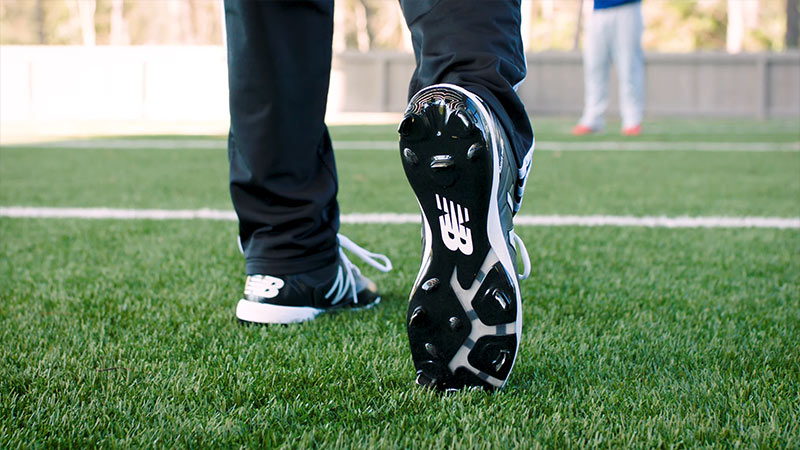
Transitioning from youth athletic leagues to high school baseball marks a pivotal step in an athlete’s physical and competitive development.
Among the most frequent equipment decisions facing student-athletes, parents, and coaching staffs is footwear compliance—specifically, whether metal spikes are permitted, how they compare to molded alternatives, whether football cleats can be reused, and how team customization policies apply.
This comprehensive guide provides an authoritative analysis of high school footwear regulations, surface-specific traction dynamics, safety considerations, and equipment strategies.
Grounded in rulebook standards and athletic performance research, this article equips families and players with the exact insights required to make informed, cost-effective, and performance-enhancing footwear choices.
NFHS Regulations: Metal Cleat Compliance in High School Baseball
The Rulebook Baseline
Under the official regulations set forth by the National Federation of State High School Associations (NFHS), metal cleats are generally permitted for high school baseball play on standard natural grass and dirt fields.
In youth baseball divisions—such as Little League Minors and Majors—metal spikes are strictly prohibited due to safety concerns regarding younger players slide-tackling or making contact with unprotected fielders.
However, as athletes enter high school, governing bodies recognize that players possess the physical strength, athletic coordination, and skill level necessary to manage metal traction safely.
Consequently, high school programs not only permit metal spikes but routinely encourage their adoption to elevate competitive output.
Level / Organization | Metal Cleats Permitted? | Core Regulatory Notes |
|---|---|---|
Little League (Majors) | Prohibited | Molded rubber/plastic only |
Travel Ball (USSSA/PG) | Varies by Age / Event | Check event-specific rules |
High School (NFHS) | Allowed | Permitted on dirt/grass fields |
College (NCAA) | Allowed | Standard competitive footwear |
Professional (MLB) | Allowed | Standard competitive footwear |
Why the Safety Policy Shifts at the High School Level
The transition from soft rubber studs to sharp steel blades is rooted in player biomechanics. High school athletes generate significantly higher rotational torque at the plate and greater ground reaction force during field play.
Metal spikes provide the deep surface penetration necessary to anchor a player’s footing, reducing slips and supporting high-speed lateral acceleration across the diamond.
Metal vs. Molded TPU vs. Turf Footwear: Performance & Biomechanics
Selecting the right footwear involves balancing maximum field traction against long-term lower-extremity health. Understanding the structural differences between cleat types helps players maximize speed while minimizing physical strain.
Feature / Attribute | Metl Cleats | Molded TPU / Plastic | Turf Shoes |
|---|---|---|---|
Surface Penetration | Maximum (Dirt/Grass) | Moderate | Minimal |
Primary Surface | Natural Dirt & Grass | Dirt, Grass & Turf | Synthetic |
Front Toe Spike | Present | Present | Absent |
Joint Impact Strain | Higher | Lower | Minimal |
Recommended Usage | Game Days | Practice / Turf | Cages / Turf |
The Performance Advantage of Metal Spikes
Metal cleats feature thin, strategically placed steel blades that cut cleanly into clay, packed dirt, and lush outfield grass.
- Acceleration & Lateral Cuts: Unlike plastic studs that sit on top of hard dirt, metal blades penetrate the surface instantly, providing immediate traction for first-step quickness.
- Mound Traction for Pitchers: Pitchers benefit immensely from a rigid metal plant foot. A secure landing spot prevents the drive foot from slipping on hard landing clay, ensuring consistent release points and helping to protect against lower-body strains.
- All-Weather Reliability: On wet, muddy, or uneven fields, metal cleats prevent mud build-up better than broad rubber studs, retaining grip under challenging weather conditions.
Joint Health, Fatigue & The Cleat Rotation Strategy
Despite their traction superiority, metal spikes carry structural trade-offs. Because steel blades do not give or flex, impact energy transfers directly up the kinetic chain into the ankles, shins, knees, and lower back.
Former Major League Catcher Buster Posey famously transitioned to plastic/molded cleats following a major career injury to reduce impact strain on his joints.
Molded Thermoplastic Polyurethane (TPU) cleats are lighter than metal options and offer superior cushioning across the footbed.
To optimize performance without accumulating excess body fatigue, many high school athletes adopt a smart footwear rotation strategy:
- Practice & Training Days: Wear lightweight, cushioned molded TPU cleats to minimize wear and tear on joints.
- Game Days: Switch to metal cleats to harness full traction, torque, and explosive power when official results are on the line.
Surface Exceptions: Synthetic Turf, Portable Mounds & Venue Rules
While NFHS rules allow metal spikes on natural terrain, modern facility design introduces critical field-specific exceptions.
Playing Surface | Permitted Footwear | Prohibited Footwear |
|---|---|---|
Natural Dirt & Grass | Metal, Molded, Turf | None |
Synthetic Full-Turf Field | Molded TPU, Turf Shoes | Metal Spikes (Damage Risk) |
Portable / Fiberglass Mounds | Molded TPU, Turf Shoes | Metal Spikes (Damage Risk) |
Indoor Batting Cages | Turf Shoes, Sneakers | Metal Spikes, Molded Cleats |
Synthetic Turf & Portable Mound Restrictions
An increasing number of high schools, tournament complexes, and university host venues utilize artificial synthetic turf fields and portable fiberglass pitching mounds.
- Facility Protection: Metal spikes slice and tear synthetic turf fibers and permanently gouge fiberglass mound surfaces. Consequently, venue managers strictly prohibit metal cleats.
- Tournament Organization Policies: Specialized tournament sanctioning bodies—including select USSSA events—frequently enforce rules requiring all age groups to wear molded plastic or turf shoes when playing at artificial turf facilities.
Equipment Bag Essentials: The Secondary Pair
Because venue enforcement is non-negotiable, a high school baseball player should never arrive at an away field with only metal cleats.
Maintaining a secondary pair of molded TPU cleats or dedicated turf shoes (featuring dense rubber nub outsoles) in the equipment bag ensures full compliance regardless of field conditions.
Multi-Sport Cleat Crossover: Football Cleats in High School Baseball
Parents and multi-sport athletes frequently ask whether football cleats can be repurposed for baseball to reduce gear costs.
The answer involves a clear distinction between youth recreational play and high school competition, as well as a vital safety rule.
Direction | Permissible? | Structural & Safety Rationale |
|---|---|---|
Football Cleats → Baseball | Legal / Safe | Molded studs pose no safety hazard |
Baseball Cleats → Football | Prohibited | Toe spike creates a severe tackle hazard |
Structural Differences: The Crucial Toe Cleat
The defining structural difference between baseball and football cleats lies in the front toe cleat.
- Baseball Cleat Construction: Features a prominent spike located directly under the big toe. This spike allows batters to dig into dirt at the plate for push-off power and gives fielders immediate leverage when planting and throwing.
- Football Cleat Construction: Omits the toe spike entirely. Football cleats emphasize forward acceleration and high-ankle protection for contact on grass and turf, but lack toe-spike leverage.
The “One-Way Safety Rule”
Understanding why cleats can cross over in one direction but not the other is critical for parent peace of mind and player safety:
- Football Cleats for Youth Baseball (SAFE & LEGAL): Football cleats feature molded rubber or plastic studs. Because they lack a sharp front toe spike, wearing football cleats on a baseball field poses zero safety risk to opponents. They are legal in most youth recreational leagues and serve as a practical budget solution for young kids. However, at the high school level, football cleats cannot accommodate metal spikes, are heavier, lack lateral dirt support, and are generally not recommended for high school varsity programs.
- Baseball Cleats for Football (STRICTLY PROHIBITED): The front toe spike on a baseball cleat creates a severe safety hazard during football contact. During a tackle or pile-up, a toe spike can easily catch on another player’s body or leg, leading to catastrophic ankle or knee injuries. Consequently, nearly all football athletic associations explicitly ban baseball cleats.
Custom Cleats, Team Culture & Coaching Standards
With modern footwear culture emphasizing personalized gear, high school athletes frequently inquire about wearing custom-painted cleats.
- Step 1: Check NFHS General Rules – Custom paint is generally allowed.
- Step 2: Evaluate Team Uniformity Rules – Coaches may enforce strict color policies.
- Step 3: Secure Roster Spot & Consult Head Coach – Get approval from your head coach before painting or customizing your cleats.
NFHS Guidelines vs. Varsity Program Culture
From a purely regulatory standpoint, NFHS athletic rules do not contain explicit bans against custom-painted cleats or personalized colorways.
As long as the cleats meet safety standards and do not display offensive imagery, state athletic associations do not restrict custom designs.
However, individual team standards always take priority over general athletic rulebooks. High school head coaches frequently enforce strict team uniformity expectations:
- Color Scheme Mandates: Many coaches require all players to wear cleats that strictly match school colors (e.g., solid black, red, navy, or white).
- Team-Issued Orders: In many competitive programs, the varsity coaching staff orders standardized team metal cleats for the entire roster to ensure a unified visual presentation on the field.
Practical Advice for Student-Athletes
As highlighted by veteran high school coaches and baseball families:
- Focus on Making the Team First: Secure a spot on the official roster before investing time or money into custom footwear modifications.
- Request Direct Permission: Always ask the head coach for permission before purchasing, painting, or altering game cleats.
Top Industry Cleat Recommendations by Category
Based on performance metrics, durability ratings, and athletic design, the following models represent premier options across metal, molded, and turf categories:
Premier Metal Cleat Models (High School & Competitive Play)
- Nike Force Zoom Trout 9 Elite Metal: Features double-stacked Zoom Air cushioning, Flywire lockdown support, and explosive metal traction designed for power hitters and fast outfielders.
- New Balance 4040 Series: Renowned across high school and collegiate programs for industry-leading comfort, durable build quality, and superior fit options.
- Under Armour Highlight Yard Diamond Tips: Offers mid-to-high-top ankle stability combined with hybrid traction points that deliver high-end support.
- Adidas Adizero Afterburner: Engineered for elite sprinters and base-stealers, providing an ultra-lightweight chassis focused on rapid acceleration.
- Mizuno Ambition / Dominant: Highly reliable, affordable metal spikes trusted by high school programs nationwide for exceptional durability and mound stability.
Premier Molded & Secondary Cleat Options
- Nike Force Trout 9 Pro MCS: Lightweight molded TPU construction offering excellent traction on dirt, grass, and synthetic fields.
- New Balance Fresh Foam 3000v7: Features responsive Fresh Foam midsole cushioning, available in wide widths, making it ideal for daily practice wear.
- Under Armour Harper 10 RM: Provides aggressive molded rubber traction with signature player styling and firm footbed support.
- Adidas Adizero Impact 2.0 TPU: Excellent budget-friendly molded option providing comfortable Lightstrike cushioning across multiple playing surfaces.
Strategic Buyer’s Decision Matrix & Equipment Checklist
To streamline your equipment purchasing process, utilize this step-by-step decision framework before the season begins:
Step 1: Assess Your Primary Playing Surface
- If your home field consists of natural dirt and grass, invest in a quality pair of metal cleats as your primary game footwear.
- If your team plays on full synthetic turf or uses portable fiberglass pitching mounds, purchase molded TPU cleats or turf shoes.
Step 2: Establish a Practice vs. Game Rotation
- Protect your knees and shins by wearing molded TPU cleats during daily double-headers and multi-hour practice sessions.
- Reserve your metal spikes for official game days to maximize competitive grip.
Step 3: Verify Team Uniform Guidelines
- Check with your head coach regarding approved colorways before investing in custom shoe painting or non-standard color patterns.
Conclusion
Choosing the right footwear for high school baseball comes down to understanding league rules, respecting field surface constraints, and protecting long-term athletic health.
By equipping your player with a reliable pair of primary metal cleats for dirt/grass games and keeping a secondary pair of molded or turf shoes in their bag, you ensure complete readiness for any field environment.