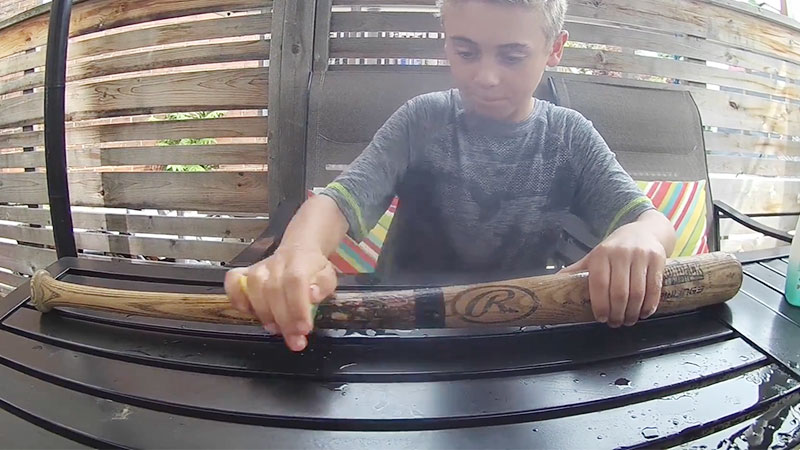
The fastest way to clean pine tar off a bat is to soften it with a solvent matched to your bat’s material, wipe it away with a soft cloth, and finish with a quick rinse and dry.
For most wood and aluminum bats, isopropyl (rubbing) alcohol does the job in under 15 minutes. Composite bats need a gentler touch, usually warm water and mild dish soap.
Pine tar is one of the most trusted tools in baseball. A thin layer gives hitters a tacky, confident grip that helps them control the barrel through contact. But that same stickiness turns against you over time.
Layers pile up, collect dirt and sand, harden into a gritty crust, and spread onto your gloves, your hands, and everything in your bat bag.
Whether you are a high school player, a weekend softball regular, a parent managing a youth player’s gear, or a collector restoring a game-used piece, this guide walks you through exactly what to use, what to avoid, and how to keep your bat game-ready all season.
Why Pine Tar Builds Up (and When to Clean It)
Pine tar is a thick, resinous substance made by heating pine wood. Its natural stickiness is exactly why hitters love it, and also why it never really “wears off.” Instead of disappearing, each new coat sits on top of the old one.
After a few weeks of batting practice and games, that buildup starts working against you. Warm weather softens it so it smears.
Cold weather hardens it into a slick, uneven shell. Dirt from the batter’s box gets trapped in every layer.
Signs your bat needs a cleaning:
- The handle feels lumpy, crusty, or uneven in your hands
- Your grip feels slippery rather than tacky, especially in cold weather
- Dark residue is transferring to your batting gloves or uniform
- Tar has crept up past the handle toward the barrel
- You plan to store the bat for the off-season
- You are preparing a bat for display, resale, or a different player
A good rule of thumb for active players: give the handle a light cleaning every few weeks during the season and a deep cleaning at the end of every season.
Clean equipment also lasts longer, because hardened grit can scratch finishes and hide small cracks you would otherwise catch early.
Know Your Bat Material Before You Start
The single most important step happens before you open any bottle: identify what your bat is made of. A method that is perfectly safe on maple can ruin a composite barrel.
Wood bats (maple, ash, birch, bamboo)
Wood is the most forgiving material. It tolerates rubbing alcohol and light sanding well. The main risk is the finish: lacquered or painted bats can lose their sheen if you scrub too hard or use harsh solvents.
Aluminum and alloy bats
Metal surfaces resist most household solvents, so alcohol and commercial adhesive removers work well. The concern here is the paint, graphics, and the handle grip, not the metal itself.
Composite bats
Composite barrels and handles are built from layered carbon fiber and resin. Many manufacturers specifically warn against chemical solvents because they can weaken the resin or void the warranty. Start with soap and water, and check your bat’s care instructions before trying anything stronger.
Hybrid bats
Many modern bats pair an alloy barrel with a composite handle. Since pine tar lives on the handle, treat a hybrid bat as a composite bat when cleaning.
Not sure what you have? Look for the material printed on the barrel, the model name on the taper, or the manufacturer’s product page. When in doubt, use the gentlest method first.
What You Need: Your Cleaning Checklist
You probably have most of these at home already. Gather everything first so you are not hunting for supplies with sticky hands.
- Isopropyl (rubbing) alcohol, 70% or 91%
- Mild liquid dish soap and warm water
- Microfiber cloths or old cotton T-shirts (at least three)
- A plastic scraper or old gift card for thick crust
- Fine-grit sandpaper (220 grit or finer), wood bats only
- A citrus-based adhesive remover such as Goo Gone, optional
- Disposable nitrile gloves to keep tar off your hands
- Newspaper, a towel, or a drop cloth to protect your work surface
- Cooking oil or baby oil for stubborn spots and hand cleanup
Safety note: Alcohol and adhesive removers are flammable. Work in a well-ventilated space away from heat or open flames, and keep cleaning products out of reach of young players.
How to Clean Pine Tar Off a Wood Bat?
Wood bats collect the most pine tar, so they usually need the most work. Plan on 10 to 20 minutes depending on how thick the buildup is.
- Scrape off the thick crust. Hold the bat firmly and use a plastic scraper or old gift card to lift away hardened chunks. Work with the grain, not across it. Never use a metal blade, which can gouge the wood.
- Apply rubbing alcohol. Dampen a microfiber cloth with isopropyl alcohol. Hold it against the tarred area for 30 to 60 seconds so the alcohol can soften the resin.
- Wipe in long strokes. Rub along the length of the handle. You will see the cloth turn brown almost immediately. Switch to a clean section of the cloth often so you are not smearing tar back on.
- Repeat as needed. Heavy buildup may take three or four rounds. Patience works better than pressure.
- Lightly sand stubborn spots (optional). If a thin, stained layer remains, sand gently with 220-grit or finer paper, following the grain. Skip this step on collectible or signed bats.
- Wipe clean and dry. Go over the handle with a cloth dampened in plain water, then dry it completely with a fresh towel. Let the bat air-dry for at least an hour before use.
Pro tip: For lacquered or painted wood bats, test alcohol on a small hidden area near the knob first. If the finish dulls or turns tacky, switch to the soap-and-water method used for composite bats.
How to Clean Pine Tar Off an Aluminum or Alloy Bat?
Metal bats are the easiest to clean because the surface does not absorb tar. Most players finish in under 10 minutes.
- Remove or protect the grip. If the tar is on the grip tape, decide whether to clean it or replace it (see the next sections). If you are keeping the grip, wrap it in plastic to keep solvent off it.
- Soften with alcohol or adhesive remover. Apply rubbing alcohol or a small amount of citrus-based adhesive remover to a cloth, not directly on the bat. Let it sit on the tar for about a minute.
- Wipe away the residue. Use firm, circular motions on heavy spots, then finish with long strokes. A plastic scraper helps with thick patches.
- Wash off any remover. Adhesive removers leave an oily film. Wash the area with warm water and a drop of dish soap so your hands do not slip later.
- Dry completely. Towel dry and let the bat air-dry before reapplying grip or tar.
Avoid steel wool, abrasive pads, and acetone. They strip paint and graphics, and on certified bats, heavy surface damage can raise questions with umpires during equipment checks.
How to Clean Pine Tar Off a Composite Bat?
Composite bats are high-performance investments, often costing $300 to $500 or more. Protecting the resin matters more than speed, so this method relies on mild cleaners first.
- Read your warranty first. Check the manufacturer’s care guide. Many brands state that solvents, alcohol, or chemical cleaners can void coverage.
- Mix a gentle solution. Combine a few drops of mild dish soap with a bowl of warm (not hot) water.
- Soak and soften. Dip a microfiber cloth in the solution, wring it out until damp, and press it against the tarred area for two to three minutes. Warmth helps loosen the resin.
- Wipe gently. Use light, even strokes. Lift thick spots with a plastic card instead of scrubbing.
- Try a drop of oil for stubborn spots. A small amount of cooking oil or baby oil on a cloth breaks down pine tar without harsh chemicals. Wash the oil off with soapy water afterward.
- Rinse and dry thoroughly. Wipe with a clean damp cloth, towel dry, and let the bat sit at room temperature until fully dry. Never submerge a composite bat or use a hair dryer to speed things up.
If residue remains after two or three gentle passes, it is usually safer to replace the grip than to escalate to stronger chemicals.
Cleaning Grips, Tape, Gloves, and Your Hands
Pine tar rarely stays on the bat alone. Here is how to handle everything else it touches.
Bat grip tape
Synthetic grips (like Lizard Skins or similar polyurethane wraps) can be cleaned gently with a damp cloth and a drop of dish soap. Alcohol tends to dry out and crack these materials. If the grip is caked, peeling, or has lost its cushion, replacing it costs roughly $10 to $20 and takes about five minutes, which is often the smarter choice.
Athletic tape
Cloth tape that has absorbed pine tar cannot be restored. Peel it off, clean any residue underneath using the method for your bat type, and re-wrap.
Batting gloves
Hand-wash in cool water with a small amount of mild detergent. Gently work the palms together to loosen the tar, rinse, and air-dry away from direct heat. Leather palms can stiffen if dried too quickly.
Your hands
Rub a teaspoon of cooking oil, baby oil, or even butter into your palms for 30 seconds, then wash with warm soapy water. Oil dissolves pine tar far better than soap alone. Hand sanitizer works in a pinch at the field.
Common Mistakes That Damage Bats
Most bat damage during cleaning comes from rushing or using the wrong product. Avoid these and your bat will thank you.
- Using acetone or paint thinner on composites. These can break down the resin that holds carbon fiber layers together.
- Soaking the bat in water. Wood swells and can crack. Composite and alloy bats can trap moisture under grips and end caps.
- Applying heat. Hair dryers, heat guns, and leaving a bat in a hot car soften tar but can warp wood and weaken composites.
- Scrubbing with metal tools or steel wool. They leave scratches that can grow into weak points.
- Sanding signed or collectible bats. Light sanding is fine for a gamer, but it destroys value on a memorabilia piece. Leave those to a professional restorer.
- Skipping the final rinse. Leftover oil or adhesive remover makes the handle slick, which defeats the purpose of having a good grip.
- Cleaning right before a game. Give the bat at least an hour to dry, ideally overnight, before you swing it.
Reapplying Pine Tar the Smart Way
A clean bat is the perfect starting point for a better grip. The goal is a thin, even coat, not a thick shell.
Follow the 18-inch rule. Major League Baseball’s official rules limit pine tar and other grip substances to the first 18 inches of the bat, measured from the end of the handle. Many amateur leagues follow the same standard.
Baseball fans remember the 1983 “Pine Tar Game,” when George Brett’s go-ahead home run against the Yankees was briefly overturned because tar extended too far up his bat. Check your own league’s rulebook, since youth and softball associations may have different limits.
How to apply it:
- Start with a completely clean, dry handle.
- Use a pine tar stick or a rag with a small amount of liquid tar.
- Apply a thin layer from the knob upward, staying well under the limit.
- Let it set for a few minutes, then test your grip with a few dry swings.
- Add a second light coat only if needed.
Prevention tips to reduce future buildup:
- Wipe the handle with a dry towel after every game or practice
- Store bats in a bag sleeve so tar does not transfer to other gear
- Keep bats out of hot cars and direct sun, which makes tar migrate
- Consider a pine tar alternative, such as grip spray or a tacky grip wrap, if you dislike the mess
- Do a quick alcohol wipe (wood and metal) every few weeks instead of letting layers stack up
Keep Your Bat Clean, Keep Your Swing Confident
Cleaning pine tar off a bat comes down to three things: know your material, choose the gentlest solvent that works, and finish with a thorough rinse and dry.
Rubbing alcohol handles most wood and metal bats in minutes. Soap, warm water, and patience protect your composite investment. A thin, fresh coat afterward gives you a grip that feels better than ever.
A few minutes of care every few weeks extends the life of your bat, keeps you within league rules, and makes sure the only thing you are thinking about at the plate is the next pitch.