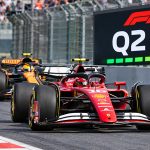
Eighteen minutes. Twenty-two cars. Six drivers sent home before the fight for pole even begins. Q1 is the opening act of Formula 1 qualifying, and in 2026 it has become one of the most unforgiving sessions on the calendar.
When Cadillac joined as the 11th team this season, the grid grew from 20 to 22 cars, and the FIA raised the Q1 cut from five cars to six.
Add all-new power units that ask drivers to manage battery energy on every flying lap, and Q1 is no longer a formality for the front-running teams. As the season opener in Melbourne proved, even a world champion can fall at the first hurdle.
This guide explains exactly how Q1 works: the format, the flow of a typical session, the 107% rule, the strategy teams use to survive, and what to watch for from your sofa or the grandstand.
Whether you are new to the sport or a long-time fan catching up on the 2026 rules, you will finish with a clear picture of the session that shapes the back half of every grid.
Q1 in a Nutshell
Q1 is the opening 18-minute segment of Formula 1 qualifying. All 22 cars may run as many laps as they like, and only each driver’s single fastest lap counts.
When the chequered flag falls, the six slowest drivers are eliminated and fill grid slots 17 to 22 for the race. The 16 survivors advance to Q2, and their Q1 times are wiped clean.
Here is how Q1 fits into the full one-hour qualifying session in 2026:
| Segment | Duration | Cars on track | Eliminated | Grid places decided |
|---|---|---|---|---|
| Q1 | 18 min | 22 | 6 slowest | P17–P22 |
| Q2 | 15 min | 16 | 6 slowest | P11–P16 |
| Q3 | 13 min | 10 | None | P1–P10 |
A seven-minute break separates each segment. Two changes stand out for 2026. Q1 and Q2 now remove six cars each instead of five, so the top-10 shootout stays intact.
Q3 also gained a minute, rising from 12 to 13, with the break before it trimmed from eight minutes to seven so the hour stays the same length.
How a Q1 Session Unfolds, Step by Step
Q1 looks chaotic on television, but every team follows a tight, rehearsed plan. Here is how a typical session runs from green light to chequered flag.
- The pit lane opens. The green light at the pit exit starts the 18-minute clock. Some drivers leave at once to bank a safe time before anything goes wrong; others wait for the track to gain grip.
- The out-lap. Drivers spend a lap warming the tyres and brakes and, in 2026, charging the battery. Arriving at the start line with the right tyre temperature and a full energy store is half the battle.
- The push lap. The driver attacks one flying lap at full commitment. If a car runs beyond the track limits, race control deletes that lap time.
- Cool-down and return. After the push lap, the driver either backs off to cool the tyres for another attempt or returns to the garage for a fresh set and a quick debrief with the engineers.
- The second run. Most teams plan two runs. The second, in the final minutes, is usually faster because the track keeps improving as rubber builds up on the racing line.
- The chequered flag. When the clock hits zero, the flag waves. Any driver who crossed the line before it may finish the lap they are on, which is why times tumble in the last seconds.
- The cut-off. The six slowest drivers are out. The remaining 16 have their times reset and head into the seven-minute break before Q2.
The Drop Zone and the 107% Rule
The six drivers knocked out in Q1 line up from 17th to 22nd, in the order of their best Q1 lap. If two drivers post identical times, the one who set it first ranks ahead. Starting from this zone makes scoring hard, because only the top 10 finishers earn points in a Grand Prix.
Q1 also sets a minimum pace for the race through the 107% rule. First used in 1996, set aside from 2003 to 2010 and restored in 2011, it requires every driver to lap within 107% of the fastest Q1 time to earn a place on the grid. The limit is simple to calculate:
Cut-off time = astest Q1 lap x 1.07
If the fastest Q1 lap is 1:20.000, every driver needs a 1:25.600 or better. Anyone slower depends on the stewards to decide whether they race.
In practice, the stewards often say yes. Permission is usually granted when a driver showed competitive pace in practice but was stopped by a crash or a mechanical failure in qualifying.
The rule also does not apply when race control declares the track wet. At the 2026 season opener in Australia, Aston Martin’s Lance Stroll missed the 107% mark but was still allowed to start from the back. The last drivers actually excluded were HRT’s pair at the 2012 Australian Grand Prix.
Q1 Strategy: How Teams Survive the Cut
Surviving Q1 is a balance of speed, timing and risk. Every team weighs the same four factors, but each one reaches a different answer depending on how fast its car is.
Track evolution
Grip rises through the session as rubber is laid down, so the final two minutes are usually the quickest of all. The catch is that everyone knows this, and the last run becomes a crowded scramble for clean air.
Traffic
With 22 cars on circuits that have not grown any longer, finding a clear gap is harder than ever. A slow car on the racing line can ruin a lap, and drivers who back up the queue on their out-laps can be investigated for impeding. Short tracks such as Monaco and Austria are the toughest of all.
Tyres
Teams receive a fixed allocation of tyre sets for the weekend, and every set used in Q1 is one fewer for later. Front-runners try to get through on a single run to save fresh softs for Q2 and Q3. Midfield teams, separated by hundredths of a second, usually need two full runs on new softs just to make the cut.
Energy management
The 2026 power units split output close to 50-50 between the combustion engine and the electric motor, so drivers must harvest energy and deploy it at exactly the right points of the lap.
Early in the season, cars were slowing on straights to recharge, a habit dubbed “super clipping.” Before the Japanese Grand Prix in March, the FIA cut the energy that could be harvested on a qualifying lap from 9 MJ to 8 MJ to encourage flat-out driving. Getting the energy plan right is now as important as finding the braking points.
What Can Go Wrong in Q1
Q1 has the most cars, the smallest margins and the busiest track, so it is where qualifying surprises usually happen.
- Red flags. A crash or a stranded car stops both the session and the clock. Since 2026, any lap completed after the red flag first appears is automatically invalid, a rule clarified after Oliver Bearman’s deleted lap at Imola in 2025. A late red flag can leave a fast driver stuck in the drop zone.
- Deleted laps. Exceeding track limits wipes out a lap time. A driver who relied on that lap can drop from safe to eliminated with no time left to respond.
- Yellow flags. Drivers must slow for waved yellows, which usually ends a push lap. A yellow in the final minute can freeze the order.
- Mistakes and failures. A single lock-up, spin or power unit glitch is enough. At the 2026 Australian Grand Prix, Max Verstappen crashed in Q1 and was classified 20th.
- Mistimed final runs. A team that sends its driver out too late can miss the chequered flag altogether and never start the final lap.
How SQ1 Works on Sprint Weekends
Six weekends in 2026 feature a sprint race, which adds a second, shorter qualifying session on Friday called Sprint Qualifying. Its first segment, SQ1, follows the same knockout logic as Q1 but with less time and stricter tyre rules.
| Segment | Duration | Eliminated | Tyres (dry) |
|---|---|---|---|
| SQ1 | 12 min | 6 slowest (P17–P22) | New mediums |
| SQ2 | 10 min | 6 slowest (P11–P16) | New mediums |
| SQ3 | 8 min | None | Softs |
With only 12 minutes on the clock, there is barely time for two runs, so teams often commit to one clean lap and a perfectly timed exit from the pit lane. Sprint Qualifying sets the grid for Saturday’s sprint only; the Grand Prix grid still comes from standard qualifying.
How to Watch Q1 Like an Insider
A few simple habits make Q1 far more rewarding to follow, whether you are at the track or watching at home.
- Watch the cut line, not just the top. The battle for 16th place is often closer than the fight for the fastest time, and the drop-zone marker on the timing screen tells the real story.
- Follow the sector colours. Purple marks the fastest sector of the session, and green marks a personal best. A driver turning purple late in the lap is about to leap up the order.
- Count the tyre sets. A top team sending its driver out for a second run on new softs is a clear sign it is worried about the cut.
- Save your verdict for the flag. Times fall sharply in the final 90 seconds, so the order at the 10-minute mark rarely survives.
- Listen for the energy story. In 2026, commentators often point out when a driver reaches a straight short on battery power, and it explains many lost tenths.
Conclusion: A Short Session With Big Stakes
Q1 lasts only 18 minutes, but it shapes every Formula 1 weekend. In 2026, a 22-car grid means six drivers fall at the first hurdle, while new power units turn every lap into a test of energy management as well as raw speed.
Track evolution, traffic, tyre choices and red flags can turn a safe position into an early exit in seconds.
Knowing these moving parts changes how you watch. You will notice the 16th fight, spot a risky single-run strategy and see why the final minute changes so much.