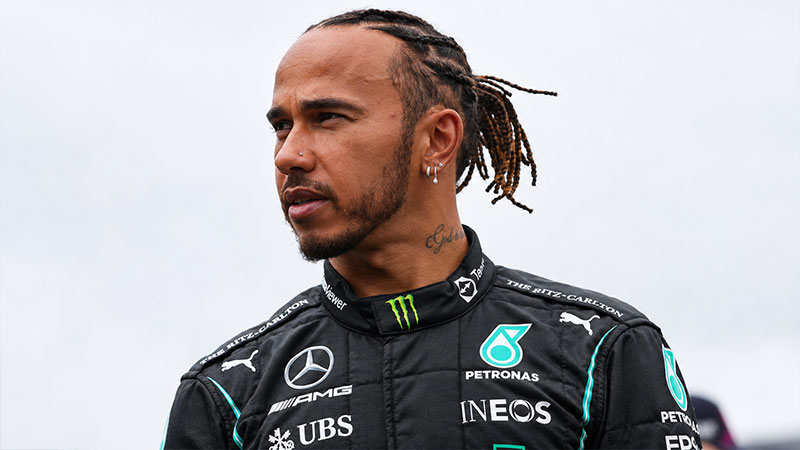
Lewis Hamilton is a mixed-race British man: his father, Anthony, is Black British with roots in Grenada, and his mother, Carmen, is white British. Hamilton identifies as Black, and he is the first and only Black driver to race in Formula 1.
That short answer explains why so many fans look this up. The longer story explains why it matters. Hamilton’s heritage shaped how he grew up, what he faced on his climb to the top, and how he chose to use one of the biggest platforms in global sport.
This guide walks through his family roots, his early years in Stevenage, the racism he confronted, and the work he now leads to open motorsport to people who look like him.
Lewis Hamilton at a Glance
Here are the essential facts about his background in one place.
| Detail | Fact |
|---|---|
| Full name | Sir Lewis Carl Davidson Hamilton |
| Born | 7 January 1985, Stevenage, Hertfordshire, England |
| Nationality | British |
| Ethnicity | Mixed race (Black Caribbean and white British) |
| Father’s heritage | Black British, of Grenadian descent |
| Mother’s heritage | White British |
| How he identifies | Black |
| Historic first | First Black driver in F1 history (debut 2007) |
| World titles | 7 (2008, 2014, 2015, 2017, 2018, 2019, 2020) |
Grenadian Roots: The Hamilton Family Story
Hamilton’s Black heritage comes from his father’s side, which traces back to Grenada, a small island nation in the eastern Caribbean. His paternal grandparents moved from Grenada to Britain in the 1950s, part of the wider Windrush generation who came from the Caribbean to help rebuild post-war Britain.
That generation often met hostility in housing, work and daily life. Anthony Hamilton grew up in that world and understood early the barriers that came with being Black in Britain.
Those lessons shaped how he raised his son. Anthony took on as many as three jobs at a time to pay for Lewis’s karting, a sport usually reserved for wealthy families.
He also gave his son a clear message: as a Black kid in a mostly white sport, he would have to be better than everyone else, and his best answer to abuse would come on the track. Hamilton has often credited that mindset for the drive that carried him to Formula 1.
His Mother’s Side and Growing Up Mixed Race in Stevenage
Hamilton’s mother, Carmen Larbalestier, is white British. His parents separated when he was two, and he lived with his mother and two older half-sisters until he was 12. He then moved in with his father, his stepmother Linda and his younger half-brother Nicolas.
Growing up mixed race in Stevenage, a commuter town north of London, was not always easy. Hamilton has described being one of only a handful of Black children at his school and facing bullying, including racial abuse. He took up karate partly to protect himself.
His background gives him a view from two sides of British life. Yet he has been clear that the world treated him as Black, and that is how he identifies.
The distinction is worth understanding: ethnicity describes ancestry, while identity reflects lived experience. For Hamilton, both point in the same direction.
Breaking the Barrier: Formula 1’s First Black Driver
When Hamilton lined up for McLaren at the 2007 Australian Grand Prix, he became the first Black driver to race in Formula 1, a championship then 57 years old.
His path there was rare for a family without wealth. At 10, he met McLaren boss Ron Dennis at an awards evening and told him he wanted to race for his team one day. Three years later, McLaren signed him to its young driver programme.
| Year | Milestone |
|---|---|
| 1985 | Born in Stevenage, Hertfordshire |
| 1995 | Meets Ron Dennis and says he wants to race for McLaren |
| 1998 | Joins McLaren’s young driver programme |
| 2007 | Makes his F1 debut and wins his first race, in Canada |
| 2008 | Wins his first world title, then the youngest champion in F1 history |
| 2013 | Moves to Mercedes |
| 2020 | Wins a seventh title, equalling Michael Schumacher’s record |
| 2021 | Knighted in the New Year Honours |
| 2025 | Joins Ferrari |
His results speak for themselves: seven world championships, more than 100 Grand Prix wins and the most pole positions in the sport’s history. He did it all while carrying the weight of being the only driver on the grid who looked like him.
The Racism He Faced on the Way Up and at the Top
Hamilton has faced racial abuse at almost every stage of his career, from local karting tracks to the sport’s biggest stages.
As a young karter, he and his father heard racist slurs in the paddock. In 2008, during preseason testing in Barcelona, a group of spectators appeared in blackface and wigs to taunt him. The incident drew wide condemnation and prompted the FIA, the sport’s governing body, to launch an anti-racism campaign.
The abuse did not stop as his success grew. After his collision with Max Verstappen at the 2021 British Grand Prix, Hamilton was targeted with racist messages online, which Mercedes, Formula 1 and the FIA publicly condemned.
In 2022, a video surfaced of former champion Nelson Piquet using a racial slur about him, and a Brazilian court later ordered Piquet to pay damages.
Hamilton’s response has stayed consistent: call it out, refuse to stay quiet, and turn each moment into pressure for lasting change.
From Driver to Advocate: Turning Identity into Action
In 2020, Hamilton moved from speaking about racism to organising against it, and three efforts define that shift.
- Black Lives Matter. After the murder of George Floyd, he criticised the sport’s silence, took a knee before races and wore an “End Racism” shirt on the grid. At the 2020 Tuscan Grand Prix, he wore a T-shirt calling for the arrest of the police officers who killed Breonna Taylor. Mercedes switched its cars to a black livery for the 2020 and 2021 seasons in support.
- The Hamilton Commission. Launched in 2020 with the Royal Academy of Engineering, it studied why Black people are underrepresented in UK motorsport. Its 2021 report found that Black people made up less than 1% of the F1 workforce, and it set out recommendations on schools, teachers, apprenticeships and hiring.
- Mission 44. Hamilton founded this charity in 2021, named after his race number, to act on those findings. It backs young people from underrepresented groups into science, engineering and motorsport careers, and he committed £20 million of his own money to launch it.
The ripple effects reached the teams themselves. Mercedes introduced its Accelerate 25 programme, aiming for a quarter of new hires to come from underrepresented groups, and Formula 1 launched engineering scholarships for students from similar backgrounds.
Why Hamilton’s Heritage Matters Around the World
Hamilton’s identity resonates far beyond Britain and the Caribbean. Formula 1 races on five continents, and for many young fans of colour, he is living proof that the sport has room for them.
His bond with Brazil shows that reach. A lifelong admirer of Ayrton Senna, Hamilton was made an honorary citizen of Brazil in 2022. He has also spoken often with pride about his Caribbean roots and the sacrifices his grandparents’ generation made.
For educators, employers and fans, his story carries a clear lesson: representation changes who believes they belong. A child who sees someone like them winning world titles is more likely to picture a future in engineering, motorsport or any field that once felt closed.
Conclusion
Lewis Hamilton’s ethnicity is simple to state and rich in meaning. He is mixed race, the son of a Black British father with Grenadian roots and a white British mother, and he identifies as Black.
That heritage shaped a childhood marked by sacrifice and prejudice, and it framed a career that broke one of motorsport’s oldest barriers.
Hamilton did more than win seven world titles. He used his platform to confront racism, fund real change through Mission 44 and push an entire industry to widen its doors. His story shows how identity, talent and purpose can combine to change a sport.