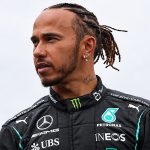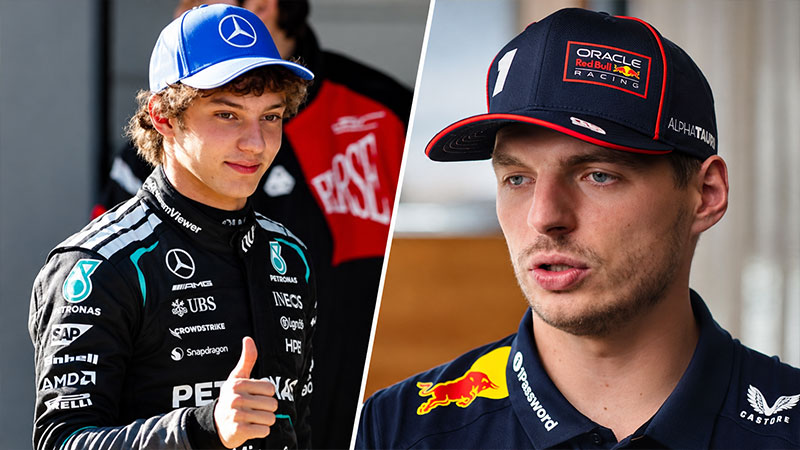
Kimi Antonelli is the 2026 Formula 1 World Champion. At 20 years and 68 days old, the Mercedes driver is the youngest title winner in the sport’s history, beating Sebastian Vettel’s 2010 mark of 23 years and 134 days by more than three years.
That result has reopened a debate many fans assumed would stay closed for years: is Kimi Antonelli better than Max Verstappen?
It is a fair question. Verstappen is a four-time world champion, and for half a decade he has been the yardstick every driver on the grid is measured against. Antonelli is only in his second season, yet he has just beaten Verstappen to the biggest prize in motorsport.
In this analysis, we break the comparison into the areas that decide championships: raw speed, racecraft, machinery, consistency and experience. We also look at what respected voices in the paddock are saying, and where the evidence points next.
The Short Answer
Not yet. Kimi Antonelli has proven he can beat Max Verstappen over a full season, but most analysts still rate Verstappen as the more complete driver on the grid today.
Antonelli’s 2026 title shows elite speed, composure and consistency. Verstappen’s case rests on something a single season cannot match: years of winning in good cars and bad ones, under pressure, against the best drivers of his generation.
The more honest framing is this: Antonelli is no longer a prospect. He is a genuine peer of Verstappen, and the gap between them, if one still exists, is now very small.
How the 2026 Season Unfolded
The 2026 season was built on a reset. New technical regulations brought smaller, lighter cars, active aerodynamics and power units that split output roughly evenly between combustion and electric power, running on fully sustainable fuel.
Resets reward the teams that read the rules best, and Mercedes started strongly. Antonelli turned that platform into results week after week, collecting pole positions, race wins and, most importantly, steady points when victory was not on the table.
Red Bull’s season was different. The team entered 2026 with its first in-house power unit, built with Ford, and Verstappen spent stretches of the year extracting more from his car than it appeared to offer.
His late-season charge, including wins in Singapore and Mexico City, reminded everyone why he remains the benchmark. It was not enough to overturn Antonelli’s lead, but it kept the debate about who is truly the best driver very much alive.
Kimi Antonelli vs Max Verstappen: Head-to-Head
On paper, Verstappen leads on experience and silverware, while Antonelli leads on how quickly he has reached the top.
| Metric | Max Verstappen | Kimi Antonelli |
|---|---|---|
| Born | 30 September 1997, Hasselt, Belgium (races as Dutch) | 25 August 2006, Bologna, Italy |
| F1 debut | 2015, Toro Rosso, aged 17 | 2025, Mercedes, aged 18 |
| World titles | 4 (2021, 2022, 2023, 2024) | 1 (2026) |
| Signature record | Youngest race starter and youngest race winner in F1 history | Youngest world champion in F1 history |
| 2026 team | Red Bull Racing | Mercedes |
| 2026 campaign | Strong late charge, with wins in Singapore and Mexico City | Season-long title run built on poles, wins and consistent points |
| Paddock view | Still the grid’s benchmark driver | Generational talent and a proven title-winning peer |
The table makes one thing clear: this is not a veteran against a rookie anymore. It is a four-time champion against a reigning champion.
Raw Speed and Qualifying
Edge: too close to call. Both drivers have the rare ability to find lap time that their cars do not obviously contain.
- Verstappen’s one-lap pace: His qualifying speed has been the standard on the grid for years, and he rarely leaves lap time on the table.
- The 2023 benchmark: His record 19 wins that season came from a superb car, but also from qualifying laps that delivered even on circuits that did not suit the Red Bull.
- Antonelli’s early instincts: As a rookie in 2025, he became the youngest driver ever to take pole for an F1 sprint, in Miami.
- Speed turned into results: In 2026, he converted that natural pace into regular Grand Prix pole positions during his title-winning season.
- The real difference is range: Verstappen has been fast in every kind of car across a decade of rule changes. Antonelli has been fast in a strong car under one set of rules, which is impressive, but a smaller sample.
Racecraft and Performance Under Pressure
Edge: Verstappen. Racecraft is where experience shows most clearly, and Verstappen has more of it than almost anyone on the grid.
His title fight with Lewis Hamilton in 2021 tested him in wheel-to-wheel combat every other weekend. His win at the 2024 São Paulo Grand Prix, from 17th on the grid in heavy rain, is still cited as one of the finest drives of the modern era.
Verstappen’s real strength is how calmly he manages a race: tyres, gaps, strategy calls and the moment to attack. Analysts often describe his racecraft as metronomic because the mistakes are so rare.
Antonelli’s 2026 campaign showed maturity well beyond his age. He handled the pressure of leading a championship as a 19- and 20-year-old, which many experienced drivers have failed to do. Still, he has fewer seasons of hard, close combat with elite rivals, and that is the area where Verstappen’s lead looks most secure.
The Machinery Question: Car or Driver?
Edge: context favors Verstappen. In Formula 1, no honest comparison can ignore the car, and in 2026 Antonelli had the stronger package for much of the year.
That does not diminish his title. The fairest measure of any driver is the teammate in identical machinery, and Antonelli finished ahead of George Russell, an experienced Grand Prix winner, to claim the championship. Beating Russell in a title-winning car is a serious statement.
Verstappen’s teammate record is even more striking. For years, a string of talented drivers in Red Bull’s second seat struggled to get anywhere near him, which tells you how much of Red Bull’s performance has come from the driver rather than the chassis.
The key point for fans: Antonelli won when the car allowed it, which is exactly what champions do. Verstappen has also won when the car did not obviously allow it. Until Antonelli does the same, this category stays with the Dutchman.
Experience, Consistency and Mental Strength
Edge: Verstappen on experience, Antonelli on 2026 consistency. This is the category where the two drivers’ stories differ most.
| Factor | Max Verstappen | Kimi Antonelli | Edge |
|---|---|---|---|
| Years in Formula 1 | More than a decade, since 2015 | Two seasons, since 2025 | Verstappen |
| Title-fight experience | Four titles, plus a near-miss for a fifth in 2025 | One title, won in his first serious title fight | Verstappen |
| Resilience | Fought back from a wide mid-season deficit in 2025 | Not yet tested by a major setback | Verstappen |
| 2026 consistency | Strongest during his late-season charge | Steady points even when wins were out of reach | Antonelli |
| Handling title pressure | Proven across multiple championship runs | Led and closed out the 2026 title at 19 and 20 years old | Even |
| Next big test | Winning the title back from a younger rival | Defending his crown with a target on his back | Open |
What the Paddock and Pundits Are Saying
Expert opinion leans toward Verstappen as the benchmark, with Antonelli recognized as his closest long-term challenger.
Respected commentators, including Sky Sports’ Martin Brundle, continue to describe Verstappen as the standard against which the grid is measured. That view reflects his full body of work, not a single season.
At the same time, former F1 chief executive Bernie Ecclestone has reportedly compared Antonelli’s trajectory to Verstappen’s own rise, a striking endorsement from someone who has watched every great champion of the past half-century.
It is also worth remembering who backed Antonelli first. Mercedes team principal Toto Wolff promoted him straight from Formula 2 to replace seven-time champion Lewis Hamilton for 2025, a decision many questioned at the time. The 2026 title has answered those doubts emphatically.
The broad consensus, then, is nuanced: Verstappen remains the more proven driver, while Antonelli is now treated as an equal-level peer rather than a rising prospect.
The Verdict: Who Is Better Right Now?
Max Verstappen is still the better all-round driver today, but Kimi Antonelli has closed the gap faster than anyone expected.
| Category | Edge |
|---|---|
| Raw speed and qualifying | Even |
| Racecraft under pressure | Verstappen |
| Winning in a weaker car | Verstappen |
| Experience | Verstappen |
| 2026 season consistency | Antonelli |
| Future ceiling | Antonelli |
Verstappen’s advantage rests on depth: more seasons, more titles and more proof that he can win in any circumstance. Antonelli’s advantage rests on trajectory: no driver in history has reached a world title this young.
If Antonelli defends his crown in 2027, or beats Verstappen in a season where Mercedes does not have the stronger car, this verdict will need rewriting. Given his rate of progress, that day may not be far away.
Conclusion
So, is Kimi Antonelli better than Max Verstappen? Today, the answer is still no, but only just. Verstappen remains the most complete driver in Formula 1, with four titles and a decade of proof that he can win in almost any car.
Antonelli, meanwhile, has achieved something no driver before him has managed: a world championship at just 20 years old.
The gap between them is now measured in experience rather than ability, and experience is the one thing time always delivers. The 2027 season could settle this debate for good.