For nearly three decades, the New York Giants built their identity around dominant defensive fronts, anchored by stars like Lawrence Taylor and Michael Strahan.
But by 2023, that tradition had faded. Kayvon Thibodeaux recorded 11.5 sacks, yet limited production opposite him allowed offenses to focus their protection.
Jihad Ward managed only 5.0 sacks, while the Giants finished tied for 28th with 34 sacks and ranked 26th defensively.
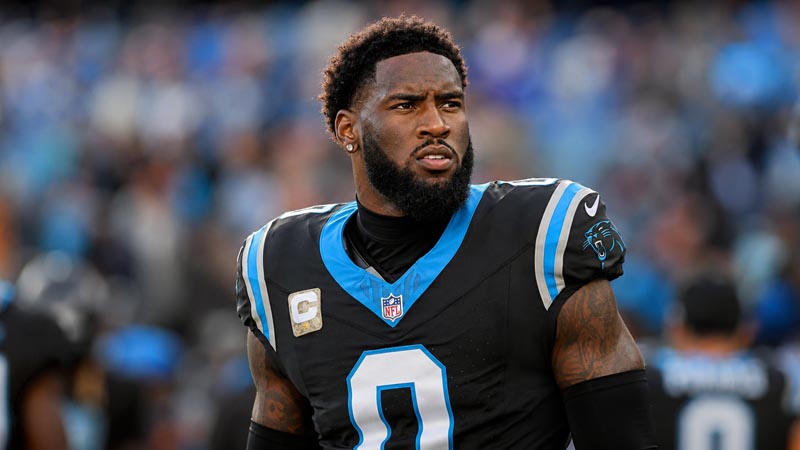
Seeking to restore their pass rush, general manager Joe Schoen acquired Brian Burns from the Carolina Panthers for a 2024 second-round pick and 2025 fifth-rounder.
New York then signed Burns to a five-year, $141 million contract. This analysis explores whether Burns can revive the Giants’ defense through his impact, scheme fit, financial value, and chemistry with the existing roster.
1. The Financial Calculus of an Elite Pass Rusher
In today’s NFL, elite edge rushers receive quarterback-level contracts, and Brian Burns is no exception.
The Giants signed the 26-year-old to a five-year, $141 million deal worth $28.2 million annually, making him one of the league’s highest-paid pass rushers.
Burns has embraced those expectations, treating his contract as motivation to elevate the entire defense.
His impact became undeniable during his outstanding 2025 season, when he recorded a career-high 16.5 sacks, led NFC defenders, and earned second-team All-Pro honors.
His consistent pressure, tackles for loss, and forced fumbles have justified New York’s investment while forcing opposing offenses to devote greater attention to containing him.
2. The Chemistry of Cohesion: Rebuilding the Front Seven
A single pass rusher cannot transform a defense alone. Giants history proved this when Michael Strahan was often neutralized without complementary threats.
Brian Burns shares that philosophy, stressing that sacks come from collective pressure. His partnership with Dexter Lawrence is especially important: Burns creates opportunities for Lawrence, while Lawrence’s interior dominance gives Burns more one-on-one matchups. Together, they can form the disruptive defensive front New York has lacked.
This collaborative dynamic is the engine driving the Giants’ revamped front seven:
- The Interior Gravity of Dexter Lawrence: Lawrence has established himself as the premier nose tackle in the NFL. His ability to crush the pocket from the interior is historically rare; in 2023, he recorded 24 quarterback pressures when lined up directly over the center, while no other interior defender in the league managed more than eight. When Lawrence collapses the pocket from the inside, quarterbacks are forced to escape laterally—directly into the path of Burns and Thibodeaux.
- The Dual-Edge Threat with Kayvon Thibodeaux: The arrival of Burns has fundamentally changed the projection of Kayvon Thibodeaux’s career. The two edge defenders have rapidly developed a close working relationship, frequently seen dissecting film and exchanging notes on the practice field. With Burns drawing primary blocking attention on one side, Thibodeaux no longer has to carry the burden of being the sole edge threat. This balanced attack prevents offenses from chipping or sliding protections toward a single side.
- Second-Level Reinforcement via Bobby Okereke: Operating behind this defensive line is middle linebacker Bobby Okereke, who has delivered consecutive Pro Bowl-caliber seasons. With Lawrence swallowing double-teams and Burns forcing tackles to drop deep into pass protection, Okereke is shielded from climbing blockers, allowing him to play downhill, stop the run, and drop into coverage with maximum efficiency.
3. Scheme Synergy: The Shane Bowen Defensive Philosophy
The Giants’ defensive talent is amplified by coordinator Shane Bowen’s straightforward philosophy: let the pass rushers attack while the secondary focuses on coverage.
By generating pressure with four rushers, New York can keep seven defenders in coverage, limiting big plays and forcing quarterbacks to hold the ball longer.
This approach perfectly suits Brian Burns, allowing him to attack the edge without being burdened by complex coverage responsibilities. The simplified system encourages faster, more instinctive play from the entire defensive front.
4. Historical Precedents: The Impact of the Singular Edge Addition
To understand the potential trajectory of this Giants defense, one must look at recent NFL history. There are only a few instances where a franchise has traded premium draft capital to acquire a Pro Bowl pass rusher in the absolute prime of their career. In almost every scenario, the impact was immediate and profound:
| Player | New Team | Immediate Defensive Impact |
|---|---|---|
| Khalil Mack | Chicago Bears | No. 1 scoring defense; 12.5 individual sacks |
| Von Miller | Los Angeles Rams | Super Bowl championship; 20.94 postseason EPA |
| Montez Sweat | Chicago Bears | Defensive efficiency jumped from 31st to 4th |
| Brian Burns | New York Giants | 16.5 sacks (2025); NFC Leader; 2nd-Team All-Pro |
When the Bears acquired Khalil Mack and the Rams added Von Miller, their defenses quickly became elite. Montez Sweat had a similar impact in Chicago in 2023.
However, Brian Burns emphasized that those stars succeeded alongside strong supporting casts. In New York, with Dexter Lawrence, Kayvon Thibodeaux, and Bobby Okereke already in place, Burns can serve as the final piece that elevates the Giants’ defense to another level.
5. Defensive Gaps: The Remaining Obstacles to Domination
Despite the individual brilliance of Burns and the high-end talent of the front seven, the Giants’ defense is not yet a complete product. To reach the absolute pinnacle of defensive efficiency, the unit must address several critical operational gaps:
Run-Stopping Vulnerability
An elite pass rush is useless if opposing offenses can consistently stay ahead of the chains by running the football. In recent seasons, the Giants have struggled to consistently anchor the edge and stop interior runs.
While Burns is an elite pass rusher, he must continue to receive help from the interior and secondary defenders to prevent teams from running away from his edge. To prevent offenses from neutralizing Burns, the broader defense must show significant improvement in run-stopping discipline.
Defensive Scheme Versatility
While Shane Bowen’s “rush four, drop seven” philosophy has stabilized the defense, NFL offenses are highly adaptable. If the front four hits a dry spell or faces a premier offensive line, the coaching staff must show the willingness and capacity to adjust.
This means implementing situational pressures, changing coverage shells, and showing greater tactical versatility to keep modern offensive coordinators off-balance.
The Threat of Double-Teams
Because Burns commands so much attention on the edge, opposing offenses will naturally lean on tight end chips, running back help, and slide protections to slow him down.
If the complementary pieces along the defensive line fail to win their one-on-one matchups, offenses can afford to dedicate multiple blockers to Burns without paying a price.
The continued development of the secondary rushers and interior line rotation is vital to ensure that teams are punished for doubling the star edge rusher.
6. The Leadership Spectrum: Leading by Action
Brian Burns brings a different kind of leadership to the Giants. While Dexter Lawrence is the vocal leader, Burns leads through preparation, consistency, and mentorship. His strong partnership with Kayvon Thibodeaux has helped set a professional tone in the defensive room.
After years of losing, Burns’ calm, business-first approach could provide the stability the young roster needs.
His conversations with Giants legend Michael Strahan have also reinforced a simple message: handle business on the field, and New York will embrace you.
Conclusion
The acquisition of Brian Burns was a bold, expensive statement by the New York Giants’ front office. It was an admission that their defensive identity had slipped and a declaration that they were committed to rebuilding it using the classic, championship-tested blueprint of the franchise’s past.
With his 16.5-sack, All-Pro performance in 2025, Burns proved that he is not just a high-priced defender, but the definitive cornerstone around which a modern, dominant defense can be built.
He has brought elite edge disruption, elevated the play of Dexter Lawrence and Kayvon Thibodeaux, and infused the locker room with a quiet, professional leadership style.
While structural challenges remain—particularly in run defense and the need for greater coaching adaptability—the foundation is now securely in place.
With Brian Burns anchoring the edge, the Giants finally have the game-changing pass rusher they need to transform their defense from a liability into a feared, championship-caliber unit. The missing piece has been found; now, it is up to the rest of the roster and coaching staff to build upon it.