The trajectory of elite athletic talent in professional football is almost always anchored in a foundational collegiate program.
For fans, analysts, and franchise executives tracing the origins of defensive dominance, one central question often initiates the journey: what college did Brian Burns go to?
Brian Burns attended Florida State University, where he played college football for the Florida State Seminoles.
Over the course of three seasons, from 2016 to 2018, he established himself as one of the premier defensive assets in the collegiate ranks.
His tenure in Tallahassee was defined by explosive pass-rushing capabilities, consistent statistical production, and an athletic evolution that ultimately positioned him as a first-round selection in the professional ranks.
The Institutional Foundation: Florida State University
Choosing the right collegiate program is a critical strategic decision for any prospective athlete.
For defensive linemen and edge rushers, the choice of university determines the level of competition they will face, the quality of coaching they will receive, and the national stage on which they can showcase their talents.
The Prestige of the Seminoles Defense
Florida State University has historically been a premier destination for defensive talent. Entering this program meant joining a lineage of highly disciplined, physically imposing athletes who set the defensive standard in college football.
For a young edge rusher, the pressure to perform within such a storied program is immense, but it also provides the ideal environment for high-level athletic development.
- Elite Competition: Playing in a major power conference ensures weekly matchups against future professional offensive linemen. This constant testing accelerates a player’s technical growth.
- Professional Exposure: Major collegiate programs command significant media attention and scouting presence, ensuring that individual achievements are recognized on a national scale.
- Systemic Discipline: The rigorous training, strength conditioning, and film study protocols of a major university program prepare collegiate athletes for the intense daily demands of the professional landscape.
Chronological Progression: A Three-Year Defensive Evolution (2016–2018)
An elite collegiate career is rarely built in a single season. It requires a sustained progression of physical maturation, mental mapping of complex defensive schemes, and technical refinement. His three-year tenure from 2016 to 2018 illustrates a perfect developmental arc.
[2016: Freshman Integration] ──> [2017: Sophomore Consolidation] ──> [2018: Junior Dominance & Accolades]
The Developmental Phases of His Collegiate Career
- The Freshman Campaign (2016)
Entering the collegiate level in 2016, the immediate focus was on physical adaptation. The speed of college football requires incoming freshmen to rapidly adjust their reaction times and learn complex playbook assignments. Despite the learning curve, his initial year demonstrated the raw athleticism and instincts required to navigate elite offensive blocking schemes. - The Sophomore Progression (2017)
By 2017, physical development and a deeper understanding of defensive schemes allowed for a more prominent role within the defensive line rotation. This sophomore phase was critical for refining hand-fighting techniques, understanding leverage against heavier offensive tackles, and developing a wider array of pass-rush maneuvers. - The Junior Pinnacle (2018)
The 2018 season represented the culmination of physical preparation and technical mastery. As a junior, he was the focal point of opposing offensive game plans. Despite facing constant double-teams and chip blocks from tight ends, his ability to disrupt the backfield reached an elite level, resulting in conference-wide recognition and cementing his status as a top-tier draft prospect.
Statistical Excellence: Analyzing the 24-Sack Milestone
In the realm of defensive evaluation, the ultimate metric of disruption for an edge defender is the quarterback sack.
A sack not only halts offensive momentum but also alters field positioning, influences play-calling, and can completely shift the psychological balance of a game.
During his three-season career at Florida State University, he recorded 24 career sacks. This metric is highly significant, placing him among the elite defensive disruptors in the university’s historic archives.
Collegiate Profile and Key Milestones
The following table organizes the foundational milestones of his collegiate tenure, illustrating how his performance at Florida State University translated into elite draft stock:
| Evaluation Category | Collegiate Metric / Detail | Strategic Implications |
|---|---|---|
| Institution | Florida State University | Provided high-level competition and national exposure. |
| Team Identity | Florida State Seminoles | Offered a historic defensive framework and elite training facilities. |
| Active Seasons | 2016 – 2018 (3 Seasons) | Demonstrated rapid development and optimal draft eligibility timing. |
| Defensive Production | 24 Career Sacks | Confirmed high-level disruption and elite pass-rushing mechanics. |
| Historical Rank | High in School History | Validated his standing among the program’s all-time defensive greats. |
| Conference Honors | First-Team All-ACC (2018) | Certified him as the premier edge defender in the conference. |
| Draft Position | 16th Overall Pick (2019 NFL Draft) | High first-round valuation indicating franchise-player potential. |
| Drafting Franchise | Carolina Panthers | Began his professional career as a key defensive building block. |
The Mechanics Behind the Metrics
To appreciate the significance of 24 career sacks, one must understand the technical proficiency required to compile these numbers over just three seasons. This level of production demands a diverse skill set:
- The First Step Burst: The ability to explode off the line of scrimmage the instant the ball is snapped, immediately putting offensive tackles on their heels.
- Ankle Flexion and “Bend”: The physical capacity to lean at extreme angles while turning the corner around the offensive tackle, reducing the blocker’s target area.
- Counter Moves: Having a secondary plan (such as a spin move or an inside counter) when the initial speed rush is blocked.
- Closing Speed: The acceleration required to pursue and secure the quarterback once the pocket is breached.
By maintaining a high level of efficiency across these areas, he ensured his name would rank among the most productive defenders in the history of Florida State football.
Regional Dominance: Earning First-Team All-ACC Honors
Collegiate football is divided into highly competitive regional conferences, with the Atlantic Coast Conference (ACC) standing as one of the most historically challenging. The ACC regularly features elite offensive lines, sophisticated passing attacks, and highly tactical coaching staffs.
In 2018, his final collegiate season, his continuous defensive disruption earned him First-Team All-ACC honors.
[Weekly Defensive Disruption] ──> [Film Review by Conference Coaches] ──> [First-Team All-ACC Selection]
What First-Team All-ACC Honors Signify
Earning a spot on the conference First Team is a rigorous achievement that requires consensus from head coaches, athletic scouts, and regional media panel members. It represents several distinct achievements:
- Positional Supremacy: It certifies the recipient as the single most dominant player at their position within the entire conference during that competitive year.
- Scouting Validation: Professional scouts highly value first-team honors in Power Five conferences, as it demonstrates that the player’s statistical production was validated by the coaches who had to game-plan against them.
- Consistency of Performance: A player cannot earn first-team honors through a few sporadic performances. It requires high-level execution across every single conference game, maintaining focus despite fatigue and opposing offensive schemes designed specifically to neutralize them.
The Professional Transition: The 2019 NFL Draft
The ultimate objective of an elite collegiate career is to translate collegiate production into professional opportunity. The transition process is highly analytical, with professional franchises evaluating three years of collegiate film, physical metrics, character references, and competitive consistency.
His performance at Florida State University left no doubt regarding his readiness for the professional ranks.
The Draft Selection Breakdown
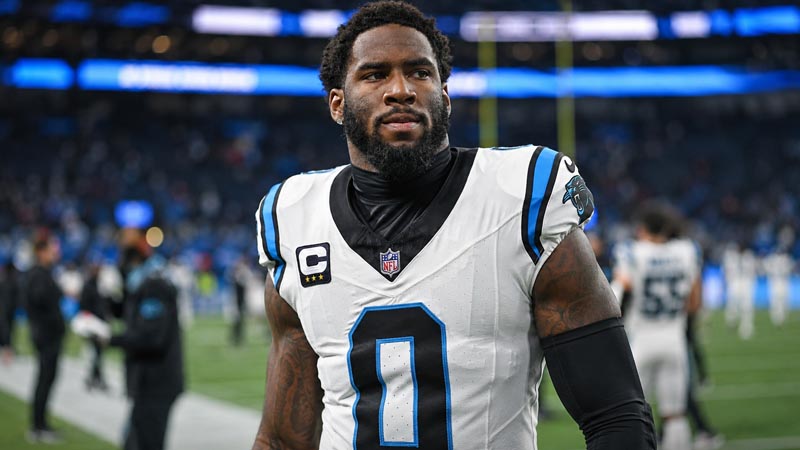
In the 2019 NFL Draft, the culmination of his collegiate hard work was realized when he was selected 16th overall by the Carolina Panthers.
- First-Round Capital: A top-16 draft selection represents a massive organizational investment. Franchises reserve these selections for players they project to be immediate impact starters and long-term cornerstones of their defensive units.
- The Transition Pathway: His three seasons of development at Florida State University (2016–2018) provided the exact tactical foundation necessary to transition smoothly into the complex defensive schemes of the professional ranks.
- Immediate Expectations: Being drafted 16th overall highlights the high value placed on premium edge-rushing talent. The ability to rush the passer is viewed as a non-negotiable requirement for defensive success, and his 24 collegiate sacks served as the primary proof of his capability.
Understanding the Edge Rusher Position: Why His FSU Career Matters
To fully comprehend why his collegiate path at Florida State University was so successful, it is useful to analyze the specific demands of the edge rusher position.
Edge defenders operate at the intersection of speed and power, carrying unique responsibilities in the modern game.
Key Demands of the Edge Rusher Position
- Setting the Edge in Run Defense: Before a defender can rush the passer, they must prove they can defend the run. This requires maintaining outside leverage, engaging offensive tackles, and forcing ball carriers back inside toward defensive tackles and linebackers.
- Pass-Rush Lane Discipline: Rushing the quarterback is not simply about running as fast as possible toward the backfield. Defenders must maintain specific lanes to prevent mobile quarterbacks from escaping the pocket and extending plays with their feet.
- Physical Endurance: Defensive line play is highly exhausting, involving repeated high-intensity physical collisions. Playing three full seasons in a major conference requires elite physical conditioning and durability.
By mastering these tactical responsibilities under the guidance of the athletic program at Florida State University, he transformed himself from a talented recruit into a highly polished professional prospect.
Conclusion: A Legacy Built on Excellence
The collegiate career of Brian Burns at Florida State University stands as a textbook example of athletic development and positional dominance.
By combining elite natural athleticism with the rigorous training of a premier collegiate program, he progressed systematically over three seasons from 2016 to 2018.
His 24 career sacks and First-Team All-ACC honors confirmed his status as one of the most disruptive defensive forces in the nation, making his selection as the 16th overall pick in the 2019 NFL Draft a natural next step in his football journey.
For Florida State University, his legacy remains a proud chapter in the program’s history of producing elite defensive talent.