In the modern landscape of professional football, the valuation of the running back position has undergone a dramatic transformation.
While analytical models across the league have consistently advocated for a “devalue and draft” approach to the backfield, elite franchises with distinct identities understand that true championship windows are built on schematic dominance and calculated financial structures.
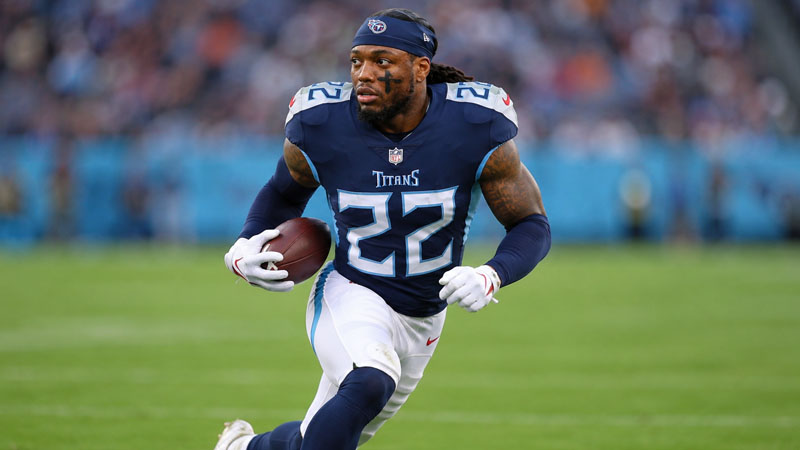
On May 19, 2025, the Baltimore Ravens made a definitive statement regarding their offensive philosophy by signing power back Derrick Henry to a two-year, $30 million contract extension.
This agreement, which keeps the physical runner under contract through the 2027 season, represents far more than a simple player retention move.
It is a highly sophisticated masterclass in salary cap optimization, cash-over-cap mechanics, and competitive window alignment.
The Strategic Vision Behind the Deal
For the Baltimore Ravens, offensive identity is not merely a preference; it is a competitive advantage. In a league where defenses have lighter, faster linebackers designed to drop into pass coverage, Baltimore has consistently zigged while others zagged.
By committing an average annual salary of $15 million to Derrick Henry, the Ravens have solidified their commitment to a punishing, high-volume ground game.
From a roster-building perspective, this contract accomplishes three critical strategic objectives:
- Maintains Offensive Gravity: It pairs the league’s most physically imposing downhill runner with the most dynamic threat under center, forcing defensive coordinators into impossible schematic conflicts.
- Preserves Short-Term Cap Flexibility: Through clever restructuring and the utilization of an option bonus, the franchise has managed to keep the immediate financial burden remarkably low.
- Establishes a Clear Departure Point: By structuring the deal to conclude after the 2027 season, the front office has protected itself against the steep drop-off historically observed in aging running backs, allowing Henry to enter unrestricted free agency in 2028 with no further obligations on Baltimore’s books.
The Financial Architecture of the Contract
To truly appreciate the elegance of this contract, one must look beyond the headline figure of two years and $30 million. The true story of an NFL contract is found in its cash flow, guarantee structures, and cap distribution.
The agreement guarantees a substantial portion of the contract, providing Henry with significant security while allowing the team to manipulate the timing of the cap hits. Specifically, the deal features between $24 million and $25 million in total guaranteed money.
This level of commitment indicates that the franchise views Henry as a non-negotiable anchor of their competitive identity over the next two seasons.
Key Contractual Anchors
- Total Contract Value: $30,000,000
- Average Annual Salary: $15,000,000 per year
- Signing Bonus (Upfront Liquidity): $11,745,000
- Total Guaranteed Window: $24,000,000 to $25,000,000
- Final Year of Coverage: 2027
- Free Agency Trigger: Unrestricted Free Agent in 2028
By locking in an $11,745,000 signing bonus, Henry receives immediate cash flow, which is standard practice for high-caliber veterans. However, the clever design of the contract lies in how the subsequent years are structured to balance the team’s accounting ledger.
Year-by-Year Ledger: Cap Allocation and Cash Flow
The contract’s year-by-year structure showcases the franchise’s reliance on deferred accounting.
The front office has effectively backloaded the contract, keeping the immediate cap space open for other roster adjustments.
The table below outlines the precise year-by-year distribution of Henry’s contract terms:
| Contract Metric | 2026 Fiscal Year | 2027 Fiscal Year | 2028 Fiscal Year (Looming Free Agency) |
|---|---|---|---|
| Base Salary | $1,300,000 | $11,000,000 | Unrestricted Free Agent |
| Option/Roster Bonus | $9,700,000 (Option Bonus) | $1,000,000 (Roster Bonus) | N/A |
| Total Cap Hit | $5,589,000 | Year-End Weighted Cap | N/A |
| Contract Status | Active (Under Contract) | Active (Under Contract) | Unrestricted Free Agent |
The 2026 Accounting Masterclass
In 2026, Henry’s cap hit is a remarkably low $5,589,000. For a player earning an average of $15 million annually, having a cap charge under $6 million is an exceptional benefit for roster construction. This is accomplished through a base salary of just $1,300,000, coupled with a $9,700,000 option bonus.
In NFL financial mechanics, an option bonus behaves similarly to a signing bonus for cap purposes; it allows the franchise to prorate the cap hit over the life of the contract (including potential void years if added, though not explicitly detailed here).
By converting what would have been base salary into an option bonus, the front office has successfully minimized the 2026 cap obligation.
The 2027 Financial Pivot Point
In 2027, the financial picture shifts dramatically. Henry’s base salary balloons to $11,000,000, and he is scheduled to receive a $1,000,000 roster bonus. This design places the majority of the non-guaranteed cash flow and cap weight in the final year of the contract.
This backloaded structure acts as a natural checkpoint for the organization. By 2027, the front office will have evaluated Henry’s physical durability and performance over the preceding seasons.
Because the contract naturally terminates before the 2028 season, when Henry will become an unrestricted free agent, the team faces no long-term dead money liabilities beyond the standard proration of his signing and option bonuses.
Tactical Synergy: Why the Investment Makes Football Sense
To understand why paying a premium for a veteran running back is a sound business decision for Baltimore, one must examine the on-field mechanics of their offensive system.
In most modern NFL offenses, the running back is a dependent variable. Their success is highly correlated with offensive line grading and defensive box counts. However, Baltimore’s system operates on a different plane of physical conflict.
- The Gravity of the Dual-Threat Quarterback: Opposing defenses must account for the threat of an elite rushing quarterback on every single snap. This defensive hesitation creates wide running lanes. When a defense is forced to scrape horizontally to contain the quarterback, a downhill runner like Henry can cut vertically into the second level of the defense with devastating momentum.
- The Power RPO (Run-Pass Option): By combining a highly physical downhill running style with RPO schemes, Baltimore forces secondary defenders to make immediate, high-stress decisions. Defensive backs who attempt to support the run find themselves out of position against play-action, while those who drop into coverage are forced to tackle a physical ball-carrier in the open field.
- Time of Possession and Defensive Protection: Controlling the clock via a highly efficient running game is the best defensive strategy a team can employ. By sustained, grinding offensive drives, Baltimore protects its own defensive unit, keeps them fresh for late-game situations, and limits the number of possessions available to opposing high-powered passing offenses.
The Strategic Verdict: A Balanced, Championship-Caliber Commitment
Derrick Henry’s two-year, $30 million extension with the Baltimore Ravens is a prime example of modern NFL roster optimization.
Rather than adhering strictly to rigid positional-value formulas, Baltimore recognized a unique opportunity to secure an elite offensive weapon while structuring the contract in a highly team-friendly manner.
By guaranteeing the bulk of the contract, the franchise demonstrated deep commitment and provided Henry with the financial security befitting his status as an elite player.
Simultaneously, by utilizing a low base salary and an option bonus in 2026, the front office preserved the immediate financial flexibility required to maintain a championship-caliber roster.
As the Ravens look toward the future, this agreement ensures that their offensive identity remains incredibly physical, dynamic, and difficult to defend.
The contract establishes a clear, high-leverage two-year window to chase a Super Bowl, while maintaining long-term financial health and ensuring a clean slate when Henry enters unrestricted free agency in 2028.