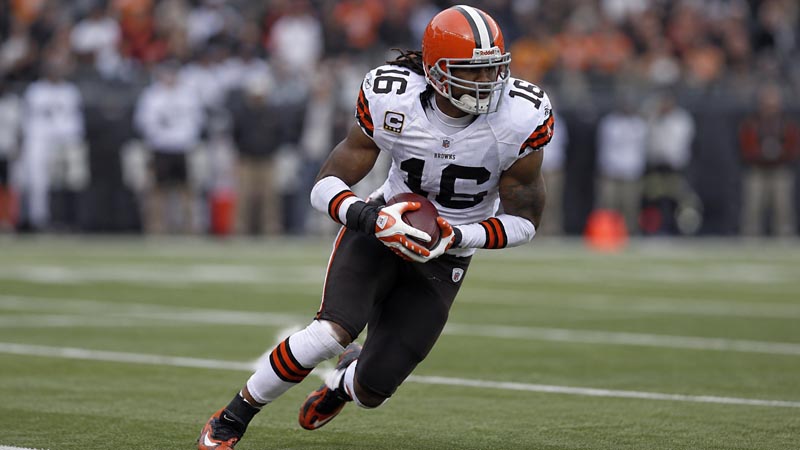
A kick returner’s primary function begins the moment the ball leaves the kicker’s foot.
Upon catching the opponent’s kickoff, the returner’s objective is twofold: maximize yardage to provide the offense with optimal starting field position or, in the most successful scenarios, execute a scoring drive immediately by reaching the end zone.
This initial phase of the game is foundational to an NFL team’s scoring efficiency. Statistics historically demonstrate that starting a drive at the 35-yard line versus the 20-yard line significantly increases the probability of a touchdown.
Consequently, the returner is the first line of offensive strategy, tasked with “flipping the field” and forcing the opposing defense to protect a shorter distance.
The Technical Execution: From Catch to Commitment
The mechanics of a successful return are categorized into several high-pressure phases. Each phase requires a different set of technical skills and mental attributes.
1. The Mechanics of the Catch
Fielding an NFL kickoff is a high-pressure task. The returner must track a ball moving at high velocity, often through wind or inclement weather, while simultaneously monitoring the “gunners” and coverage units sprinting toward them.
A “clean” catch is non-negotiable; a muffled or dropped kick can result in a turnover deep in a team’s own territory, often leading to immediate points for the opponent.
2. The Mental Calculus: To Return or To Down?
One of the most nuanced aspects of the role is the decision-making process regarding touchbacks. The returner must evaluate the kick’s landing point in a fraction of a second.
If a kick is deep in the end zone, the returner must weigh the risk of a return against the guaranteed field position of a touchback.
This decision is influenced by the team’s specific game plan, the speed of the incoming coverage team, and the returner’s confidence in their blocking unit.
3. Identifying the Seam
Once the ball is secured and the decision to run is made, the returner must transition into a navigator. They do not simply run blindly upfield; they must read the “blocking scheme” established by their teammates.
This involves identifying “seams”—the narrow running gaps that open between the coverage team’s lanes. Detecting these gaps requires elite peripheral vision and the ability to anticipate how blocks will develop as the play unfolds.
The Physical Archetype: Speed and Durability
The NFL typically selects specific player profiles for this role. It is common to see the team’s most agile and explosive wide receivers, running backs, or cornerbacks assigned to return duties. This selection is based on the requirement for three specific physical and mental traits.
- Elite Velocity: A returner must possess “straight-line speed” to outpace the coverage team once they break through the initial line of defense. They also utilize “open-field moves” to dodge tacklers in space.
- Absolute Decisiveness: There is no room for hesitation in the return game. A returner must commit to a lane instantly; a half-second of indecision often results in being tackled for a loss of potential yardage.
- Physical Toughness: The returner must be willing to absorb high-speed collisions. Because both the returner and the tacklers are often running at full speed toward one another, the impact of these hits is among the most intense in professional sports.
The Evolution of the Return Strategy
In recent years, the NFL has implemented various rule changes to the kickoff to improve player safety. These changes have evolved the returner’s role from a purely “speed-based” position to one that emphasizes spatial awareness.
With the kickoff team now starting closer to the return unit in many modern iterations of the rule, the “seams” close faster than ever. This has placed a premium on the “one-cut” returner—a player who can make a single lateral move and then accelerate vertically.
The role now demands a higher level of synchronization with the blocking unit, as the window of opportunity to gain yardage has narrowed.
The Strategic Impact on Special Teams
While the returner is the individual in the spotlight, their success is a byproduct of a disciplined ten-man blocking unit. This unit is designed to create a “wall” or a “wedge” that shields the returner from the first wave of defenders.
The relationship between the returner and their blockers is one of timing. If the returner hits the seam too early, the block may not be fully established.
If they hit it too late, the coverage team will have time to “shed” their blocks and close the gap. Mastery of this timing is what separates a standard returner from an All-Pro specialist.
Conclusion: The Game’s Most Dynamic Variable
The NFL return man occupies a unique space in professional football. They are the only players whose primary job is to turn a defensive or special teams moment into an offensive advantage.
Through a combination of “catching the ball cleanly,” “reading blocking schemes,” and utilizing “open-field moves,” these specialists provide a psychological and tactical boost to their teams.
Ultimately, the role is defined by the courage to face high-speed hits and the intelligence to navigate a chaotic field.
In a game of inches, the returner is the player who can give their team the first twenty yards for free, setting the stage for a championship-winning drive.