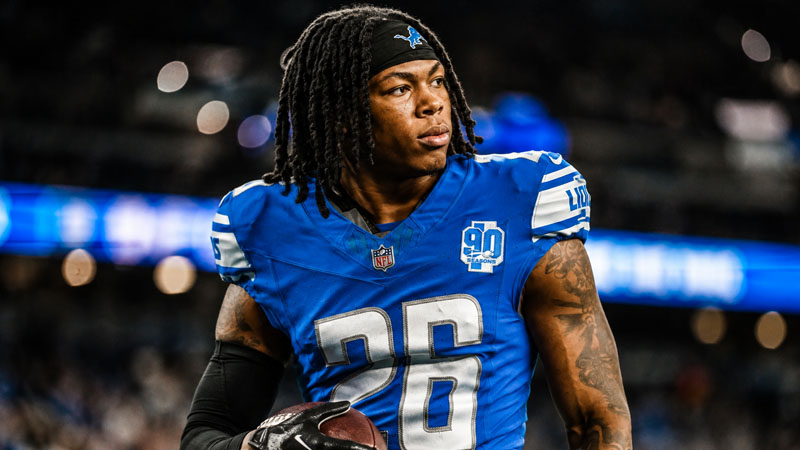
The sight of an explosive running back gliding through defensive lines is one of the most thrilling spectacles in modern professional football.
For fans of the Detroit Lions, that thrill was defined during the 2023 season by the electric play of rookie running back Jahmyr Gibbs. But as the team prepared for another championship run, a striking visual transformation took place off the field.
Gibbs decided to trade in his rookie jersey number for one of the rarest, most visually distinct digits in the sport: number 0.
A jersey number in professional sports is rarely just a piece of administrative identification. It is a core component of an athlete’s personal brand, a visual anchor for millions of fans, and a psychological touchstone for the player themselves.
When a player of Gibbs’ caliber decides to make a change, it sparks immediate curiosity. Why did the standout running back make the switch? What was the story behind the decision, and how does it fit into the broader context of modern football culture?
By examining the details behind this transition, we uncover a fascinating narrative that blends personal preference, roster logistics, and the evolving aesthetics of the modern gridiron.
The Rookie Era: Settling for Number 26
To understand why Jahmyr Gibbs chose to wear the number 0, we must first look back to the spring of 2023. On draft night, the Detroit Lions shocked many analysts by selecting Gibbs with the 12th overall pick.
The selection immediately signaled that the Lions viewed him as a cornerstone of their offensive future—a versatile weapon capable of lining up in the backfield, running routes out of the slot, and changing games with elite speed.
However, when a rookie enters a professional locker room, they quickly learn that while their talent is highly valued, their choices in personal gear are often dictated by the harsh realities of roster availability.
A Marriage of Convenience
When Gibbs arrived in Detroit to begin his professional career, he was eager to select a number that matched his style. Unfortunately, his options were severely restricted.
The high single-digit numbers that offensive playmakers traditionally covet were completely unavailable on the Lions’ roster at that time.
Confronted with a highly limited selection of double-digit options, Gibbs eventually selected the number 26. It was a choice born out of necessity rather than preference.
For Gibbs, number 26 carried no deep personal significance, no family history, and no collegiate connection. It was simply a placeholder—a marriage of convenience designed to get him through his first season in the league.
The Dislike of Number 26
Throughout his spectacular rookie campaign, in which he amassed over 1,000 yards from scrimmage and earned a Pro Bowl selection, Gibbs wore number 26 on his back.
To the casual observer, the number seemed to suit his quick, elusive running style. But behind closed doors, Gibbs harbored a deep-seated dislike for the digit.
To many professional athletes, the aesthetic flow of a uniform matters immensely. There is a common adage in competitive athletics: “Look good, feel good, play good.”
For Gibbs, the bulky, traditional feel of number 26 did not align with his self-image as a sleek, dynamic, and modern playmaker.
He felt bogged down by a number that did not represent his true on-field identity. As the offseason approached, he made it a priority to leave number 26 behind at the earliest possible opportunity.
The Collegiate Connection: The Quest for Number 1
Before making his mark in Detroit, Jahmyr Gibbs was a highly celebrated collegiate star. His journey through the college ranks took him from Georgia Tech to the powerhouse program at the University of Alabama. Throughout this formative era, his identity was deeply intertwined with a specific digit: the number 1.
For Gibbs, number 1 represented the ultimate standard of individual excellence. It was the number he wore while shredding opposing defenses in college, carving out a reputation as one of the most versatile and dangerous offensive players in the nation. Naturally, when he transitioned to the professional ranks, his first choice was to reclaim that collegiate identity.
The Unavoidable Obstacle: Jameson Williams
Upon deciding to change his number in Detroit, Gibbs immediately inquired about the availability of number 1. However, his path to reclaiming his favorite digit was blocked by an unavoidable roster obstacle.
The number 1 was already claimed by dynamic wide receiver Jameson Williams. Williams, a highly regarded first-round pick from the 2022 draft, had already established his own strong brand identity around the number.
In professional football, team chemistry and mutual respect are paramount. A newcomer, even a highly productive rookie, does not simply walk in and demand a coveted number from an established teammate.
Recognizing that Williams was firmly entrenched in number 1, Gibbs accepted the reality that his favorite collegiate number was out of reach. This required him to look elsewhere on the roster sheet, searching for an alternative that could offer the same level of sleek, modern appeal.
The Appeal of Zero: Sleek, Standout, and Cool
With number 1 off the table and number 26 firmly rejected, Gibbs found himself searching for a number that could serve as a powerful new symbol for his career. That was when he turned his attention to the most unique digit available on the roster sheet: number 0.
Rather than viewing the number 0 as a secondary backup plan, Gibbs immediately saw it as an incredibly appealing opportunity. To him, the number 0 felt distinctly “cool”. It was a digit that carried an aura of mystery, minimalism, and modern style.
The Psychological Edge of the “Cool” Factor
In competitive athletics, confidence is a powerful currency. The gear a player wears, the way their helmet fits, and the number printed on their chest all contribute to their psychological state. When a player steps onto the field feeling like they look their absolute best, it can translate directly into heightened confidence, sharper focus, and a more aggressive style of play.
For Gibbs, dropping the disliked number 26 and stepping into the ultra-sleek number 0 provided a massive boost to his personal brand and on-field confidence. Number 0 is a visual statement.
It tells the opposing defense that the player wearing it is comfortable standing out, embraces the spotlight, and is ready to deliver an elite performance. By choosing zero, Gibbs was not just changing a number; he was actively shaping his professional identity.
The Evolving Landscape: The History of Number 0 in the NFL
To truly appreciate the significance of Jahmyr Gibbs’ transition to number 0, it is helpful to examine the historical context of jersey numbering rules in professional football. For decades, the number 0 was a forbidden digit, locked away in the league’s administrative archives.
The Historic Ban on Zero
For much of the league’s modern history, players were strictly prohibited from wearing either 0 or 00.
While a few legendary figures wore double-zero in the past—most notably Hall of Fame center Jim Otto of the Oakland Raiders and explosive wide receiver Ken Burrough of the Houston Oilers—the league eventually standardized its numbering system in 1973.
Under the 1973 system, specific position groups were assigned specific ranges of numbers, and both 0 and 00 were completely eliminated from active rosters.
The decision was made to simplify player identification for officials, coaches, and fans. For half a century, the number 0 remained a relic of the past, unseen on professional fields.
The Modern Rule Change
The landscape shifted dramatically in the spring of 2023. During the annual league meetings, team owners approved a proposal to permit players to wear the number 0.
The rule change allowed almost every position group—including quarterbacks, running backs, wide receivers, tight ends, defensive backs, and linebackers—to claim the single digit. Only offensive and defensive linemen remained restricted from wearing it.
The motivation behind the rule change was simple: players had long advocated for more expressive numbering options, similar to those allowed in college football.
The league recognized that allowing number 0 would create exciting new branding opportunities, boost merchandise sales, and align the professional game with the evolving tastes of a younger, more modern fanbase.
Gibbs entered the league in the exact year this historic rule change was implemented. While he was unable to secure a single-digit number during his first summer in Detroit due to immediate roster limitations, the door remained open for him to join the exclusive club of “Agent Zero” playmakers in his second year.
The Branding and Business Impact of a Jersey Change
While the decision to change numbers is deeply personal for a player, it also has far-reaching implications for the franchise, the league, and the fans.
Professional sports is a multi-billion dollar industry where player merchandising plays a crucial role in brand positioning and revenue generation.
The Logistics of a Jersey Swap
The process of changing a jersey number in the league is governed by strict financial and administrative protocols.
According to league policy, if a player chooses to change their number during the offseason, they are typically required to buy out the remaining inventory of their old jersey model currently held by official retail distributors.
For an established star, this buyout can cost tens of thousands of dollars. It is a financial commitment that highlights just how much a jersey number means to a player.
If a player is willing to write a substantial check simply to change the digit on their back, it demonstrates that the psychological and branding benefits of the new number far outweigh the financial cost.
Cultivating a Modern Identity in Detroit
For the Detroit Lions franchise, Gibbs’ transition to number 0 represents a powerful marketing opportunity. The Lions are currently experiencing a historic resurgence, transitioning from a team fighting for respect to a legitimate championship contender. This new era of Detroit football is defined by a bold, aggressive, and highly modern identity.
Gibbs in a sleek number 0 jersey perfectly encapsulates this modern era. The single-digit looks spectacular on television broadcasts, stands out in social media graphics, and has quickly become a highly coveted item for fans looking to purchase official merchandise.
By shedding the traditional number 26 and embracing the rare number 0, Gibbs has cemented his status as one of the most marketable and exciting young stars in the entire league.
Other Notable Players Who Embraced the Number Zero
Jahmyr Gibbs is not alone in his appreciation for the unique aesthetic of the number 0. Since the rule change went into effect, several of the league’s most dynamic stars have rushed to claim the digit, creating an elite fraternity of playmakers who are redefining on-field style.
The Trendsetters
- Calvin Ridley: The explosive wide receiver was one of the very first players to announce he would be wearing number 0 following the rule change, using it to mark a fresh start and a bold new chapter in his career.
- D’Andre Swift: Interestingly, another former Detroit Lions running back made the switch to number 0 after joining a new franchise, demonstrating the deep appeal this specific digit holds for elite backfield playmakers.
- Roquan Smith: On the defensive side of the ball, the powerhouse linebacker claimed the number to represent his status as a dominant, singular force in the heart of the defense.
These players, along with Gibbs, have turned the number 0 into a symbol of premium talent and elite status. When fans see a player wearing zero, they immediately expect to see game-changing plays and spectacular athleticism.
Looking Forward: A Bold New Era in Detroit
As the Detroit Lions prepare to take the field for another highly anticipated season, all eyes will be on their explosive young running back. While his incredible talent, world-class acceleration, and game-changing vision remain the same, his visual presentation will mark a bold new beginning.
Jahmyr Gibbs stepping onto the field in the number 0 jersey is more than just a cosmetic update. It is the culmination of a personal journey toward self-expression, confidence, and brand alignment. By shedding the disliked number 26 and embracing the sleekest digit on the roster, Gibbs has set the stage for an unforgettable sophomore campaign.
Lions fans can look forward to seeing “Agent Zero” slice through opposing defenses, leaving a trail of defenders in his wake and cementing his status as one of the most exciting, stylish, and dominant playmakers of his generation.