In the world of professional sports, success is often measured in millimeters and milliseconds. Every piece of equipment, from the moisture-wicking fabric of a jersey to the ergonomic curvature of a shoe, is a product of intense engineering. Yet, the most iconic tool in the game—the basketball—is often taken for granted.
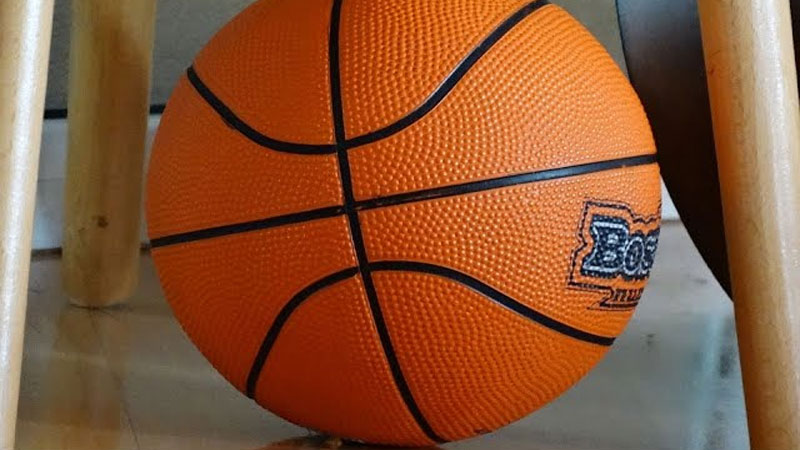
To the casual observer, it is a simple orange sphere. To the professional athlete and the sports scientist, it is a highly specialized aerodynamic instrument covered in a precise, mathematical pattern of raised textures known as “pebbling.”
You may have stood on a court, feeling the familiar texture beneath your fingertips, and wondered: How many dots does a basketball actually have? While it seems like a trivial question, the answer reveals a fascinating intersection of history, physics, and manufacturing precision that defines the modern game.
The Magic Number: Deciphering the 35,000-Dot Standard
When we look at a regulation-sized basketball, we aren’t just looking at random bumps. We are looking at a calculated surface area designed for peak performance.
The Mathematical Breakdown
For a standard-size 7 basketball, which features a circumference of 29.5 inches, the surface area is meticulously mapped out by manufacturers. Research into professional-grade balls reveals an average density of 122 dots per square inch.
When you calculate the total surface area of the sphere and multiply it by this dot density, you arrive at a staggering figure: over 35,000 dots on a single basketball.
Why Dot Density Matters
The number of dots isn’t just about tradition; it’s about the level of play. While beginner-level balls may feature a lower dot count to provide a smoother, more manageable texture, NBA-standard balls prioritize the high-density 35,000-dot configuration.
This high concentration of “pebbles” is what allows elite shooters to achieve the necessary friction and spin required for professional accuracy.
The Evolution of the Surface: From Soccer Balls to Synthetic Science
The basketball we use today is a far cry from the equipment used at the sport’s inception. Understanding the history of the ball helps explain why the dots became a necessity.
The Naismith Era (1891–1894)
When James Naismith first invented basketball in 1894, a specialized ball didn’t even exist; players used a soccer ball. This was problematic for several reasons: soccer balls were designed to be kicked, not bounced, and their smooth surface became incredibly slippery when exposed to the sweat of a player’s hands.
The Bicycle Era and the Introduction of Leather
Soon after, bicycle manufacturing companies began producing the first dedicated basketballs. These were made of brown leather with external laces. However, these early designs were flawed. The laces caused the ball to bounce erratically, making dribbling an unpredictable chore rather than a skill. By 1929, manufacturers improved the design by concealing the laces and increasing the bounce consistency.
1950: The Birth of the Pebble
The most significant shift in grip technology occurred in the 1950s, when manufacturers first added “dots” or pebbles to the surface. This was a direct response to the increasing speed of the game. As players became more athletic, the need for a ball that wouldn’t slip out of sweaty hands became paramount.
1972: The Synthetic Revolution
In 1972, Spalding revolutionized the industry by introducing the first synthetic leather official basketball. Synthetic materials allowed for even more consistent pebbling patterns and greater durability than traditional hide. By 1973, the NBA had fully adopted this material, setting the stage for the high-performance equipment we see today.
The Physics of Performance: Why We Need “Pebbling”
The 35,000 dots on a basketball serve three primary functional purposes: Grip, Uniformity, and Spin.
Mastery of Friction
The “dots” are technically referred to as pebbling. These raised, textured surfaces—typically made of rubber or synthetic composites—create a high-friction interface between the player’s skin and the ball.
In a high-intensity game where hands are constantly slick with sweat, these dots provide the necessary traction to maintain control during a crossover or a high-speed pass.
Achieving a Uniform Surface
Without pebbling, any slight imperfection in the leather or synthetic material would cause the ball to behave differently depending on which side hit the floor. The regular, repeating pattern of the dots creates a uniform exterior. This uniformity ensures that the ball responds predictably every time it bounces off the hardwood or hits the rim.
The Secret to the “Shooter’s Touch”
For elite shooters, the dots are only half the story. The lines and grooves (seams) between the panels are equally vital.
- Spin Control: Professional shooters insert their fingers into these grooves to generate backspin.
- The Magnus Effect: As the ball spins, the 35,000 dots catch the air, creating a boundary layer of turbulence that stabilizes the ball’s flight path.
- Soft Bounces: High spin rates lead to what is known as a “shooter’s touch,” where the ball is more likely to “crawl” into the hoop after hitting the rim rather than clanking off.
Anatomy of an NBA Ball: Beyond the Dots
While the dots are the most numerous feature, the construction of a professional basketball involves several layers of high-tech materials.
The Multi-Layer Construction
According to expert insights on NBA-standard balls, the manufacturing process is a multi-step engineering feat:
- The Bladder: The innermost layer (usually butyl rubber) holds the air and provides the structural shape.
- The Carcass: Layers of nylon or polyester threads are wrapped around the bladder to maintain roundness.
- The Panels: Between 8 and 12 panels are stitched or glued together.
- The Surface Layer: The entire ball is covered in a layer of synthetic rubber or high-grade leather, where the 35,000 dots are molded into the material.
- The Finishing Touches: Logos and markings are added last to ensure they do not interfere with the texture of the pebbling.
The Orange Standard
The iconic orange color was not a random choice. It was specifically selected to ensure maximum visibility. The high-contrast orange stands out against dark gymnasium backgrounds, outdoor asphalt, and the wooden textures of the court. This allows players, fans, and referees to track the ball’s movement with split-second precision.
Maintenance and Longevity: When the Dots Fade
A basketball’s performance is tied directly to the health of its pebbling. When the ball is brand new, the pebbling is pronounced and sharp, offering maximum grip.
The Effects of Wear and Tear
Over time, through thousands of bounces and friction with the court, these dots begin to wear down. As the surface becomes smoother:
- Grip decreases: The ball becomes “slick,” making it harder to handle with one hand.
- Control diminishes: The predictability of the spin and bounce can change as the texture becomes uneven.
- Structural Risks: If the dots and the underlying seams get significantly damaged, the ball may develop leaks or deflate entirely.
Professional vs. Recreational Durability
Professional NBA balls are made of genuine leather, which requires a “break-in” period to reach peak playability. In contrast, many 8-panel synthetic balls are designed for immediate use on any surface—indoor or outdoor—and feature an extended lifespan specifically for regular players.
Expert FAQ: Addressing the Most Common Queries
Does the number of dots change the weight of the ball?
No. The dots are part of the surface material’s mold. While they add surface area, the weight of the ball is determined by the density of the rubber and the thickness of the panels, which are strictly regulated by the NBA.
Why do some balls feel “stickier” than others?
“Stickiness” is often a result of the material composition. Moisture-management composites are designed to absorb sweat, keeping the dots dry and maintaining friction.
Genuine leather balls often feel slicker when new but become easier to grip as they absorb oils from the players’ hands.
Can you “re-pebble” a basketball?
Once the dots are worn smooth, the ball has reached the end of its professional life. There is no way to accurately reapply the 35,000-dot pattern once the material has eroded.
Conclusion: The Precision Behind the Play
The next time you pick up a basketball, take a moment to look closely at those “mysterious pebbles”. They are not merely a design choice; they are the result of over a century of evolution in sports science.
From the 35,000 individual dots that provide your grip to the precision-engineered grooves that allow for a perfect shooting spin, every element is designed to elevate the game.
Whether you are an aspiring pro or a weekend warrior, understanding the engineering of your equipment is the first step toward mastering it. The dots may be small, but their impact on the game is massive.