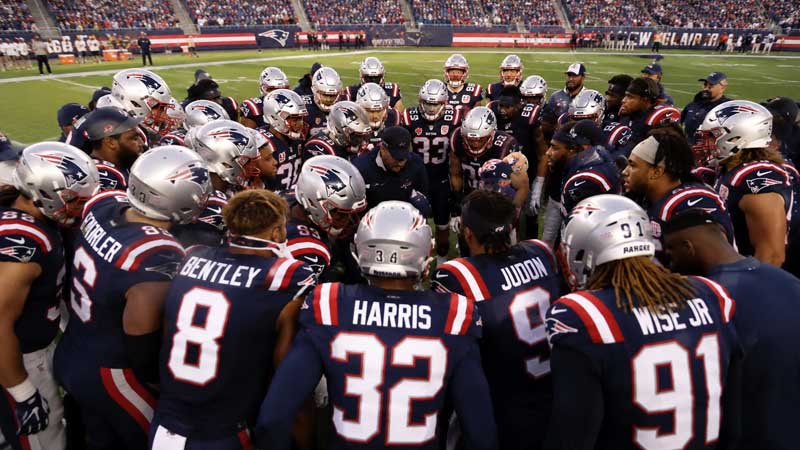
The structural integrity of a professional football organization is defined by its ability to manage talent across multiple tiers of availability.
While the casual observer focuses on the high-impact plays occurring on the field, the operational reality of the league is governed by strict numerical limits and developmental hierarchies.
Understanding how many players are on a team requires a look beyond the starting lineup into the mechanics of the active roster and the peripheral training units that ensure a franchise’s longevity through a grueling season.
The On-Field Unit: The Rule of Eleven
At the most granular level, the game is defined by the “Rule of 11.” Regardless of the total number of athletes employed by a franchise, only 11 players from a single team are permitted on the field during any given play.
These 11 individuals are strategically selected from the broader roster to execute specific roles within three distinct phases of the game.
- Offensive Unit: This group is responsible for point acquisition and ball progression. It is led by the quarterback and supported by a specialized front line including the center, guards, and tackles, alongside skill positions such as wide receivers, running backs, and tight ends.
- Defensive Unit: The primary objective of this unit is to negate the opponent’s scoring opportunities. This is achieved through a combination of defensive linemen (tackles and ends), linebackers, and a secondary consisting of safeties and cornerbacks.
- Special Teams: Often the deciding factor in field position and close contests, this unit manages kicking plays, including punts, field goals, and kickoffs. While many players on this unit also serve roles in the offense or defense, it includes highly specialized roles like the kicker and punter.
The 53-Man Active Roster: The Core Asset
During the regular season, every professional team in the league maintains an active roster of exactly 53 players.
This number represents the “gold standard” of a team’s strength and includes every individual eligible to suit up for games without additional administrative moves.
Managing these 53 spots is a complex exercise in risk mitigation. Front offices must ensure they have sufficient depth to account for mid-game injuries while maintaining a balance of talent across all position groups.
If a player on this list is unable to perform due to a long-term injury, they must be moved to a reserve list to vacate a spot for a replacement, as the 53-man ceiling is inflexible.
| Roster Component | Total Players | Primary Function |
|---|---|---|
| On-Field Limit | 11 | Active gameplay and execution |
| Active Roster | 53 | The core group of players signed for the regular season |
| Practice Squad | 16 – 17 | Developmental talent and emergency depth |
Positional Breakdown: Constructing the 53-Man Unit
A team does not simply choose 53 random athletes; the roster is a carefully calibrated machine. While specific distributions vary by coaching philosophy, a standard roster typically adheres to the following organizational logic:
- The Offensive Foundation:
- Quarterbacks: Usually 2 to 3 players. This position is the focal point of the offense.
- Offensive Line: Often 8 to 10 players. This includes the left tackle, left guard, center, right guard, and right tackle.
- Skill Positions: A mix of wide receivers (5-7), running backs (3-4), and tight ends (3-4) to provide various tactical looks.
- The Defensive Shield:
- Defensive Line: 8 to 10 players, including defensive tackles and edge rushers/ends.
- Linebackers: 6 to 8 players, covering middle and outside roles.
- Defensive Backs: 8 to 10 players, consisting of cornerbacks and safeties who manage the secondary.
- The Specialists:
- Kicking Personnel: Usually 2 to 3 players, specifically the kicker, punter, and long snapper.
The Developmental Tier: The Practice Squad
Parallel to the 53-man active roster is a secondary unit known as the practice squad. This group consists of 16 players who are integral to the team’s weekly preparation but do not feature in official games under their standard practice contract.
The practice squad serves two critical purposes:
- Developmental Pipeline: It allows teams to retain young talent—specifically rookies or players in their second year—who require more time to adjust to the professional level.
- Scout Team Duties: These players emulate the upcoming opponent’s schemes during weekly practices, allowing the active roster to prepare for specific threats.
Practice Squad Composition and Rules:
- Experience Limits: At least 10 of the 16 spots are generally reserved for players with minimal league experience (rookies or second-year players).
- International Expansion: In a move to globalize the sport, teams are granted a 17th practice squad spot if it is used exclusively for an international player, typically through the International Player Pathway program.
- Game Day Promotion: If a team needs a practice squad player to play in a game, that player must be “elevated” to the active roster. For this to occur, the team must create an opening by removing someone from the primary 53-man list.
Strategic Roster Management and Injury Mitigation
The transition from the offseason to the regular season involves significant roster attrition.
During the summer months, teams may carry up to 90 players to evaluate talent through training camp and preseason games. However, once the regular season commences, the reduction to the 53-man limit is mandatory.
The relationship between the active roster and the practice squad is dynamic. When injuries inevitably occur during the season, the practice squad acts as the first line of defense.
A team may promote a developmental player who is already familiar with the system rather than signing a free agent who would require weeks of orientation
. This internal “promotion” system ensures that the 11 players on the field are always supported by a prepared and cohesive unit.
Comparative Analysis: NFL vs. Other Professional Leagues
The 53-man limit often surprises fans of other major sports where rosters are significantly smaller. However, the high-impact nature of professional football necessitates this larger pool of athletes. The specialization of roles means that a backup tackle cannot easily fill in for a safety, creating a requirement for depth that is unique to this sport.
Key differences in this structure include:
- Role Specialization: Unlike sports where players play “both ways” or have fluid roles, football positions are highly technical and distinct.
- Attrition Rates: The physical demand requires a larger “reserve” of players to maintain a high level of competition over a 17-game season.
- Strategic Depth: The ability to rotate defensive linemen or utilize specific personnel packages (like “dime” or “nickel” defenses) requires a deep bench of available talent.
The Final Assessment: The Competitive Edge of Depth
In the modern landscape of professional football, games are rarely won solely by the starting 11. Success is a byproduct of how effectively a front office manages the entire 70-man ecosystem. The ability to identify talent for the practice squad, develop that talent into active-roster contributors, and strategically deploy specialists can be the difference between a post-season run and an early exit.
As the league continues to evolve—incorporating international talent and refining its developmental rules—the “anatomy of a roster” will remain the most critical logistical challenge for every franchise. Whether it is the 11 players executing a play or the 17th player on the practice squad preparing for their moment, every individual plays a calculated role in the organization’s pursuit of excellence.
Strategic Summary for Stakeholders:
- Total Active: 53 Players
- On-Field Max: 11 Players
- Developmental Max: 16-17 Players
- Core Goal: Maintain balance across Offense, Defense, and Special Teams while leveraging the practice squad for injury protection.