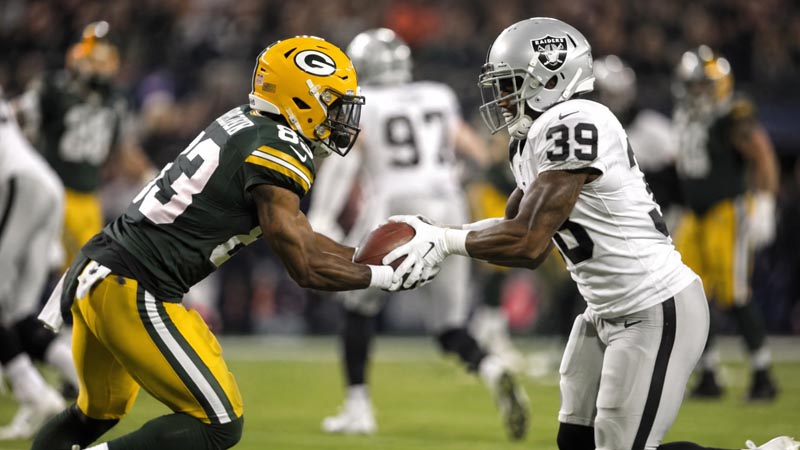
In the professional landscape of the National Football League, a trade is far more than a simple exchange of talent; it is a high-stakes calculation of risk, value, and long-term sustainability.
While fans see the breaking news of a superstar changing uniforms, the reality of these transactions involves a sophisticated interplay of collective bargaining rules, salary cap gymnastics, and draft capital valuation.
Understanding the mechanics of how these deals are constructed provides a window into the strategic minds of general managers who must balance the immediate need for wins with the future health of their franchise.
The Fundamental Assets: A Non-Monetary Economy
The most distinct feature of the NFL trade market is its lack of traditional currency.
Unlike international soccer, where transfer fees can reach hundreds of millions of dollars, or other sports where “cash considerations” are a standard component of a deal, the NFL prohibits the use of direct cash payments for acquiring players.
Instead, teams operate within a closed economy where value is measured strictly in two types of assets: active players and future draft choices. This asset-for-asset system creates a unique market where scarcity drives value.
Because teams cannot simply “buy” their way out of a talent deficit, they must carefully manage their draft picks—which represent the only way to acquire young, cost-controlled talent—to facilitate moves for established veterans.
Asset Comparison: Players vs. Draft Picks
| Asset Type | Primary Benefit | Financial Impact | Strategic Risk |
|---|---|---|---|
| Active Player | Immediate on-field impact; proven production. | Absorbs remaining base salary and future bonuses. | High risk of injury or performance decline. |
| Draft Pick | Access to young talent; long-term roster building. | Fixed rookie scale; significantly lower cap hit. | “Bust” potential; player may not adapt to the NFL. |
The Currency of the Future: Draft Pick Valuation
Draft picks are the lifeblood of NFL roster construction. Each year, teams are awarded one pick in each of the seven rounds, with the order determined by the previous season’s win-loss record. The team with the worst record picks first, while the Super Bowl champion picks last in each round.
However, these picks are highly liquid assets that can be traded up to three years in advance. This allows a team that feels it is “one piece away” from a championship to sacrifice its future for immediate help.
Conversely, a team in a rebuilding phase will often trade away expensive veterans to accumulate as many picks as possible, particularly in the early rounds.
The valuation of these picks follows a generally accepted hierarchy:
- Time Value: Picks in the current or immediate draft are almost always more valuable than picks in future years. For instance, a team wanting an extra second-round pick this year might be forced to trade away a first-round pick in the following year to secure the deal.
- Conditional Picks: To mitigate risk, many trades involve “conditional” assets. A pick’s value may fluctuate based on the player’s performance—such as making an All-Pro team—or the acquiring team’s postseason success. For example, a third-round pick might upgrade to a second-round pick if the new team reaches the conference championship.
- Rookie Wage Scale: High draft picks are especially valuable because their salaries are largely predetermined by the league’s Collective Bargaining Agreement (CBA). This “cheap labor” allows teams to spend more on veteran stars in other positions.
The Financial Engine: Salary Cap and “Dead Money”
The most complex and often misunderstood aspect of NFL trades is the financial aftermath, specifically regarding the salary cap. Every team must stay beneath a hard cap, which was approximately $255 million per season in recent years.
When a player is traded, their contract does not simply disappear from the old team’s books. Instead, it is split into two distinct parts: the money already paid and the money yet to be earned.
Understanding Dead Cap
“Dead cap” refers to money that has already been paid to a player (usually in the form of a signing bonus) but has not yet been “charged” against the salary cap.
- Proration: When a player signs a contract with a large signing bonus, the team is allowed to spread that cap hit over the life of the contract (up to five years).
- Acceleration: The moment a player is traded, all remaining “un-prorated” bonus money accelerates and hits the original team’s cap immediately.
- Financial Burden: This means the team trading the player away must often account for millions of dollars in “dead money” for a player who is no longer on their roster, which effectively reduces their ability to spend on other players.
Acquiring Team Obligations
The team receiving the player takes on a different set of responsibilities. They are generally responsible for the remaining “base salary” and any future bonuses that have not yet been paid. To finalize a trade, the acquiring team must prove they have enough available cap space at the exact moment of the transaction to absorb these future costs.
The Operational Workflow: From Negotiation to Approval
The process of executing a trade involves a series of mandatory steps to ensure league-wide compliance and fairness.
- Front Office Dialogue: General Managers (GMs) initiate contact to negotiate terms, often using standardized “draft value charts” to ensure the exchange of assets is equitable.
- The Physical Examination: Virtually every trade is contingent upon the player passing a physical exam by the new team’s medical staff. If a player is found to have an undisclosed injury, the trade can be voided or the terms renegotiated.
- League Office Verification: Once terms are agreed upon, both teams must independently submit identical paperwork to the NFL league office. The league then verifies that both teams are under the salary cap and that the assets being traded are eligible for exchange.
- Reporting: Once approved, players are generally required to report to their new city and team immediately.
Regulation and Constraints
NFL trades are governed by strict timelines and contractual limitations that prevent teams from making impulsive moves that could destabilize the league.
1. The Trade Deadline
Teams can trade players and picks throughout the offseason and the early part of the regular season.
However, there is a hard deadline, typically in late October or early November. After this point, no further trades are permitted until the start of the new league year in March.
2. Player Consent and No-Trade Clauses
Unlike many other professional environments, NFL players generally have no say in whether or not they are traded. Once the league approves the deal, the player must report to the new team or face significant fines and the loss of their salary.
The only exception is for a small number of elite veterans who have negotiated a “no-trade clause” into their contracts, giving them the power to veto any potential move.
3. The Waiver Wire vs. Trades
It is important to distinguish trades from releases. In a trade, the contract is moved from one team to another. If a player is released (cut), their contract is terminated, and they may become a free agent or be claimed by another team via the waiver wire.
In release scenarios, such as the high-profile departure of Russell Wilson from Denver, the original team may still be responsible for guaranteed future money even after the player signs a new, separate contract elsewhere.
The Impact on Roster Construction
The strategic use of trades allows a franchise to pivot quickly. If a key player suffers a season-ending injury, a team might trade for a replacement to keep their championship hopes alive.
This was seen when teams sought defensive help following major injuries to stars like Aidan Hutchinson. However, these mid-season “rentals” are often expensive and can deplete the draft capital needed for long-term success.
Critical Trade Success Factors
- Cap Neutrality: Managing the “dead cap” hit so it doesn’t paralyze future spending.
- Market Timing: Trading players while their value is high, often before they reach the final year of their contract or show signs of physical decline.
- System Fit: Ensuring the acquired player’s skills align with the new team’s coaching philosophy, as a “failed” trade still leaves the team responsible for the contract.
Conclusion: A Balancing Act of Talent and Finance
The mechanics of NFL trades represent the ultimate test for a front office. It is a world where a second-round pick is a precious commodity, and “dead cap” is a constant specter looming over every decision.
By understanding that these transactions are governed by the CBA’s rigid financial structures and the NFL’s non-monetary asset rules, fans gain a deeper appreciation for the complexity of building a winning roster.
Whether it is a blockbuster draft-day swap or a quiet mid-season veteran acquisition, every NFL trade is a calculated move in a league-wide game of chess where the stakes are measured in both championships and cap space.