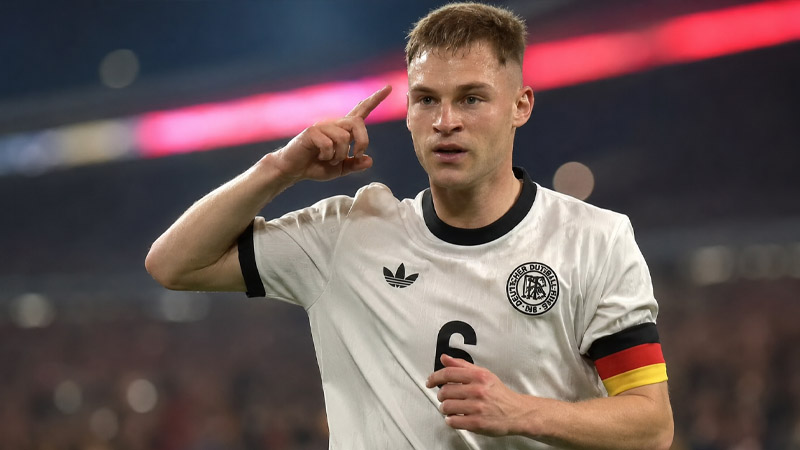
Joshua Kimmich is often described as a “mentality monster,” a term that captures his unrelenting, obsessive hunger for victory and extreme self-discipline.
This elite competitive drive makes him a central figure for FC Bayern Munich and the German national team, where he is viewed as the natural successor to legends like Philipp Lahm.
His approach goes beyond mere skill; it is a psychological commitment to excellence that refuses to accept anything less than a win.
By analyzing his performance metrics and leadership style, we can decode the specific traits that define this world-class competitive mindset.
Defining the “Mentality Monster” Phenomenon
The term “mentality monster” is not merely a media catchphrase but a foundational aspect of Kimmich’s identity as a professional athlete.
This mindset is characterized by a refusal to accept defeat in any context, from high-stakes international finals to routine training sessions.
For Kimmich, the psychological resilience required to play at the highest level is anchored in an unwavering obsession with winning that dates back to his childhood.
He maintains a fierce belief that victory is always within reach, even during matches where his team is visibly struggling on the pitch.
The Origins of Competitive Obsession
Kimmich has stated that his internal drive to win every single match is a trait he has carried since he first began playing the sport.
This is not a learned behavior but a core personality trait that has been refined through years of professional discipline at one of the world’s most demanding clubs.
This obsession manifests as an elite level of self-discipline, where every action on and off the pitch is filtered through the lens of whether it contributes to a winning outcome.
His peers and fans recognize this as a “loss ain’t acceptable” philosophy that separates him from standard professional athletes.
The External Perception of Intensity
To the casual observer, Kimmich’s mentality is often seen through his visible passion and emotional outbursts. Fans frequently note that he “makes angry faces” and “screams a lot” during matches.
While some might view this as mere aggression, it is actually a manifestation of how much he cares about the result and how poorly he takes any form of failure.
This demeanor serves as a constant reminder to his teammates that the standards for performance are non-negotiable. His passion is a tool for maintaining high standards under pressure, ensuring that no one on the pitch lapses into complacency.
The Physical Foundation: Performance-Based Leadership
Leadership in professional sports is often categorized as either vocal or through example. Kimmich rejects this binary by merging both, though he firmly believes that true leadership must begin with an individual’s physical output.
He does not demand from others what he is not prepared to do himself, and his statistical profile reflects a player who consistently outworks his opposition.
By leading through performance, he earns the authority to direct his teammates and demand higher levels of effort from the entire squad.
| Metric Category | Impact on Mentality | Tactical Outcome |
|---|---|---|
| Distance Covered | Demonstrates unrelenting stamina and work rate. | Consistently ranks at the top of distance metrics per match. |
| Ball Touches | Shows a desire to take responsibility in all phases. | Acts as the primary engine for team ball progression. |
| Passing Accuracy | Highlights composure under extreme pressure. | Maintains high precision even when closely marked. |
| Recovery Runs | Proof of defensive accountability. | Prevents counter-attacks through rapid defensive transitions. |
This data-driven approach to leadership ensures that his vocal demands are backed by undeniable effort. When Kimmich barks tactical orders at a teammate, that teammate is looking at a player who has likely covered more ground than anyone else on the field.
This creates a culture of accountability where performance is the currency of respect. His high volume of ball touches further emphasizes his role as the team’s psychological and tactical anchor, as he is always willing to receive the ball in difficult positions to help the team move forward.
The Psychological Engine: Emotional Intensity as a Tool
Emotional intensity is often misunderstood as a lack of control, but in the context of the Joshua Kimmich mentality, it is a calculated tool used to organize and motivate.
He plays with a raw, visible passion that is designed to keep his teammates focused on the tactical requirements of the match.
This intensity is part of a broader psychological engine that allows him to remain resilient in the face of adversity, adopting a mindset that setbacks may “break me down” but will never truly defeat his spirit.
The Utility of Visible Passion
Kimmich is frequently seen shouting and organizing his teammates during play. This “tactical barking” serves a dual purpose: it keeps the defensive and offensive shapes intact while simultaneously injecting energy into the squad during periods of fatigue.
His demeanor shows exactly how much he cares about winning, which acts as a psychological contagion within the team.
By visibly showing the pain of a potential loss, he forces his teammates to confront the reality of the situation and raise their level of play accordingly.
Resilience and Recovery from Failure
The true test of a “mentality monster” is how they respond to failure. Kimmich’s resilience is evidenced by his ability to anchor his teams through difficult periods.
He has a unique capacity to absorb the pressure of a loss and use it as fuel for the next performance.
This psychological durability is what makes him a natural successor to leaders like Bastian Schweinsteiger, who were also known for their “never say die” attitude in the most challenging moments of their careers.
For Kimmich, a loss is not just a result; it is a personal affront that must be corrected through immediate and intense work.
Leadership Evolution: From Enforcer to Strategic Captain
As Kimmich has matured, his leadership style has undergone a significant transformation. While he remains the vocal enforcer of high standards, he has added a layer of nuance to his management of people.
This evolution was necessary as he stepped into the role of official captain for the German national team, a position that requires a deep understanding of varied player personalities and emotional needs.
This transition from a purely intense figure to a strategic leader highlights his intelligence and adaptability.
Adapting to Modern Player Personalities
Modern football squads are diverse, and Kimmich has recognized that a “one size fits all” approach to leadership is no longer effective.
He has refined his vocal and intense approach into a more nuanced style that focuses on understanding the individual personalities of his teammates.
By pairing his relentless tactical demands with individual encouragement, he ensures that every teammate feels valued, even when they are under the intense pressure of a major tournament.
This balanced approach helps maintain team unity while still upholding the “mentality monster” standard.
The Strategic Weight of the Armband
Being the captain of a national team like Germany brings a level of scrutiny that can break many players. Kimmich, however, uses the role to further project his philosophy of excellence.
He understands that the captaincy is not just about wearing an armband but about being the primary representative of the team’s psychological health.
His evolution into this role shows a commitment to growth, as he has learned to temper his raw aggression with the empathy required to lead a modern sporting organization.
This strategic leadership is what keeps the team grounded during the chaos of international competition.
Accountability and the Rejection of Complacency
A hallmark of Kimmich’s mentality is his absolute rejection of complacency and arrogance. He is often his own harshest critic, and he extends this “brutal self-honesty” to the entire team after major setbacks.
Following tournament disappointments, he has been known to publicly criticize any signs of team arrogance or premature focus on later rounds of a competition.
This level of accountability is rare in the modern game, where players often hide behind PR-friendly statements.
- Public Accountability: Kimmich does not shy away from calling out poor performances in post-match interviews.
- Anti-Arrogance Stance: He actively fights against the idea that past successes guarantee future results.
- Training Intensity: His rejection of complacency begins on the training pitch, where he treats every drill with the intensity of a final.
- Focus on the Present: He emphasizes taking one match at a time, ensuring the team does not overlook current opponents by thinking about future stages.
- Personal Responsibility: He often takes the weight of a loss on his own shoulders, demonstrating that leadership requires being the first to accept blame.
By maintaining these high standards of accountability, Kimmich acts as a filter against the entitlement that can often plague successful clubs.
His teammates know that any drop in effort will be addressed, not just by the coaching staff, but by the leader on the pitch. This creates a self-regulating environment where excellence is the only acceptable baseline for participation.
FAQ: Understanding Kimmich’s Approach
What does “Kimmich Mentality” actually mean?
It refers to an unrelenting, obsessive hunger for victory combined with extreme self-discipline and a refusal to accept defeat in any scenario. It is a holistic approach to the sport that prioritizes winning above all else.
Is his shouting at teammates a sign of a bad relationship?
No, it is viewed as a tool for tactical organization and maintaining high standards. It stems from his deep care for the result and his desire to see the team succeed.
How does Kimmich lead if he isn’t the loudest person in the room?
While he is often vocal, his primary leadership style is based on physical output. He leads by example, consistently running more and touching the ball more than others, which gives him the moral authority to lead.
Has his mentality changed as he became captain?
It has evolved to become more nuanced. While he still demands excellence, he now focuses more on understanding different player personalities to provide the right mix of tactical demands and individual encouragement.
Why is he compared to players like Philipp Lahm?
Because of his tactical intelligence, consistency, and his role as a generational leader for both FC Bayern Munich and the German national team.
The Enduring Legacy of the Mentality Monster
The Joshua Kimmich mentality is more than just a set of behaviors; it is a comprehensive philosophy of professional excellence.
By combining extreme physical output with a sophisticated psychological approach, Kimmich has established himself as one of the premier leaders in world football.
His journey from a young, intense talent to a nuanced national team captain serves as a blueprint for any athlete looking to master the mental side of their game.
As the footballing landscape continues to evolve, the demand for leaders who can maintain high standards while managing complex human dynamics will only increase.
Kimmich’s ability to bridge the gap between “old school” intensity and modern empathetic leadership ensures that his influence will be felt for years to come.
Whether he is barking orders on the pitch or conducting a post-match analysis with brutal honesty, his goal remains singular: the pursuit of victory at all costs.
For those looking to emulate his success, the message is clear—mentality is not just something you have; it is something you build through every touch, every run, and every decision to never accept a loss.