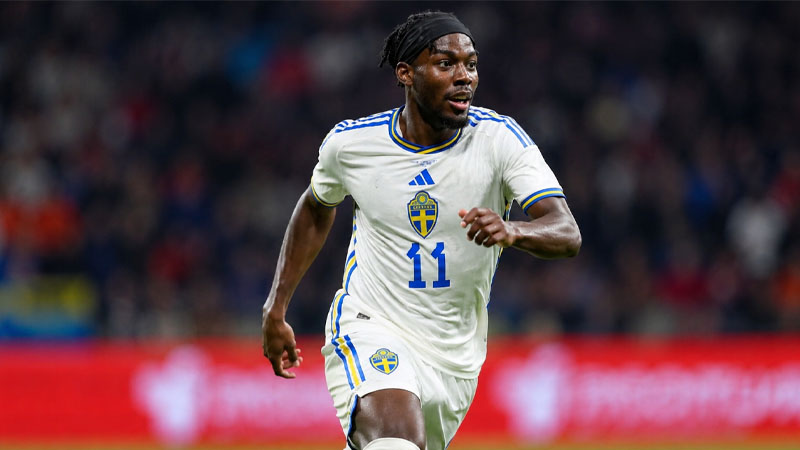
Anthony Elanga has emerged as one of the most intriguing young talents in modern football, captivating audiences with his explosive pace and technical proficiency.
However, beyond his on-field exploits, his multicultural background has sparked significant interest among fans and analysts alike. Understanding Anthony Elanga’s ethnicity requires looking at a story that spans two continents and three nations.
From his birth in Sweden to his deep ancestral ties in Cameroon, his identity is a testament to the global nature of the sport. This article explores the rich heritage, family legacy, and pivotal decisions that define Elanga’s unique international profile.
The Foundation of the Elanga Footballing Dynasty
The story of Anthony Elanga is inseparable from the athletic lineage he carries. His identity is firmly rooted in Central African soil, though his path was paved in Northern Europe.
To understand his ethnicity, we must first look at the parents who provided the genetic and cultural blueprint for his success.
The Cameroonian Connection and Paternal Legacy
Anthony Elanga is of 100% Cameroonian descent. Both of his parents hail from the African nation, a country with a storied history in world football.
His father, Joseph Elanga, was a highly respected professional defender who earned caps for the Cameroon national team and was part of their 1998 FIFA World Cup squad.
This connection ensures that while Anthony may play in Europe, his cultural and familial heritage remains deeply linked to Douala and the wider Cameroonian landscape.
The influence of a father who played at the highest level of international football cannot be overstated, providing Anthony with a professional roadmap from birth.
A Shared Passion: The Role of Daniella Elanga
The athletic prowess in the Elanga family is not limited to the paternal side. His mother, Daniella Elanga, was also a football player in Cameroon.
This dual-athlete household provided Anthony with a unique upbringing where the sport was more than just a hobby; it was a fundamental way of life.
The combination of Joseph’s defensive discipline and Daniella’s own experiences on the pitch created an environment where high-level performance was understood and encouraged.
This shared parental expertise served as the bedrock for Anthony’s development, blending natural talent with an elite sporting work ethic.
Born in Scandinavia: The Swedish Chapter
While his ethnicity is Cameroonian, his birthplace and upbringing introduced a complex layer of national identity. This geographical journey is a key component of why fans often ask about his nationality alongside his heritage.
The Malmö Connection and Early Life
Anthony was born in Hyllie, a suburb of Malmö, Sweden. At the time, his father was playing for the prestigious Swedish club Malmö FF. This specific circumstance makes Anthony a Swedish national by birth.
Growing up in Sweden during his formative years allowed him to integrate into the Swedish football system early on, benefitting from the country’s structured youth development programs.
The environment in Malmö provided him with a technical foundation that complemented the raw athletic traits he inherited from his parents.
Cultural Integration in Hyllie
Living in a multicultural suburb like Hyllie likely shaped Elanga’s worldview, allowing him to navigate different cultural spaces with ease.
Although he spoke Swedish and lived the life of a typical Swedish youth, the Cameroonian traditions maintained at home ensured he remained connected to his roots.
This duality of being “Swedish on the outside and Cameroonian on the inside” is a common theme for children of the African diaspora in Europe, contributing to a versatile and resilient personality that would later serve him in the high-pressure world of the Premier League.
The Move to England and Professional Growth
A major turning point in Elanga’s life occurred at a young age, shifting his development from the Scandinavian landscape to the heart of English football. This move added a third national dimension to his already complex identity.
Relocating to the United Kingdom
At the age of 12, Anthony moved to England. This relocation was pivotal for his career, as it eventually led him to the world-renowned youth academy of Manchester United.
Living and training in England for several years added another layer to his eligibility, as he became qualified to represent the “Three Lions” through residency requirements.
This three-nation puzzle—Cameroon by blood, Sweden by birth, and England by residence—is a rarity in the footballing world and made him a highly sought-after prospect for international scouts.
Developing at the Theatre of Dreams
The transition to England required Elanga to adapt to a faster, more physical style of play. His time in the Manchester United academy allowed him to refine the skills he first learned in Sweden.
By the time he reached the senior level, he had been exposed to three distinct footballing cultures: the physical power of Cameroon, the technical structure of Sweden, and the high-intensity tactical environment of England.
This diverse education is reflected in his playing style, which blends speed with clinical finishing.
Navigating the International Eligibility Crossroads
With three nations vying for his loyalty, Elanga faced a significant career decision. His choice would not only determine his international future but also how he balanced his heritage with his birthplace.
A Comparison of International Opportunities
| Factor | Cameroon | Sweden | England |
|---|---|---|---|
| Eligibility | Ethnic Heritage | Birth & Formative Years | Residency since age 12 |
| Family History | Father played for “Indomitable Lions” | Father played for Malmö FF | No direct family link |
| Development | Cultural connection | Youth system roots | Professional academy peak |
| Final Decision | Not Selected | Selected as Primary | Not Selected |
Choosing the Blue and Yellow
Ultimately, Anthony Elanga chose to represent the Sweden national team. This decision was rooted in a sense of gratitude and belonging to the country where he first opened his eyes and began his footballing journey.
By representing the “Blågult,” he honors his birthplace while continuing to acknowledge his Cameroonian roots in his personal life.
His debut for the senior Swedish squad marked the culmination of years of development within their system, proving that his connection to the country remained strong despite his long-term residency in the United Kingdom.
The Symbiosis of African Athleticism and European Tactics
Footballing experts often analyze how a player’s background influences their style of play. In Elanga’s case, the mixture of his Cameroonian heritage and European training has created a distinctive and highly effective profile on the pitch.
Physical Power Rooted in Heritage
Drawing from his Cameroonian roots, Elanga possesses the raw speed and explosive power often associated with West and Central African athletes. This genetic advantage is a clear link to his father, Joseph, who was known for his physical presence as a defender.
Anthony’s ability to outpace defenders in the Premier League is a primary weapon, allowing him to stretch play and create scoring opportunities from seemingly neutral positions. This “athletic DNA” is a significant part of his identity as a player.
Technical Precision from the Swedish School
While his speed may be inherited, his composure and tactical awareness were honed in the Swedish youth systems and later refined in England. The Swedish “school” of football emphasizes collective discipline and technical efficiency.
This training ensures that Elanga is not just a “speed merchant” but a player who understands spatial dynamics and defensive responsibilities.
This hybrid development has allowed him to excel in elite competitions where both physical power and intelligent movement are required to break down sophisticated defensive blocks.
Frequently Asked Questions: Understanding Elanga’s Background
What is Anthony Elanga’s primary ethnicity?
Anthony Elanga is of 100% Cameroonian descent through both of his parents.
Where was Anthony Elanga born and raised?
He was born in Hyllie, Sweden, and lived there until age 12, when he moved to Manchester, England.
Who is Anthony Elanga’s father?
His father is Joseph Elanga, a former professional footballer who played for the Cameroon national team and participated in the 1998 World Cup.
Why does Elanga play for Sweden instead of Cameroon?
While he is ethnically Cameroonian, he chose to represent Sweden because it is his country of birth and where he spent his formative years.
Was Anthony Elanga’s mother an athlete?
Yes, his mother, Daniella Elanga, was also a football player in Cameroon.
How many national teams was Elanga eligible for?
He was eligible for three: Cameroon (ancestry), Sweden (birth), and England (residency).
The Impact of Identity on Modern Football
Anthony Elanga’s story is a modern narrative of identity in a globalized world. He represents a generation of players who carry the weight of an ancestral footballing legacy while proudly wearing the colors of their adopted or birth nations.
An Inspiration for the Diaspora
Elanga serves as a role model for many young players with immigrant backgrounds. His success demonstrates that it is possible to reach the pinnacle of the sport while navigating multiple cultural identities.
By choosing Sweden, he validated the importance of his upbringing, yet he remains a figure of pride in Cameroon due to his family’s deep roots there.
This balance of “heritage versus home” is a central theme in the lives of many modern athletes, and Elanga handles it with a professional grace that belies his young age.
A Global Citizen of the Game
As football continues to become more interconnected, the stories of players like Anthony Elanga will become the standard rather than the exception.
His ethnicity is a point of pride, providing him with a foundation of talent and resilience that has seen him rise to the highest levels of the European game.
Whether he is playing at Old Trafford, the City Ground, or on the international stage for Sweden, he carries with him the history of his family and the diverse cultures that shaped him.
His journey is a reminder that in football, as in life, our roots are just the beginning of a much larger story.