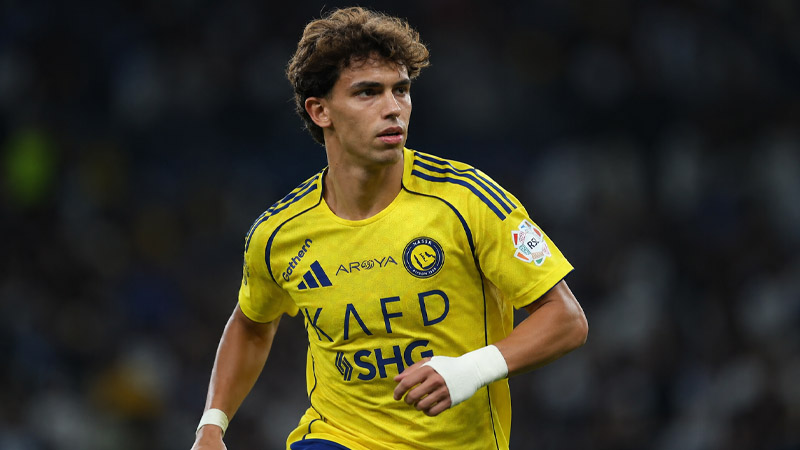
The transfer of João Félix to Al Nassr in July 2025 marked one of the most significant shifts in the modern football landscape.
Moving for a staggering €50 million (£43.7 million), the 25-year-old Portuguese playmaker opted to leave the European elite for the burgeoning Saudi Pro League.
While critics initially labeled the move as a premature exit from the highest level, the transition proved to be a masterstroke for a career that had stalled under the weight of massive expectations and tactical rigidity in Europe.
This move wasn’t merely about financial gain; it was a calculated play for relevance and rejuvenation.
A Strategic Pivot: The Motivation Behind the Riyadh Move
Before landing in Saudi Arabia, Félix found himself at a definitive crossroads. His journey through Europe’s top clubs—Atlético Madrid, Chelsea, Barcelona, and AC Milan—was characterized by flashes of brilliance overshadowed by a lack of consistent output and fractured relationships with managers.
The move to Al Nassr was designed to break this cycle of instability by providing him with a platform where he could be the undisputed centerpiece of an ambitious project.
Seeking Tactical Freedom and Consistency
In Europe, Félix often struggled to find a system that accommodated his unique skill set. At Atlético Madrid, Diego Simeone’s defensive pragmatism clashed with Félix’s creative instincts, while his stints at Chelsea and Barcelona saw him fighting for minutes in overcrowded squads.
By joining Al Nassr, he moved to a league where the tactical setup, particularly under manager Jorge Jesus, was specifically tailored to his strengths.
Jesus deployed him as a true No. 10, granting him the positional freedom to dictate play and link up with world-class attackers. This environment allowed him to rediscover the form that originally made him a teenage sensation at Benfica.
The Pursuit of International Continuity
A primary driver for this transfer was Félix’s desire to remain a staple in the Portugal National Team ahead of the 2026 World Cup. During his second spell at Chelsea, he expressed concerns that a lack of playing time was jeopardizing his international standing.
The move to Al Nassr guaranteed him the “consistent first-team minutes” required to stay in manager Roberto Martínez’s plans.
By playing in a high-tempo, competitive league alongside the national team captain, Félix ensured he remained sharp and visible for selection on the global stage.
The Financial and Structural Realities of the Transfer
The logistics of the deal revealed a complex web of financial necessity and club ambitions. Chelsea was eager to offload Félix’s significant wages to facilitate their own recruitment goals, specifically a move for RB Leipzig’s Xavi Simons.
Meanwhile, Al Nassr was the only suitor capable of meeting Chelsea’s valuation while offering Félix a contract that reflected his status as a marquee talent.
The financial power of the Saudi Public Investment Fund provided Al Nassr with a leverage that traditional European giants could no longer match.
| Entity | Role in the Transfer | Primary Objective |
|---|---|---|
| Chelsea F.C. | Seller | Offload high wages and fund a move for Xavi Simons. |
| Al Nassr | Buyer | Secure a dynamic No. 10 to pair with Cristiano Ronaldo. |
| Benfica | Potential Suitor | Desired a homecoming but could not match the €50m fee. |
| Jorge Mendes | Agent | Facilitated the deal to ensure the player’s career revival. |
The Role of Cristiano Ronaldo and Jorge Jesus
The presence of influential Portuguese figures in Riyadh acted as a powerful magnet for Félix. Beyond the tactical fit, the personal relationships and professional mentorship available at Al Nassr provided a level of comfort and security that he had lacked during his nomadic years in Europe.
This “Portuguese core” transformed Al Nassr into a home away from home for the young star.
Ronaldo’s Personal Recruitment Drive
Cristiano Ronaldo played a pivotal role in the transfer by personally reaching out to Félix to discuss the project.
Ronaldo defended the move against critics who suggested it was a “sad decline,” arguing that the Saudi Pro League provided a higher level of competitiveness than the Portuguese league.
By framing the move as a “better option” for Félix’s development, Ronaldo helped shift the player’s perspective from seeing Saudi Arabia as a retirement destination to viewing it as a legitimate platform for growth.
Ronaldo’s firm stance that “nobody stole anything from anyone” helped mitigate the controversy surrounding the failed Benfica return.
The Tactical Brilliance of Jorge Jesus
The appointment of Jorge Jesus as manager was equally critical. Jesus had a clear vision for how to integrate Félix into a winning system, prioritizing his ability to operate in the “hole” between midfield and attack.
Under Jesus’ guidance, the partnership between Félix and Ronaldo flourished, as the veteran striker’s movement created the spaces that Félix’s vision could exploit.
This tactical synergy was the engine behind Al Nassr’s successful campaign to reclaim the Saudi Pro League title for the first time since 2019.
Analyzing the Competitive Landscape: Saudi vs. Europe
One of the most debated aspects of the move was the perceived drop in competition. However, those within the league, including the players themselves, have consistently pushed back against this narrative.
For Félix, the decision was about choosing the “right pace” for his career rather than adhering to traditional European hierarchies.
Rebutting the “Retirement League” Narrative
The influx of elite talent into the Saudi Pro League has fundamentally altered its competitive standing. Félix wasn’t joining an aging squad; he was joining a team of “stars” and “high-level players”.
The league’s growth is no longer just about financial incentives; it’s about building a footballing infrastructure that can compete at the Club World Cup level.
For Félix, playing against top-tier international defenders in the Middle East provided a more rigorous challenge than sitting on the bench for a mid-table Premier League side.
Ronaldo’s Defense of the Middle Eastern Level
Ronaldo has been vocal in his belief that the Saudi league is unfairly maligned by those who do not play there. He highlighted that the “pace that’s lived there” is often underestimated by European spectators.
By choosing this path, Félix embraced a league that was becoming a legitimate alternative to the traditional European circuit.
This choice was validated when Félix claimed the Player of the Season award, proving he could dominate a league that was rapidly increasing in quality.
The Outcome: From Skepticism to Player of the Season
The results of the 2025–26 season provided an emphatic answer to Félix’s doubters. His “Saudi Resurrection” was not just a narrative; it was backed by elite-level production that translated into silverware for Al Nassr.
He transitioned from a player “all style over substance” to a clinical finisher and prolific creator.
Key Achievements in the 2025–26 Season:
- Total Goals: 20
- Total Assists: 13
- Major Honor: Saudi Pro League Player of the Season
- Team Success: Guided Al Nassr to their first league title since 2019
- National Team Impact: Secured a consistent role in the Portugal squad for the 2026 World Cup
Fan Sentiment and Public Perception
The move generated intense debate across social media and fan forums. On platforms like Reddit, the initial reaction was one of skepticism, with some users calling the transfer “extremely dodgy” and a “waste of space”.
Many fans felt that at 25, Félix was too young to abandon European football. However, as his performances improved, the narrative shifted from questioning his ambition to praising his impact.
The controversy regarding Chelsea’s “oil money” connections and “dodgy deals” eventually took a backseat to the reality of his on-field success.
Frequently Asked Questions (FAQ)
What was the total transfer fee for João Félix to Al Nassr?
The deal was worth approximately €50 million (£43.7 million). This included an initial fee of around €30 million plus various add-ons and a heavy sell-on clause to meet Chelsea’s valuation.
How old was João Félix when he made the move?
Félix was 25 years old when he officially signed for Al Nassr in July 2025.
Did Cristiano Ronaldo influence the move?
Yes. Ronaldo personally reached out to Félix to convince him that Al Nassr was the best environment for him to maintain his form for the Portugal National Team and the 2026 World Cup.
Was the move considered a success?
By all metrics, yes. Félix registered 20 goals and 13 assists in his debut season, won the league title, and was named the Saudi Pro League Player of the Season.
Why didn’t Félix return to Benfica?
While Benfica expressed interest in bringing the player back to Portugal, they were unable to match Chelsea’s €50 million valuation.
Conclusion: A New Blueprint for Career Longevity
João Félix’s journey to Al Nassr is a testament to the changing dynamics of global football. By prioritizing a tactical fit and consistent playing time over the prestige of a European bench, he successfully revived a career that many believed was in permanent decline.
His partnership with Cristiano Ronaldo and the mentorship of Jorge Jesus allowed him to fulfill the potential that had been stifled for years in Madrid and London.
As we look toward the 2026 World Cup, Félix stands as a prime example of how the Saudi Pro League can serve as a legitimate platform for elite players to maintain their peak performance.
The “Saudi Resurrection” of João Félix isn’t just his story—it’s a signal to the rest of the football world that the landscape of the sport has shifted.